The best spa-integrated wellness retreats in the US for 2026, and when a spa-led week is actually the right call
A grounded look at spa-forward retreats from the Texas Hill Country to Sedona, with honest notes on who they suit and how to book without overpaying.
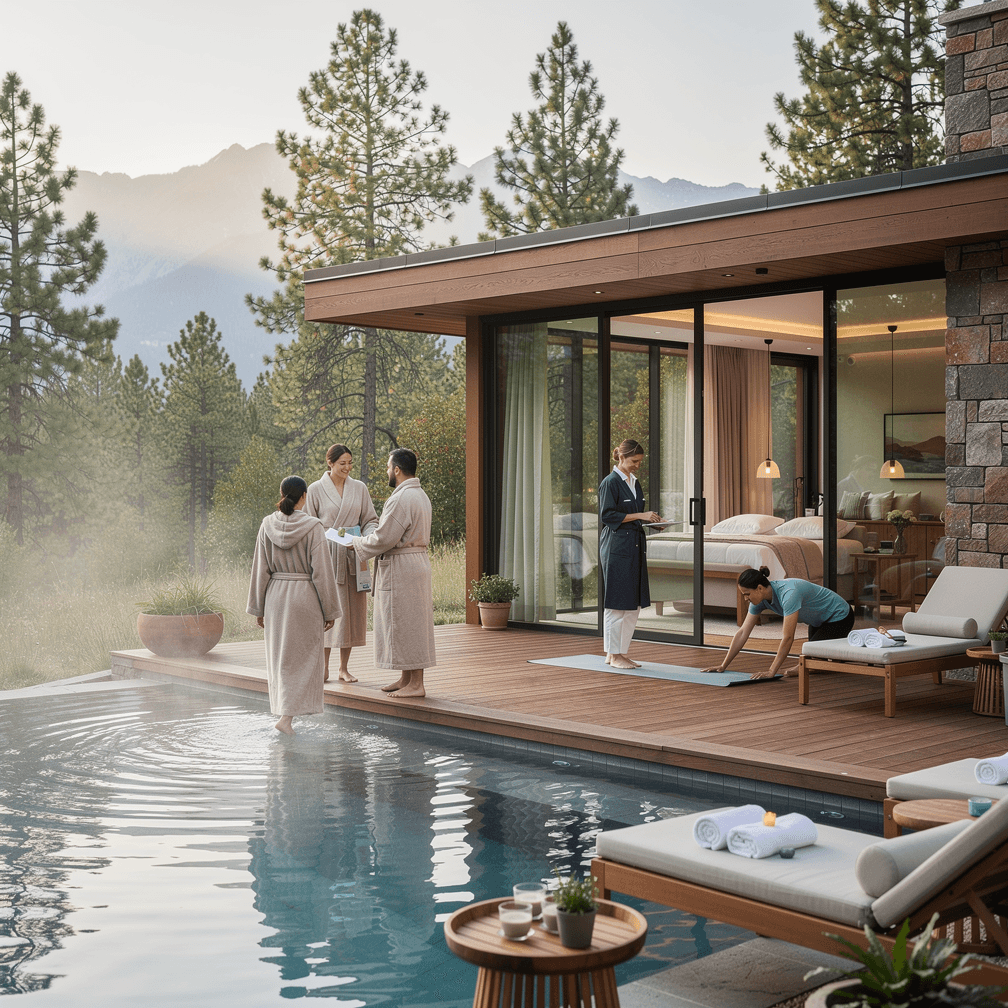
Short answer: Spa-integrated means a daily treatment inside the base price and open access to sauna, steam, cold plunge and mineral soak, with movement sessions hanging off that. It suits you when you are physically depleted more than mentally agitated. If you want teaching or a specific practice goal, book a teaching-led retreat instead.
Most people who go looking for the best wellness retreats 2026 has to offer end up sorting through two very different things wearing the same label. One is a teaching retreat: a schedule of practice, instruction, and shared meals, where the spa (if there is one) is a side door.
The other is a spa-integrated retreat, where hydrotherapy, sauna, cold plunge, bodywork, and skin treatments are the spine of the week, and the yoga or breathwork sessions hang off that spine.
Both can be excellent. They are not interchangeable. This guide is about the second kind, and about when it is the honest right answer for the week you actually need.
What “spa-integrated” actually means
A spa-integrated retreat is built so the hydrothermal circuit (sauna, steam, cold plunge, mineral soak) and hands-on treatments are scheduled into your days rather than booked as optional add-ons. You should expect at least one daily treatment included in the base price, open access to the thermal facilities, and a pace that assumes you are doing a lot of resting, soaking, and quiet walking between sessions.
What you should not expect is the same depth of teaching you would get on a silent meditation retreat or a yoga teacher training. The nervous system work here is mostly done through the body: heat, cold, water, touch, and sleep. That is a real intervention, and for some people it is the more useful one. It is just a different mechanism.
A useful test before you book
If you can answer yes to two of these three, a spa-integrated week is probably the right shape:
- You are physically depleted more than you are mentally agitated.
- You sleep poorly and want a setting that resets that within a few days.
- You find sitting practice frustrating when you are this tired.
If you answered no to all three, a teaching-led retreat will likely give you more.
The strongest US options for 2026
These are the regions and properties we keep recommending after walking them ourselves or sending readers who reported back in detail. We have left pricing ranges loose because rates shift quarterly; check current rates when you book.
Texas Hill Country
A wellness retreat in the Texas Hill Country tends to be the most underrated option on this list. The limestone aquifer feeds genuinely mineral-rich soaking pools, the cedar and oak country is quiet in a way coastal properties rarely are, and the drive from Austin or San Antonio keeps travel friction low.
Look for properties between Wimberley, Fredericksburg, and the Blanco River corridor. The strongest spa-integrated weeks here pair morning movement with afternoon hydrotherapy and end with an early, simple supper. Shoulder seasons (late February through April, and October into early December) are the sweet spot; summer heat shortens the outdoor portion of the day considerably.
Sedona, Arizona
A Sedona wellness retreat earns its reputation for a reason that has little to do with vortexes and a lot to do with elevation, dry air, and the way the red rock light slows people down.
The spa-integrated properties in and around West Sedona and the Village of Oak Creek lean into sound healing, watsu, and Native-inspired bodywork alongside standard sauna and cold plunge circuits. Bring more layers than you think; desert nights in shoulder season are genuinely cold, and most outdoor soaking happens after sunset.
Blue Ridge and Asheville
The North Carolina mountains have quietly become a serious spa-retreat region, with a handful of properties pairing Appalachian hot springs with structured nervous system work. The pace is slower than Sedona, the food is generally better, and the late-September through early-November window is the cleanest weather you will find anywhere on this list.
Big Sur and the Central Coast
The California coast offers the most dramatic hydrotherapy settings in the country, with cliffside soaking tubs that have justifiably long waitlists. These weeks are the most expensive on the list and the most weather-dependent. Book a flexible cancellation rate.
Vermont and the Northeast
For a winter spa retreat, the Vermont properties built around Nordic-style sauna and cold plunge circuits are doing the most honest work in this category. If you respond well to heat-cold contrast and you have been curious about what a serious sauna habit feels like, a January week here will teach you more in five days than a year of inconsistent practice at home.
How to book a wellness retreat online without overpaying
When you book a wellness retreat online, three things consistently separate a clean transaction from a frustrating one:
- Confirm what is actually included in the base price. “All-inclusive” at a spa-integrated property usually means lodging, meals, and group activities, with treatments as a daily credit. Read the credit policy carefully; unused credits rarely roll over.
- Ask about the cancellation window in writing. A 30-day window is standard; 14 days is generous; anything inside 7 days at full price is a property protecting itself, which is fair, but you should know.
- Check whether the booking goes through the property directly or through an aggregator. Direct bookings are almost always easier to modify, and the property keeps more of the rate, which matters for the small operators worth supporting.
If a property will not put inclusions and cancellation terms in a confirmation email, that is the answer. Move on.
When a spa-integrated week is the wrong call
A few honest disqualifiers. If you are working through grief, a recent diagnosis, or something that needs talking about, a spa week can feel isolating in a way you did not expect. A trauma-informed teaching retreat with skilled facilitators is the better container.
If you have a specific practice goal (deepening meditation, learning breathwork, returning to yoga after injury), the time you would spend in treatment rooms is time you are not spending with a teacher.
And if you are someone who gets restless without structure, the open afternoons that make spa weeks restorative for some people will make you anxious.
A note on building the habit at home
One reason spa-integrated retreats work as well as they do is that the heat-and-cold cycle is genuinely repeatable. If a week in the Hill Country or Sedona convinces you of the value, you do not need to wait a year to feel it again.
A regular cold plunge in Austin, or a consistent sauna practice in Austin (or wherever you live), will hold most of the gains between trips. The retreat is the reset. The weekly practice is what keeps it.
The short version on spa-led weeks
The best spa-integrated retreats for 2026 are the ones honest about what they are: a structured rest, built around water, heat, cold, and skilled hands, with enough teaching to give the week shape but not so much that it crowds out the recovery.
Pick the region that matches your season, confirm inclusions and cancellation in writing, and give yourself permission to do less than the schedule suggests. That is usually where the actual work happens.