Best wellness retreats in Santa Fe and New Mexico for 2026
High desert light, an old healing culture, and real quiet make New Mexico one of the most distinctive places in the US to reset. Here's how to choose a retreat that uses it.
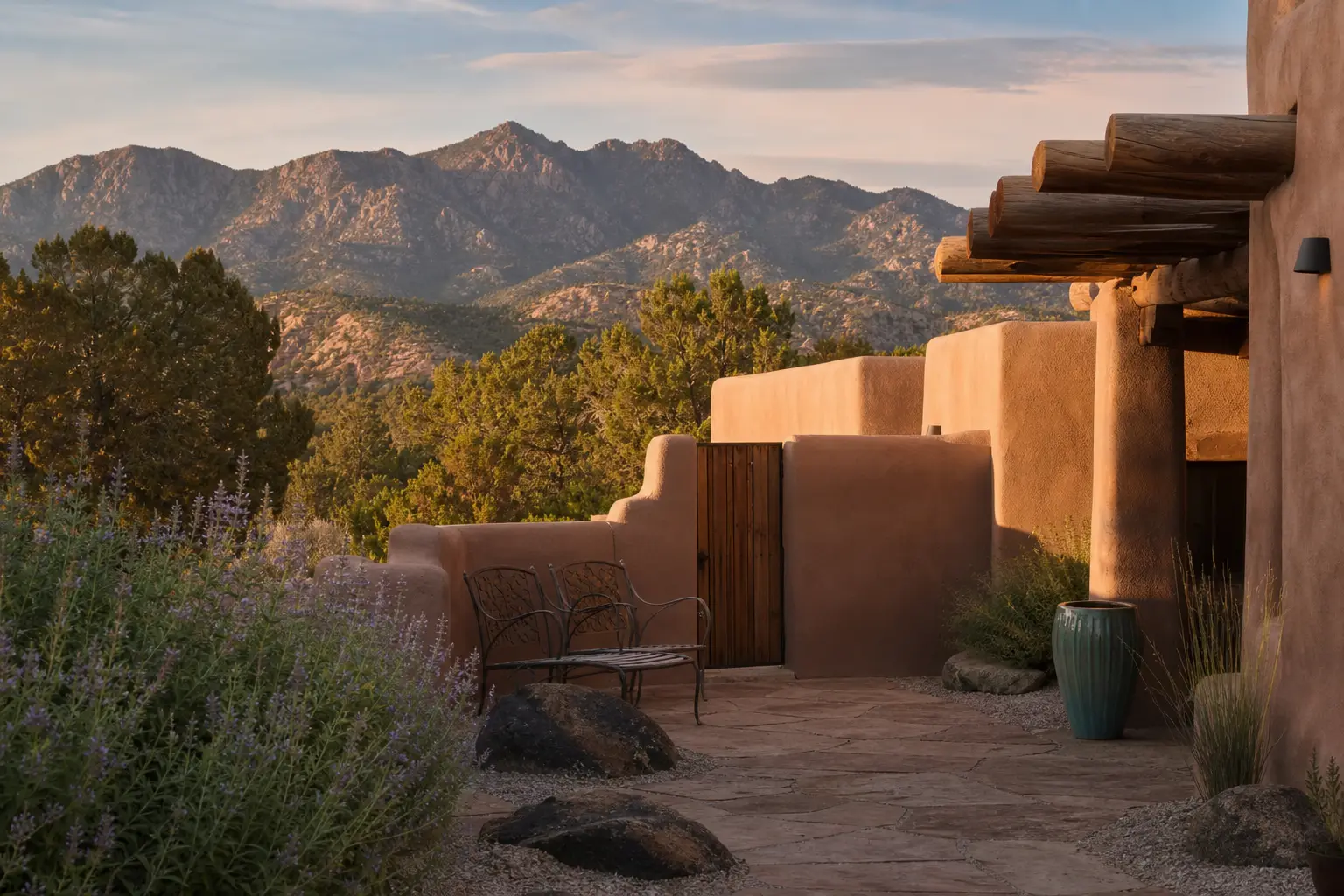
Short answer: Go in September or October, fly into Albuquerque, and spend a night lower down before anything strenuous: Santa Fe sits around 7,000 feet with humidity often below 20 percent. Expect roughly $200 to $500 per person per night, better value than Sedona or the Colorado ski towns. Vet spiritual claims carefully.
The longer answer
Go in the fall, fly into Albuquerque, and give yourself a night at a lower elevation before anything strenuous. Expect roughly $200 to $500 per person per night for a good New Mexico retreat, which makes it noticeably better value than Sedona or the Colorado ski towns.
The two things people underestimate here are the altitude and the dryness. The thing people over trust is the spiritual marketing, which runs thicker in Santa Fe and Taos than almost anywhere in the country.
We don’t take placement fees, so nothing here is paid for, and we only recommend what we’d send a friend to.
The altitude and the dry air
Santa Fe sits around 7,000 feet. Albuquerque, an hour south, is closer to 5,300. Taos town is just under 7,000 and the ski valley above it climbs past 9,000. If you are arriving from sea level, that is a real jump in one flight.
Expect to be more easily winded for a day or two, to sleep badly the first night, and to feel alcohol harder than usual. Not dangerous for most healthy people, but enough to ruin a first morning of hard yoga if you ignore it.
The dryness surprises people more. Humidity here often sits below 20 percent. You will lose water without noticing, your skin will complain, and nosebleeds are common in the first few days. Drink more than feels necessary, and expect the high desert UV to burn you faster than the temperature suggests.
If you have a heart or lung condition, are pregnant, or take medication affecting blood pressure, talk to your doctor before booking at elevation. The evidence for supplements sold as altitude preventatives is thin; hydration and a slow first day are what actually help.
When to go: New Mexico’s seasons compared
| Window | What it is like | Worth knowing |
|---|---|---|
| March to May | Warming, and genuinely windy | Spring wind is the season’s real character |
| June | Hot, dry, clear, before the rains | Strong light, low crowds |
| July to August | Monsoon: afternoon thunderstorms, green | Cooler than the low desert thanks to elevation |
| September to October | Clear, still, gold cottonwoods | The best window by a distance |
| November to February | Cold, some snow, very quiet | Lowest prices, best for indoor and silent formats |
September and October are the answer if you can choose. Late August through mid September also brings Santa Fe’s busiest cultural weeks, when lodging tightens and prices climb, so book earlier than you would otherwise. Our guide to when to go on a wellness retreat covers the general timing logic.
Getting there and how the regions differ
Albuquerque Sunport is the practical airport. Santa Fe has a small regional field with limited service, and it is often cheaper and easier to land at Albuquerque and drive.
Santa Fe. About an hour north of Albuquerque up I-25. The hub: art, food, an established wellness scene, and the widest range of retreats with the easiest logistics.
Taos and the north. Roughly 90 minutes further, either the fast river road or the slower High Road through the mountain villages. Smaller, artier, more remote, with a strong spiritual reputation and hot springs nearby. The best choice for a quieter, deeper stay.
Abiquiu and the Chama valley. An hour northwest of Santa Fe, into the red rock and mesa country that made the region’s painting famous. Sparse, spectacular, and good for nature immersion.
Truth or Consequences and the south. About two and a half hours south of Albuquerque, and importantly lower and warmer at roughly 4,600 feet. A town built on mineral hot springs. If altitude worries you, this is the part of the state to look at.
The formats worth the trip
High desert nature and reset retreats. Built around the landscape, hiking, and big sky stillness. The format that truly uses New Mexico.
Hot springs stays. The state has real geothermal water, notably in the north around Ojo Caliente and Jemez, and in the south around Truth or Consequences. Our US hot springs guide and the piece on thermal soaking cover the safety points nobody posts by the pool.
Silent and meditation retreats. The quiet here is genuine, and northern New Mexico has a long contemplative presence. See our silent retreat roundup for what to expect.
Spiritual and creative retreats. Santa Fe and Taos have drawn artists and seekers for a century. Some programs are deep and well led. Others lean on vague claims and borrowed imagery, which is the next section.
Vetting anything that leans spiritual
New Mexico is home to 19 Pueblos plus Navajo and Apache communities, and it has a correspondingly long history of outsiders selling versions of Indigenous practice to visitors.
Be direct about it. If a retreat advertises a sweat lodge, a pipe ceremony, or anything described as Native American, ask who is leading it, which community they belong to or trained in, and whether that community sanctions what is being offered. A vague answer is an answer. Sweat lodge ceremonies run by unqualified facilitators have caused serious harm and deaths in the United States, which is not a reason to avoid the practice but is a strong reason to know exactly who is holding the door. Our explainer on temazcal and sweat lodges covers how the real thing works.
The same skepticism applies to the broader new age end of the market: energy clearing, past life work, unnamed “ancient” modalities. None of that is regulated. Ask for training, ask what happens if you are distressed, and use our guides to checking credentials and spotting a nonsense wellness claim before you pay a deposit.
What a New Mexico retreat actually costs
Expect roughly $200 to $500 per person per night for a mid range retreat with meals and sessions included. Simple, small, ranch or adobe programs sit below that, and the polished resort end around Santa Fe runs well above.
Then add the flight into Albuquerque, a rental car (all but essential outside central Santa Fe, since rideshare thins out fast once you leave town), and the single supplement if you travel alone. Our retreat cost breakdown shows what each tier tends to include.
FAQ: booking a retreat in New Mexico
How bad is the altitude in Santa Fe really? Mild for most people: a headache, some breathlessness, poor sleep for a night. It is meaningfully gentler than the Colorado ski towns, which sit 2,000 feet higher. A slow first day usually settles it.
Do I need a car? Almost certainly. Central Santa Fe is walkable, but Taos, Abiquiu, the hot springs, and most retreat properties are not reachable any other way, and coverage drops off quickly outside the towns.
Is summer too hot? No, and this is the common misconception. Elevation keeps Santa Fe far milder than Phoenix or Tucson, and the July and August monsoon brings afternoon storms that cool things down. Just plan outdoor sessions for the morning.
Santa Fe or Sedona? Santa Fe if you want culture, food, quiet, and better value. Sedona if you want the red rock landscape and a bigger, more commercial wellness scene. Our Sedona guide makes the comparison directly.
The bottom line on Santa Fe and New Mexico retreats
New Mexico is one of the most distinctive resets in the country, and one of the better value ones, as long as you choose a retreat that actually uses the high desert rather than decorating with it.
Go in September or October, fly into Albuquerque, take the first day slowly, drink more water than you think you need, and vet anything spiritual as carefully as you would a therapist.
If you are comparing desert and mountain options, our guides to Arizona, Utah, and Colorado and the Rockies use the same approach, and the first timer’s checklist covers how to choose well.