Best wellness retreats in Utah for 2026
Red rock deserts, alpine mountains, and five national parks make Utah one of the most dramatic backdrops for a reset in the country. Here's how to choose a retreat that uses it.
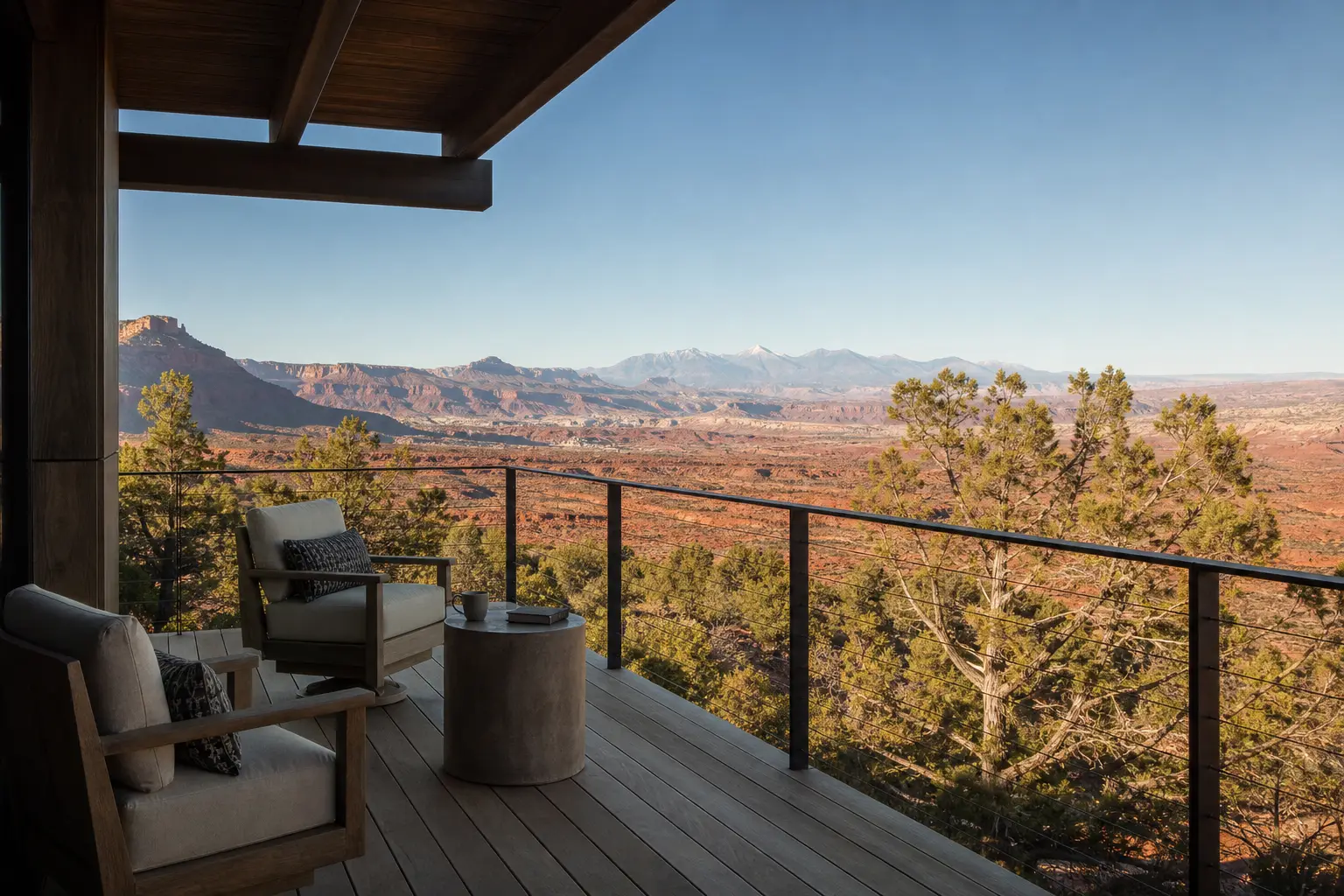
Short answer: Match region to season. Utah’s red rock south (Moab, Zion, St. George) is best in spring and fall and brutally hot in midsummer; the alpine north around Park City is a summer trip. Most multi-day retreats run $1,500 to $4,000 all-in, and everything sits high enough to need an easy first day.
Utah splits cleanly in two, and the right retreat depends on matching region to season. The red rock south (Moab, Zion, St. George) is desert country, best in spring and fall and brutally hot in midsummer. The mountain north (Park City and the Wasatch) is alpine, glorious in summer and snowed in by winter. Expect most multi-day retreats to land somewhere between $1,500 and $4,000 all-in, with polished mountain resort stays running higher, and budget a day to acclimate to real altitude either way.
Get those three decisions right (region, season, format) and Utah delivers one of the most dramatic resets in the country. Here’s how to work through them.
Why Utah
Few states pack in as much dramatic landscape as Utah. Red rock deserts in the south, alpine mountains in the north, and five national parks give it a range that most destinations can’t touch, and the scale of the scenery is a reset in itself.
Utah offers everything from rugged desert nature retreats to polished mountain-resort stays, with the landscape doing an enormous amount of the work.
This guide covers the formats, the regions, and the two things people underestimate here: altitude and season. We don’t take placement fees, so nothing here is paid for.
Utah retreat formats worth the trip
Nature-immersion and adventure retreats. Built around the desert and mountains, with hiking, canyons, and big-sky stillness. This is the format that truly uses Utah, often paired with light adventure. If this pull is the strongest one, our roundup of nature immersion and wilderness retreats across the US puts Utah in national context.
Yoga and movement retreats. Plentiful in both the red rock south and the mountain north, from gentle to active, with striking backdrops.
Mountain resort and spa retreats. Especially around Park City: comfort-first stays with strong amenities. Genuinely restful, though closer to a luxury break than deep inner work. If you’re torn between the two, hotel spa vs a standalone wellness retreat draws the line honestly.
Quiet desert retreats. Remote, intimate stays near the parks for people who want real solitude and dark skies.
How do Utah’s regions compare?
| Region | Landscape | Best season | Retreat style | Logistics |
|---|---|---|---|---|
| Moab and the southeast | Red rock, Arches, Canyonlands | Spring, fall | Adventure and nature immersion | 4 hr drive from SLC |
| Southwest (Zion, St. George) | Canyons, warmer desert | Spring, fall, mild winter | Desert nature, yoga | Fly via Las Vegas or SLC |
| Park City and the Wasatch | Alpine mountains | Summer, early fall | Resort, spa, movement | 40 min from SLC airport |
| Remote desert and small towns | High desert quiet | Spring, fall | Solitude, small groups | Varies, often a long drive |
Moab and the southeast (Arches, Canyonlands). The red rock heartland: dramatic desert, world-class hiking, and adventure-leaning nature retreats.
Southwest Utah (Zion, St. George). Warmer and lower, with stunning canyons and a longer comfortable season. Strong for desert nature immersion, and the mildest pick for a winter escape.
Park City and the Wasatch (near Salt Lake). Mountain resorts, easy logistics from the airport, and a polished wellness-and-spa scene. The most accessible base, and the natural pick if travel time is tight.
Remote desert and small towns. Off-the-path retreats for deep quiet away from the crowds. Some sit near natural hot springs; our guide to US hot springs covers what to know before soaking.
The altitude and season reality
This is the honest part people skip. Much of Utah sits at real elevation: even St. George is near 2,800 feet, Moab around 4,000, and Park City above 7,000. Expect to feel more easily winded and tired for a day or two, and hydrate constantly in the dry air.
Season matters just as much. The southern desert is best in spring and fall (summer around Moab and Zion regularly tops 100 degrees), while the northern mountains are at their best in summer and turn to snow in winter. Match the region to the season, and give yourself an easy first day to acclimate. Our broader guide to when to go on a wellness retreat covers the same logic nationally.
With heart or lung conditions, check with a doctor before a high-altitude trip.
What Utah retreats cost
Honest ranges, not quotes: simple weekend programs start around $500 to $1,200, most multi-day retreats land between $1,500 and $4,000 all-in, and premium mountain resort programs can run well past that. Flights, transfers (often a long drive from the airport), and single-room surcharges are the line items people forget.
Treat the total as the real price. Our retreat cost breakdown explains what actually drives the number and where paying more stops buying more.
What to ask a Utah retreat before booking
Format first. Decide between desert nature immersion, a movement focus, or a mountain resort stay before the photos pull you in.
Season and region. Confirm the timing fits the region: desert in the cooler months, mountains in summer.
The elevation. Ask how high the retreat sits and whether the schedule allows a gentle first day.
The all-in cost. With flights, transfers, and any resort premium, treat the total as the real price.
FAQ: Utah wellness retreats
What is the best time of year for a Utah wellness retreat? Spring (April to May) and fall (September to October) for the red rock south, summer (June to September) for the Park City mountains. Southwest Utah around St. George also works as a mild winter option. Avoid the southern desert in July and August.
Do I need to worry about altitude in Utah? Yes, mildly. Most retreat locations sit between 4,000 and 8,000 feet, high enough that many visitors feel winded and sleep poorly for a night or two. Hydrate heavily, go easy the first day, and check with a doctor first if you have a heart or lung condition.
Is Utah better than Arizona or Colorado for a desert retreat? It depends on the landscape you want. Utah’s red rock and national parks are unmatched for drama; Arizona around Sedona has a denser retreat scene; Colorado leans alpine. Our Arizona and Colorado guides make the comparison easy.
How much should I budget for a Utah retreat? Roughly $1,500 to $4,000 all-in for most multi-day programs once travel is counted, less for simple weekends, more for premium resort stays. Remote locations add transfer costs that are easy to miss.
The bottom line on Utah retreats
Utah is one of the most dramatic resets in the country if you choose a retreat that uses the landscape, match the region to the season, and respect the altitude. Decide the format, plan the timing, and account for the real all-in cost.
If you’re comparing desert and mountain options, our guides to Arizona, Colorado and the Rockies, and Santa Fe and New Mexico use the same approach, and the first-timer’s checklist covers how to choose well.