Buyer's FAQ: Can you go on a wellness retreat with an injury, chronic condition, or while pregnant?
The honest answers to the health questions people are too shy to ask before they book.
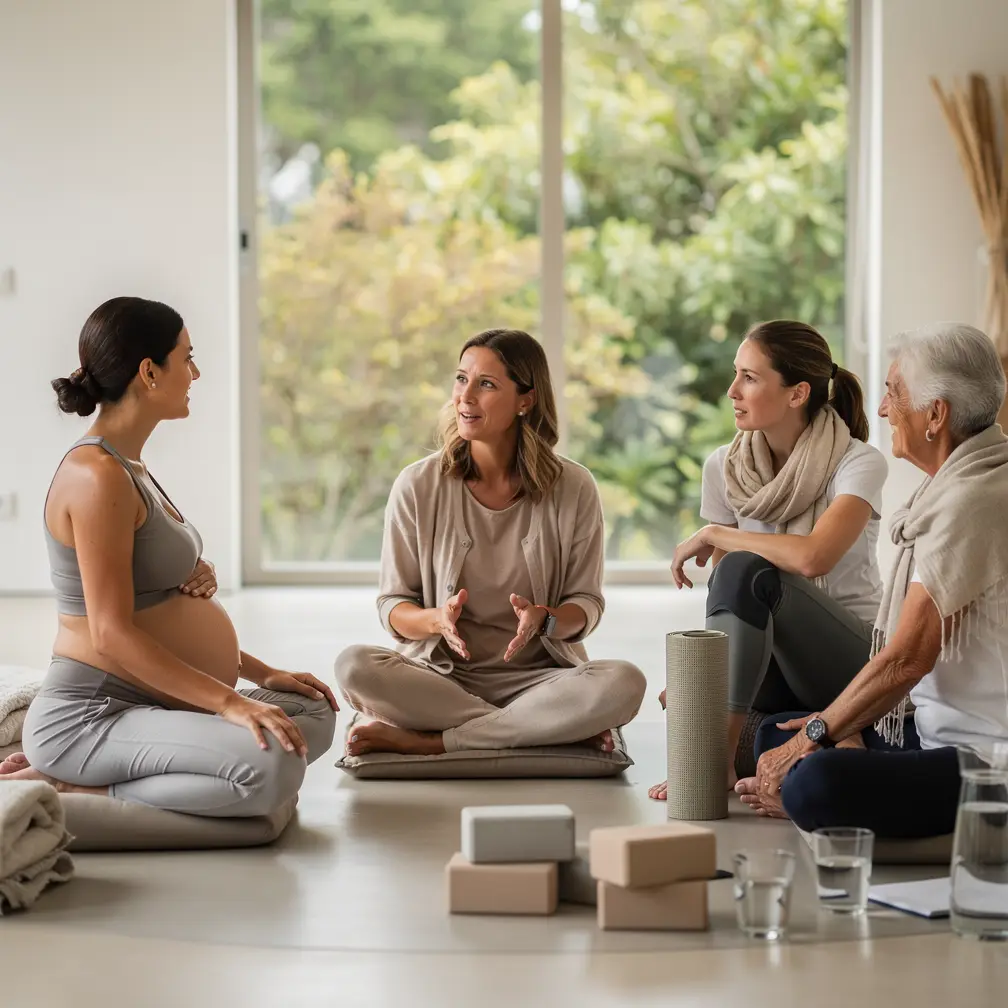
Short answer: Usually yes, if the schedule can be modified. Ask whether sessions can be skipped without losing the week, how easy the property is to move around, and how far the nearest clinic is. Pregnancy generally means avoiding hot sauna, cold plunge, fasting and retention breathwork. Your doctor clears you, not the host.
Most of the questions that stop someone from booking a wellness retreat never get asked out loud.
People worry the answer is no. So they close the tab instead of writing the email. We see it a lot: someone wants the rest, but they have a bad knee, a heart condition, a recent surgery, or they’re four months pregnant, and they assume a retreat isn’t built for them.
Usually it can be, with the right questions answered first. This FAQ covers the health eligibility questions we get asked privately, with plain answers and no false reassurance.
Can I go on a wellness retreat with an injury?
In most cases, yes. The thing that matters is how modifiable the schedule is.
A retreat built around gentle yoga, breathwork, sauna, cold plunge, and rest is far easier to join with a bad shoulder or knee than one built around long hikes or intensive vinyasa. Many of the best wellness retreats in 2026 are designed with optional intensity, so you can sit out one session and join the next without anyone making it a thing.
Before you book, ask the host three concrete questions:
- Can sessions be modified or skipped without losing the value of the week?
- Is the property easy to move around (stairs, distances, terrain)?
- Is there time and space built in for rest, or is the day packed?
If you have a recent or acute injury, check with your own doctor first. A retreat host can adapt a class. They can’t clear you medically, and a good one won’t pretend to.
Can I attend a retreat with a chronic condition?
Often yes, and a calmer, slower retreat can suit a chronic condition better than an ordinary holiday.
The deciding factors are practical:
Medication and storage. Do you need refrigeration, a private bathroom, or a quiet room? Ask before booking, not on arrival.
Access to care. How far is the nearest clinic or hospital? A wellness retreat in the Texas Hill Country sits closer to towns and care than a remote desert property. A Sedona wellness retreat can be more isolated, beautiful, but worth checking the drive time.
Diet. If your condition needs a specific diet (diabetes, coeliac, kidney, IBS), confirm the kitchen can genuinely accommodate it rather than just nodding.
Energy. Fatigue-led conditions do better with a flexible schedule. Look for retreats that treat rest as part of the programme, not a gap to fill.
We only recommend what we’d recommend to a friend, and for chronic conditions that means we point you toward properties with real flexibility and honest access notes, not the most dramatic location.
Can I go on a wellness retreat while pregnant?
Many people do, and several modalities are well suited to it. The honest answer is: it depends on your stage, your pregnancy, and your doctor.
The second trimester is usually the most comfortable window. Prenatal yoga, gentle movement, meditation, and rest-focused retreats tend to be a good fit. Some things are commonly avoided in pregnancy, and you’ll want to confirm with your provider rather than us:
- Hot sauna, hyperbaric, and high-heat practices.
- Cold plunge (a cold plunge in Austin is popular, but ask your doctor first).
- Fasting or aggressive detox programmes.
- Strong bodywork and certain essential oils.
- Some breathwork styles with breath retention.
Ask the host directly whether they’ve hosted pregnant guests, whether sessions can be swapped for prenatal-friendly alternatives, and how far the property is from care. A host who answers clearly is one worth booking with.
What should I tell the retreat host before I book?
Enough that they can give you a real answer. You don’t owe anyone your full medical history, but a short, honest note helps:
- The condition or stage in one line (“recovering from knee surgery in March”, “22 weeks pregnant”, “manage type 1 diabetes”).
- What you need practically (a private bathroom, fridge space, a ground-floor room, the option to skip cold exposure).
- One question: “Given this, would you say your retreat is a good fit, honestly?”
The answer you get tells you a lot. A vague “you’ll be fine” is a flag. A specific answer about what they can and can’t adapt is the sign of a host who runs a careful operation.
What if the answer is that this retreat isn’t right for me?
That’s a good outcome, not a rejection.
A host who tells you their week isn’t the right fit is protecting you from spending real money on something that won’t serve you. It’s also why we take nothing upfront and only earn when a booking is genuinely a good match. We have no reason to push you into a retreat that doesn’t fit your body.
If one property isn’t right, the fit usually exists somewhere gentler, closer to care, or built for your stage.
How we can help you choose
When you book a wellness retreat online, the hardest part is reading between the lines of a glossy page. We do that reading for you.
We research properties for access, flexibility, distance to care, and how honestly they describe what the week actually asks of your body. We can’t clear you medically, and we never promise we’ve personally inspected every room. What we can do is narrow a wall of options down to the few that suit your situation, then tell you what to ask before you pay.
If you’re weighing a retreat and a health question is the thing holding you back, that’s exactly the question to bring to us first.