Buyer's FAQ: your first multi-day wellness retreat in the US, what's actually included
Straight answers on price, lodging, meals, schedules, and cancellation before you book a multi-day wellness retreat in the US.
Short answer: The headline price at most US retreats covers the bed, the meals and the scheduled sessions. Airfare, transfers, bodywork, alcohol and a private room are usually extra. Budget $900 to $3,500 per person for three to five nights, then add 15 to 30 percent for what the sticker skips. Check the cancellation policy before you pay.
Most retreat pages tell you the vibe and the view. They rarely tell you what your money buys, who else is in the room, or what happens if you have to cancel.
This is the FAQ we wish existed when we started researching the best wellness retreats 2026 has on offer. It’s written for someone close to booking their first multi-day trip, not someone browsing for inspiration.
We’ll keep it plain. If a question matters to your wallet or your nervous system, it’s here.
What does “all-inclusive” actually mean at a wellness retreat?
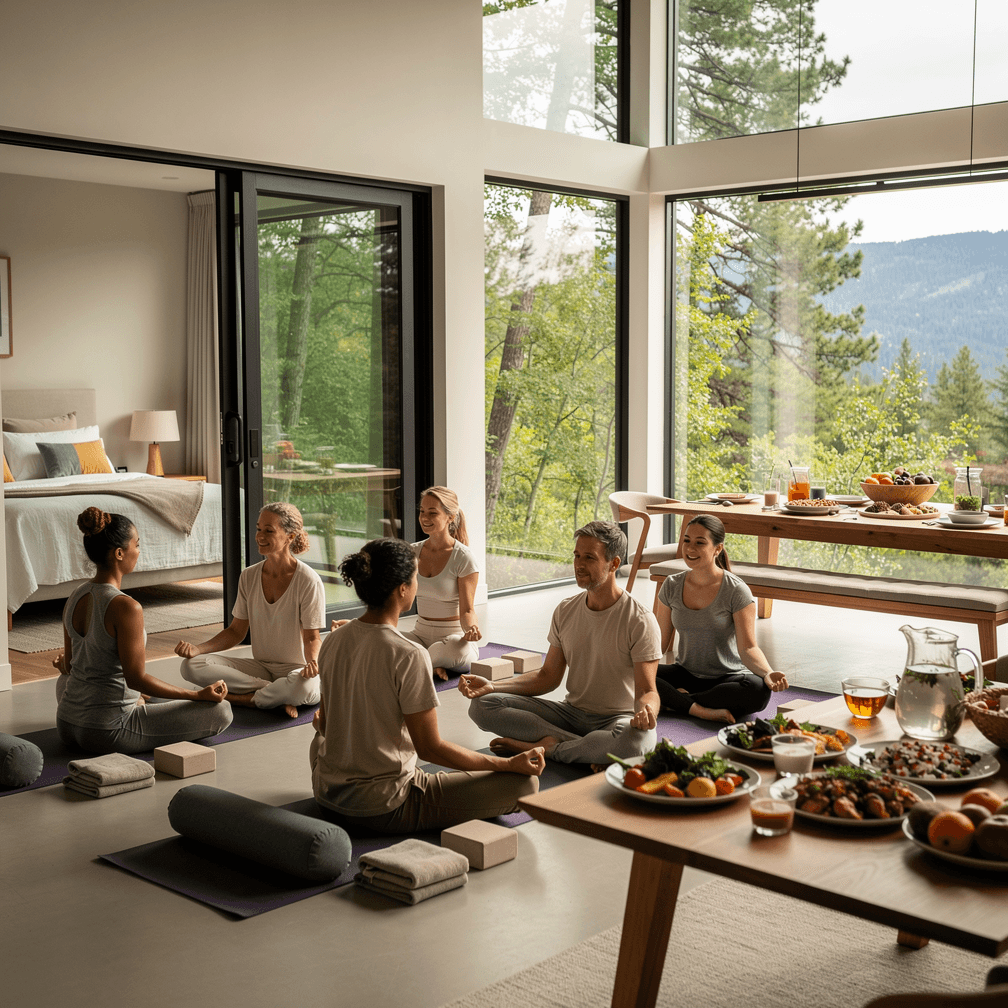
It varies more than the word suggests. At most US retreats, the headline price covers your bed, your meals, and the scheduled sessions (yoga, breathwork, guided hikes, workshops). That’s the common core.
What’s often outside the price: airfare and ground transport, spa treatments or bodywork, private rooms (you usually pay extra to skip a shared room), alcohol, and any one-on-one coaching.
When you book a wellness retreat online, find the “what’s included” and “what’s not” lists before anything else. If a page only has one of those two lists, treat the missing one as a question to ask directly.
How much should I budget for a multi-day retreat?
For a 3 to 5 night retreat in the US, prices commonly land between $900 and $3,500 per person, depending on lodging and location.
A shared room at a Texas Hill Country wellness retreat tends to sit at the lower end. A private casita at a Sedona wellness retreat, with daily bodywork built in, sits near the top.
Then add the extras the headline price skips. A realistic all-in number is usually 15 to 30 percent above the sticker once you count travel, treatments, and tips.
What’s the food situation, really?
Meals are almost always included, and almost always set by the kitchen rather than ordered off a menu. Expect mostly plant-forward cooking, with many retreats running fully vegetarian or vegan.
If you have allergies, a medical diet, or you simply need protein to feel human, ask before booking. Good operators will tell you exactly how they handle it. Vague answers here are a real signal.
Coffee is the sleeper issue. Some retreats are caffeine-free on purpose. If that’s a dealbreaker, you want to know on day zero, not at 6am on day one.
Will I have to share a room?
Often, yes, unless you pay for privacy. Shared rooms (two to four people) are the default at many price points because they keep the base cost down.
Private rooms are usually an upgrade of a few hundred dollars across the stay. Couples retreats and luxury properties more often include private rooms in the base price.
If you’re traveling solo and the idea of a roommate raises your blood pressure, the private upgrade is money well spent for a reset week.
How structured are the days?
This is the question that decides whether you come home rested or wrung out.
Some retreats run a full schedule: sunrise movement, workshops, meals, evening sessions, lights out. Others build in long open afternoons for napping, reading, or doing nothing.
Neither is better. They’re for different people. If you want to be told where to be, a tightly held schedule is a gift. If you’re already overstimulated, look for a retreat that protects free time and says so plainly.
What about cold plunge, sauna, and recovery amenities?
More US retreats now build in contrast therapy, a cold plunge and sauna cycle, especially in wellness-heavy regions.
If recovery amenities are part of why you’re going, confirm they’re included and not a paid add-on. Around Austin in particular, cold plunge Austin and sauna Austin sessions are easy to find as standalone visits, so some operators treat them as extras rather than core programming.
Ask two things: is it included, and is it optional. A plunge should be an invitation, never a requirement.
What happens if I need to cancel?
This is the single most important question, and the one buyers skip most.
Every retreat sets its own cancellation policy, and they range from generous (full refund up to 30 days out) to strict (non-refundable deposits, or no refund inside 60 days). Read it before you pay, not after something goes wrong.
When you book a wellness retreat online through us, the provider’s cancellation policy is the one that applies, and we make it visible up front. After you pay, the retreat operator is responsible for your stay, your care, and any refund their policy allows. We’d rather you know that clearly than discover it in a dispute.
Travel insurance that covers trip cancellation is worth pricing out for any retreat with a strict policy. It’s usually cheap relative to the booking.
How do I know a retreat is legit before I pay?
Look for the names and faces of the people running it. Real bios, real credentials, real photos. A retreat that won’t show you who’s leading the breathwork is one to question.
Read how they describe who the retreat is for, and who it isn’t. Honest operators draw that line. The ones who claim it’s perfect for everyone are usually optimizing for bookings, not fit.
We only recommend what we’d recommend to a friend, which mostly means matching the right person to the right week, not selling you the most expensive option.
What should I ask before I book?
Five questions cover most of it.
What’s the total price once private lodging, treatments, and travel are added? What’s the daily schedule, and how much free time is real? How are dietary needs handled? What’s the exact cancellation policy and refund window? And who, by name, is leading the sessions?
If a provider answers all five clearly, you’re in good hands. If they dodge, that’s your answer too.
Where to start looking
The US has strong options across very different settings. The Texas Hill Country leans warm, accessible, and good value. Sedona leans red-rock dramatic and pricier. Both can be excellent first retreats depending on what your week needs to do for you.
Start with what you want to feel by the last morning. Then work backward to the place, the price, and the policy. The right retreat is the one that fits, not the one with the best photos.