Yoga retreat vs meditation retreat: which one is right for you?
They get lumped together, but they ask different things of you and leave you in different places. Here's how to tell which one your body and mind actually want.
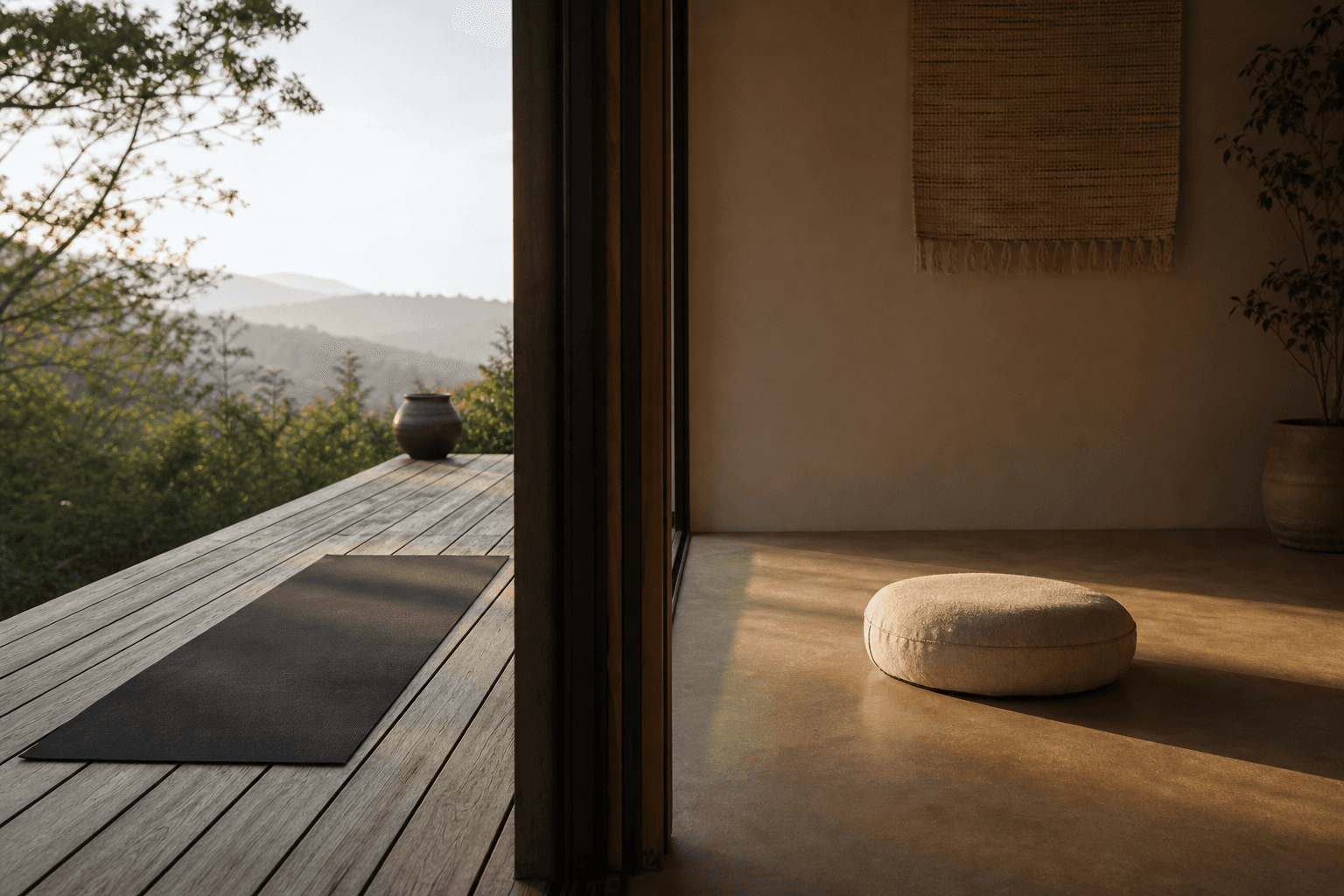
Short answer: Choose a yoga retreat if you want your body involved and stillness sounds like the hard part; choose a meditation retreat if silence sounds like the point rather than the price. Meditation is usually the harder week and often the cheaper one, $400 to $2,500 against $700 to $3,500. Unsure? Book blended.
The longer answer
Choose a yoga retreat if you want your body involved and stillness alone sounds like the hard part. Choose a meditation retreat if silence sounds like the point rather than the price. If you genuinely cannot tell, book a blended retreat, which gives you movement when sitting gets heavy and sitting when movement is enough.
One more decision rule that saves people a lot of money: a meditation retreat is usually the more demanding week, and almost never the restful one. If you are running on empty and mainly need to decompress, a gentle yoga or nature-leaning retreat is the better first booking.
They get filed under the same heading and the marketing rarely helps you tell them apart, so here is the practical difference.
Yoga retreat vs meditation retreat at a glance
| Yoga retreat | Meditation retreat | |
|---|---|---|
| Daily shape | 1 to 3 practices, long open middle | 4 to 8 sitting blocks, tight schedule |
| Physical demand | Moderate to high, style dependent | Low, but sitting still is its own strain |
| Mental demand | Low to moderate | High, sometimes confronting |
| Silence | Usually only during practice | Often partial or total, all week |
| Talking to others | Yes, meals are social | Often not, on silent formats |
| Typical length | 3 to 7 days | 3 to 10 days, some much longer |
| Rough US price | $700 to $3,500 | $400 to $2,500, some donation-based |
| The hard part | Sore hamstrings by day two | Day three, when the mind stops cooperating |
| Best for | Physical reset, building a practice | Working with the mind, deep quiet |
The price gap is real and often surprises people. Meditation retreats, especially traditional Vipassana and Zen formats, are frequently the cheapest multi-day retreats available, because the accommodation is plain and some run on donation. Our retreat cost breakdown covers what drives the numbers.
How a yoga retreat actually feels
A yoga retreat is built around movement. Expect daily practice, often morning and evening, with the rest of the day for meals, rest, nature, and sometimes workshops. The pace varies enormously, from restorative to genuinely athletic, so reading the level honestly before you book matters more than anything else on the listing.
The social texture is warmer. Meals are shared and conversational, and by day two you usually know everyone’s name. That is either a feature or a cost depending on why you went.
It suits you if you want your body involved, if sitting still feels hard, or if you already have a practice you want to deepen. You leave loose, worked, and usually calmer, with the calm arriving through the body rather than around it. Our guide to yoga retreats for beginners covers picking a first one, and the yoga styles explainer covers what hatha, vinyasa, and yin actually ask of you.
How a meditation retreat actually feels
A meditation retreat is quieter, more internal, and more structured than most people expect. The day is built around sitting practice, usually alternating with walking meditation, often with periods or entire days of silence. Some are gently guided. Others, particularly longer Vipassana courses, are demanding in a way that has nothing to do with physical effort.
The common arc: day one is novel, day two is restless, day three is where the difficulty actually lives, and whatever comes after that is the reason people go back. The reward is a deeper kind of quiet.
It suits you if you want to work with your mind directly, or if you are ready to meet whatever surfaces when distraction is removed. What a first silent retreat is like and our guide to silent retreat formats are the honest previews, and our roundup of US silent and Vipassana retreats covers where they run.
One caution worth stating plainly: intensive meditation is not universally gentle. If you are in an acute mental health crisis or working through recent trauma, a long silent retreat is a poor first move, and a teacher who asks about that on the application is a good sign rather than an intrusive one.
Where they overlap
Plenty of retreats blend both, using yoga to prepare the body for sitting and meditation to settle after moving. Practices like yoga nidra sit squarely between the two, and most yoga retreats include some guided mindfulness practice anyway.
For a first-timer, blended is usually the kindest entry. You find out which half you look forward to without paying for a week of the one you do not.
What the evidence supports
Both have real but modest research behind them, and neither justifies the transformation language on the brochures.
Yoga has reasonable evidence for improvements in flexibility, balance, low back pain, and self-reported stress and mood, with effects that depend on continuing the practice. Meditation has reasonable evidence for reductions in anxiety, depression symptoms, and perceived stress, again strongest in people who keep practicing afterward.
The caveat for both: the research mostly studies ongoing practice, not a single retreat week. A retreat is a good way to start or restart a habit, and the habit is where the effect lives. Our summaries of what the yoga science says and what the meditation science says go through the detail.
How to choose your first retreat
Be honest about stillness. If sitting quietly for long stretches sounds like the hard part, start with yoga or a blend. If it sounds like the point, lean meditation.
Match the intensity to your week. A demanding yoga retreat or a long silent sit is not a rest. If you mainly need to decompress, take the gentler version of either.
Read the schedule, not the photos. How much practice, how much silence, how much free time. The day’s actual shape tells you more than the scenery ever will.
Check who is leading it. For both formats, the teacher’s experience and how they hold a group is most of what makes the week good or bad.
Start short. A weekend costs less to get wrong, and our guide to retreat length covers what you actually give up by going short. We only recommend what we would send a friend to, and a short first retreat is what we would suggest to one.
FAQ: yoga or meditation retreat
Which is harder for a beginner? Meditation, in most cases. Yoga is physically tiring but socially normal. A silent retreat removes conversation, phones, reading, and distraction at once, which is a bigger adjustment than sore hamstrings.
Can I do a meditation retreat with no meditation experience? Yes for guided and shorter formats, which are designed for it. For a ten-day silent intensive, having some regular practice first makes a real difference, and some centers ask about it on the application.
Do yoga retreats include meditation? Usually some, often as a short guided sit or a yoga nidra session. It is rarely the main event. If you want meaningful meditation content, look for a retreat that says so in the schedule rather than assuming.
Which one is better for burnout? Generally the gentler yoga or nature-leaning end, at least first. Deep meditation work can be valuable for burnout, and it tends to land better once you are rested rather than as the rest itself. Which retreat type for which goal maps this out.
The bottom line on yoga retreat vs meditation retreat
Choose a yoga retreat when you want the body to lead you to calm, and a meditation retreat when you want to work with the mind directly and you are ready for stillness. Meditation is usually the harder and often the cheaper week. When in doubt, a blended retreat is the kindest first step.
Either way, the first-timer’s checklist covers how to vet one, how to choose a retreat covers the due diligence, our hotel spa vs standalone retreat comparison helps if you are not sure you need a full retreat at all, and what retreats actually do sets honest expectations for both.