Your first infrared sauna session: what to expect
It looks like a sauna but feels completely different: gentler air, a slower sweat, and a longer sit. Here's how to have a good first infrared session and what not to expect from it.
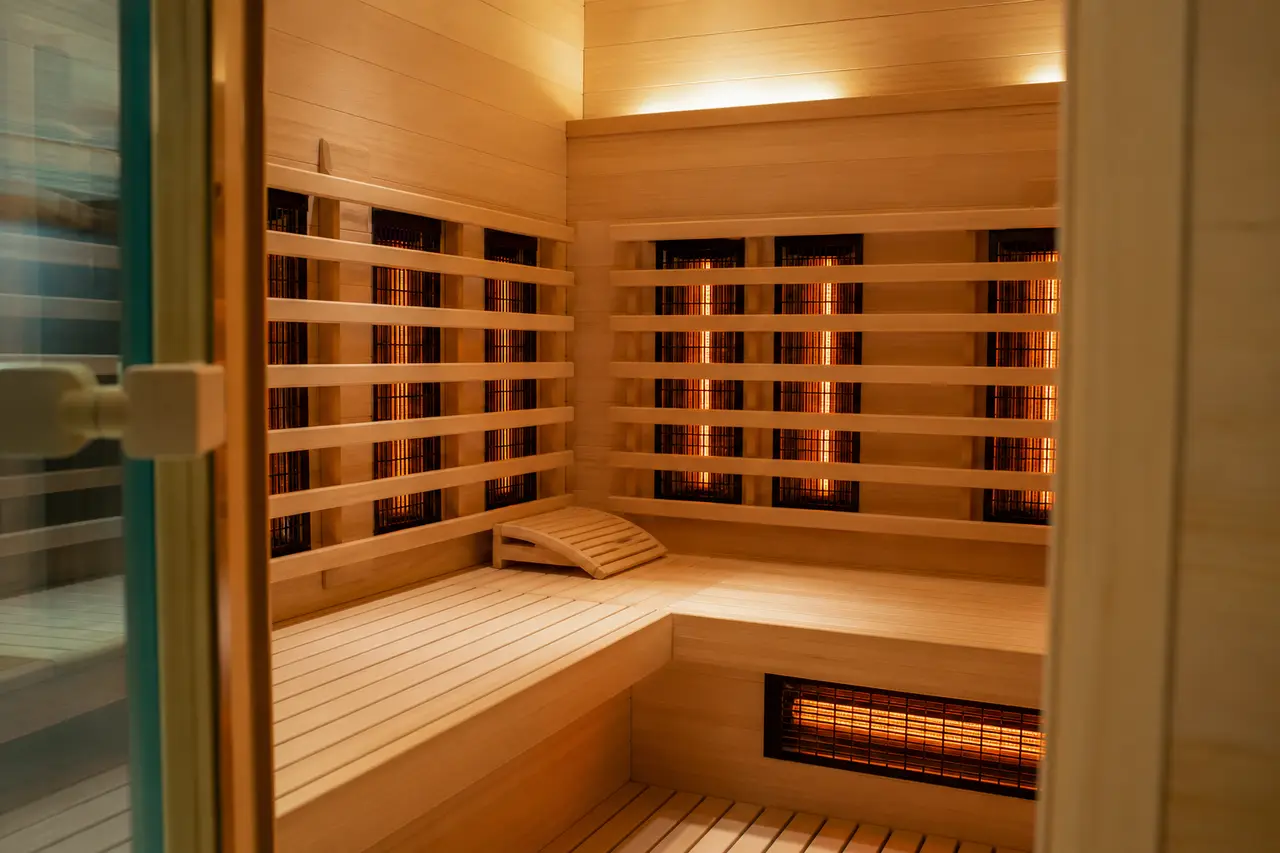
Short answer: An infrared room runs cooler air than a traditional sauna because the heaters warm your body directly, but not always as cool as the “120 to 150°F” you will read everywhere: of 18 US studios that publish their own room’s setting, the median top setting is 158°F and 6 run at 170°F or more. Studios sell sessions in 30 to 45-minute blocks. For a first time, ask for a lower setting, stay about five to 15 minutes (Cleveland Clinic says five to 10, Sunlighten no more than 15), drink water, and ignore the detox claim.
Your first infrared sauna session feels milder than you might expect: the air stays cooler than in a traditional sauna, which studios list at about 160 to 200°F, but you still sweat, because infrared heaters warm your body directly rather than heating the air around you. How much cooler depends on the studio, and the table below shows how far the settings range.
Plan for about five to 15 minutes the first time, at a setting the staff can lower, drink water before and after, and leave whenever you have had enough. It is a genuinely pleasant, low-intensity heat experience. Just go in knowing the relaxation and the warmth are real, and the “sweat out toxins” marketing is not.
How is it different from a traditional sauna?
The mechanism, and therefore the feel. A traditional sauna heats the air to a high temperature, and that hot air heats you. An infrared sauna uses infrared heaters to warm your body directly, so the air can stay much cooler while your skin and core still heat up and you still sweat.
Cleveland Clinic calls the result gentler and more comfortable, though that does not make it the safe choice if heat is hard for you. It is not better or worse, just different; our infrared vs traditional sauna comparison sets the two side by side and says who should check first.
If you have only known the intense steam-room style of heat, an infrared cabin will feel surprisingly mild at first.
What will the session feel like?
For the first several minutes, not much, the direct heat builds slowly, and you may wonder if it is working. Then you start to sweat, gradually and steadily rather than the sudden drenching of a hot traditional sauna. Most people settle into a calm, warm, slightly drowsy state.
You can comfortably sit longer than in a traditional sauna precisely because the air is easier to breathe. Bring a towel to sit on and one to wipe with, sip water, and if you feel lightheaded, dizzy, or genuinely unwell, step out, that rule holds for any heat.
How hot do infrared studios actually run?
Hotter than the line everyone repeats, at about half of them.
Many infrared pages repeat that infrared saunas “typically” run 120 to 150°F, and this page said so too until October 2026. We read the websites of 433 US sauna, cold plunge, float, red light and cryotherapy businesses in October 2026 and kept the 19 that stated the temperature of their own infrared room or pod. Re-read on Nov. 4, 2026, 18 still do: the median top setting is 158°F, 10 of the 18 go above 150°F, and 6 run at 170°F or more, close to the low end of a traditional sauna.
| Studio | City | Their stated setting | Source |
|---|---|---|---|
| Eastend | Chicago | 120 to 130°F | their page |
| Evolve Social Wellness | Dallas | 135°F | their page |
| Bathhouse Flatiron | New York | up to 135°F | their page |
| FLO2S | Atlanta | 120 to 140°F (recommended) | their page |
| Enso Body | New York | pre-heated to 145°F | their page |
| iCRYO | Chicago | 100°F for first-timers, up to 150°F | their page |
| OhZone Clinics | Dallas | up to 150°F | their page |
| Urban Sweat | Dallas | 130 to 150°F | their page |
| Delete the row. | |||
| GOAT Wellness | Chicago | typically 110 to 175ºF | their page |
| Elevated | Henderson | 140 to 145°F first time, 150 to 158°F for regulars | their page |
| IMR Float | Henderson | up to 158°F | their page |
| Reset Mind & Body | Denver | about 160°F | their page |
| Löyly Sauna Lounge | Houston | 150 to 165°F | their page |
| Glow Sauna Studios | Dallas | up to 150 to 170°F (pod) | their page |
| Flow State Cryo & Recovery | Los Angeles | 175°F | their page |
| Healthspan | Miami | 160 to 175°F | their page |
| Forbidden Well | New York | up to 177°F | their page |
| Spa Haus | Nashville | 145, 165 or 182°F (pod) | their page |
Settings are adjustable at many of these studios, so the top setting is not what you have to sit in. It does mean “infrared is gentle” depends on the dial: ask what the room is set to before your first session, and ask for it lower if you are new to heat.
How long should a first session be?
Cleveland Clinic suggests starting at something like 110 degrees for five to 10 minutes, and keeping even experienced sessions to 20 to 30 minutes; Sunlighten, a maker, says no more than 15 minutes the first time and works up toward 40. There is no benefit to toughing out a session that feels like too much.
Studios publish much the same advice for beginners:
- Red Diamond Yoga in Los Angeles suggests 15 to 20 minutes for beginners, building up to 25 to 40.
- Replenish in Atlanta offers a 20-minute introductory session at lower temperatures.
- Elevated in Henderson recommends 140 to 145°F for a first time.
- iCRYO starts first-timers at 100°F and raises it gradually.
Most of the studios that list session lengths sell 30 or 45-minute blocks, and Restore Hyper Wellness says most of its infrared sessions run 30 to 45 minutes. A booked block is a maximum, not a target.
Because infrared sessions run longer than traditional ones, hydration matters just as much even though it feels gentler, drink water before, and rehydrate well after. If you feel great, a slightly longer or slightly warmer next session is fine.
Who should check before a first session?
The same people as for any sauna.
An infrared room still raises your body temperature and makes you sweat, so the cautions for heat apply:
- Medications: if you take one that changes how you sweat or handle heat, our medication heat-warning label index quotes what the FDA labels say.
- Pregnancy: studios mostly ask pregnant guests to check with a doctor, and some say no; our pregnancy guide sets out what 68 studios tell pregnant guests.
- Fever: a fever rules any sauna out, infrared included; our guide to a sauna when you’re sick explains why.
What to wear and bring
Wear a swimsuit, light workout clothes, or a towel, whatever the studio allows; less clothing means more skin exposed to the infrared. Bring two towels (one to sit on, one to wipe), a water bottle, and something to tie back long hair. Leave jewelry and your phone outside, heat is bad for the phone and metal warms up. Shower off the sweat afterward.
What benefits should you actually expect?
Honest ones: relaxation, a pleasant warmth, temporary muscle ease, and for many people a nice wind-down or post-workout sit. The cardiovascular and relaxation signals that make heat worthwhile are covered in our sauna benefits explainer, and they broadly apply here. What to ignore: claims that the sweat “detoxes” you or drives meaningful weight loss.
Sweat is temperature regulation, not detoxification, and any scale change is water you will drink back. Enjoy it for what it is.
The bottom line on infrared saunas
Milder air, a slower sweat, a longer and very comfortable sit: that is an infrared sauna, though studios’ settings range from 130°F to over 175°F, so ask what yours runs at. Start short on a lower setting, about five to 15 minutes, hydrate, and leave when you have had enough. Skip the detox story and take the real relaxation. If you want to add cold afterward, our sauna or cold plunge first guide covers the contrast cycle.
If the same studio also offers red light therapy and the booking page treats them as the same thing, our red light therapy vs infrared sauna comparison covers why they are not.
Want Google to show you more from Tendground? Add us as a preferred source.