Your first breathwork session: what to expect
Breathwork ranges from gentle and calming to intense and overwhelming, and the marketing rarely tells you which one you signed up for. Here's how to walk in prepared.
Short answer: Breathwork splits into two camps and the marketing rarely says which you booked. Slow styles like box breathing or extended exhales calm the nervous system and suit any beginner. Fast styles like holotropic produce tingling, temporary muscle tightening and strong emotion, and need a trained facilitator. Start gentle; ask which style before booking.
Your first breathwork session will fall into one of two very different camps, and knowing which matters more than anything. Gentle, slow-breathing styles are calming and low-drama, good for stress and sleep.
Intense, fast-breathing styles like holotropic or some “conscious connected” sessions can produce strong physical sensations, tingling, temporary muscle tightening, and sometimes intense emotion, and are best done with a trained facilitator. Ask which style your session is before you book.
For a first time, a gentle class is the sane starting point, and an intense session is something to approach deliberately, not stumble into.
What are the two kinds, really?
Slow, calming breathwork. Techniques like extended exhales, box breathing, or coherent breathing, usually done sitting or lying comfortably. The goal is downregulation: calming the nervous system, easing stress, improving sleep. Little drama, real benefit, and a fine first session for anyone.
Fast, activating breathwork. Styles like holotropic or intense connected breathing use rapid, deep breathing for extended periods to produce altered states and emotional release. These can be genuinely powerful and genuinely overwhelming, and they carry real cautions. This is not a casual drop-in for most beginners. Our breathwork retreats explainer breaks down the intense styles in detail.
What happens in a gentle first session?
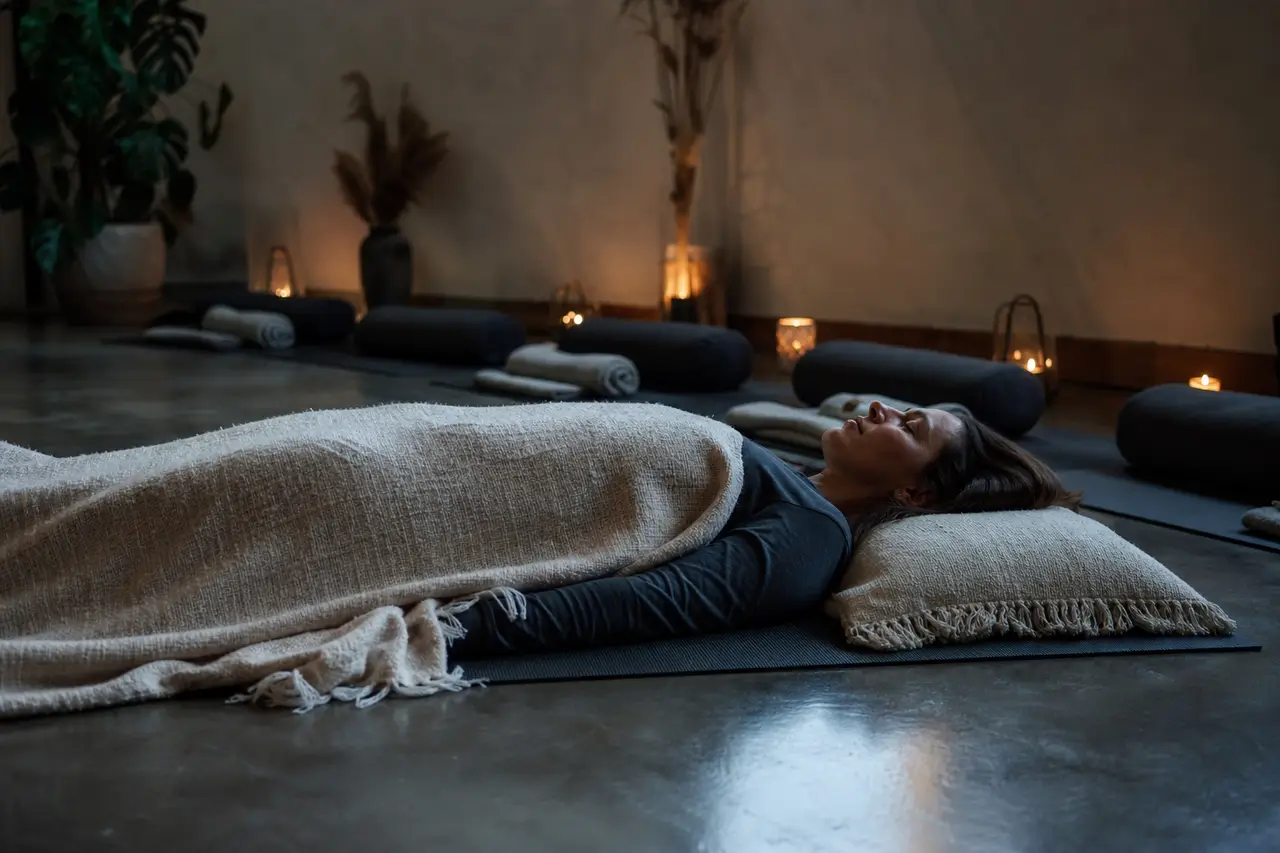
You will usually sit or lie down while a facilitator guides a breathing pattern, often with music and dim light, for anywhere from 20 to 60 minutes. Expect to feel progressively calmer, maybe a little floaty, and quite relaxed by the end. Some people get mildly emotional or very sleepy.
It is low-stakes and hard to do wrong. This is the version we would point a nervous first-timer to, and its calming effect is among the better-supported things in wellness; our breathwork benefits explainer covers the honest evidence.
What about the tingling and other sensations?
In faster styles especially, over-breathing lowers carbon dioxide in your blood, which commonly causes tingling in the hands, face, and lips, and sometimes temporary muscle tightening or cramping in the hands (tetany).
This is a known physiological effect of the breathing, not a spiritual event and not damage, and it resolves when you return to normal breathing. Facilitators of intense sessions expect it. Knowing this in advance is the difference between curiosity and alarm if it happens to you.
Who should be cautious with breathwork?
Intense breathwork is not for everyone. Skip it or get medical and mental-health clearance first if you are pregnant, have cardiovascular disease, uncontrolled high blood pressure, epilepsy, a history of fainting, or serious mental-health conditions including psychosis or significant trauma, since strong sessions can surface intense emotion.
This is exactly why the intense styles belong with a trained facilitator, not a video. Gentle, slow-breathing practices are safe for almost everyone.
How do you choose a first session?
Pick a beginner-friendly, gently-paced class, and read the description or ask the facilitator directly whether it is a calming or an activating style. A good facilitator will happily tell you and will ask about your health history. If you are drawn to the intense, cathartic version, that is fine, but treat it as a considered step with a qualified guide, not a first casual try.
The bottom line on starting breathwork
Start gentle. A slow-breathing session is calming, safe, and a real introduction to the practice; the intense styles are powerful tools that deserve a trained facilitator and a clear health check. Either way, breathwork pairs naturally with the rest of a reset, our meditation for beginners guide is a good companion for the calm end of the spectrum.
Want something you can do tonight without a class? Start with box breathing, the simplest of the slow patterns.