Art Therapy Explained: What Creative Expression Does (and Doesn't) Heal
Making art in a therapeutic context can be genuinely useful, the key is understanding when it's clinical therapy and when it's a creative wellness class.
Short answer: Art therapy is a clinical mental health discipline practised by someone with a master’s degree and Art Therapy Credentials Board registration, working toward defined therapeutic goals. Its strongest evidence is as an adjunct for PTSD, anxiety and depression, and in cancer, dementia and autism. A wellness art class is not the same thing.
Art therapy is a clinical mental health discipline that uses the creative process, drawing, painting, sculpting, collage, and other visual media, as a therapeutic tool under the guidance of a credentialed art therapist.
It has a legitimate evidence base for specific populations and a lot of softer wellness applications that are genuinely enjoyable but are not the same thing. Knowing the difference helps you get what you’re actually looking for.
What art therapy is
Art therapy is practiced by professionals who hold a master’s degree in art therapy and meet the credentialing standards of the Art Therapy Credentials Board (ATCB) in the US, typically as a Registered Art Therapist (ATR) or Board Certified Art Therapist (ATR-BC). Like other licensed mental health disciplines, it operates within a clinical framework: assessment, treatment planning, defined therapeutic goals, and evaluation of outcomes.
The underlying premise is that creative expression can access emotional material that verbal communication alone sometimes doesn’t reach, and that the process of making something, as much as the finished product, has psychological value. You don’t need to be an artist, and the sessions are not about making beautiful things. The artwork serves as a medium for the therapeutic relationship.
Art therapy is distinct from, though often confused with, expressive arts programs, wellness art classes, and creative retreats. These can be meaningful, enjoyable, and genuinely good for your mood. They’re just not clinical art therapy and don’t carry the same therapeutic framework, accountability, or professional standards.
This distinction matters more if you’re dealing with a serious mental health condition. It matters less if you’re looking for a creative wellness experience and that’s accurately what you’re signing up for.
What an art therapy session is like
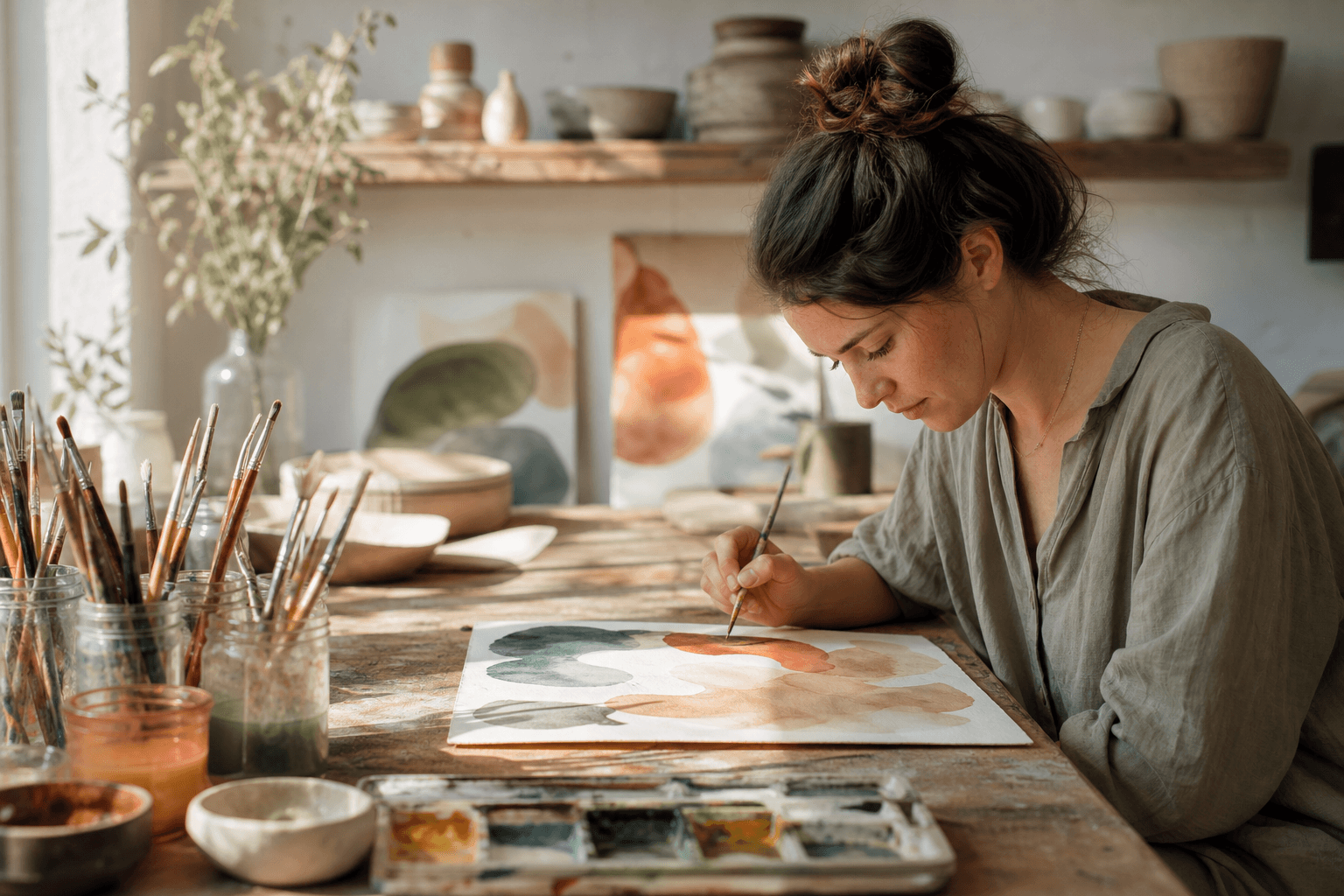
Art therapy sessions typically run 50 to 90 minutes, either individually or in small groups. They take place in a therapist’s office, clinic, hospital, or a dedicated art therapy studio, usually a space with tables, natural light, and accessible art materials.
A session rarely starts with a blank directive. Your therapist might invite you to respond to something you’ve been discussing, offer a prompt related to a theme you’re working on, or simply invite you to work with materials that feel right.
You work, drawing, painting, or assembling something, while the therapist observes and, at times, asks questions. There’s no interpretation of your work without your participation; this isn’t Rorschach. The therapist might ask: “What’s happening in this part of the image? What did it feel like to make this?”
The making is often where the session does its work. People regularly report that something emerges in the image they weren’t fully aware of before starting. Group art therapy adds a layer of shared experience and reflection that can be its own therapeutic element.
Sessions close with reflection and grounding. You leave with your work, or it’s stored as part of your therapeutic record with your permission.
What the evidence says about art therapy
Art therapy has a growing research base. The evidence is strongest for specific populations and applications, more modest for broader claims.
-
Reasonable evidence for: Reduced PTSD symptoms, art therapy is among the better-evidenced adjunct approaches for trauma, particularly for people who struggle with verbal processing of traumatic events. Anxiety and depression reduction as an adjunct to other treatment, multiple systematic reviews and meta-analyses show moderate short-term benefits. Improved quality of life and emotional wellbeing in people with cancer and chronic illness, where it has been studied more rigorously than in many other conditions. Reduced behavioral symptoms and improved social engagement in children with autism and developmental differences. Meaningful benefit in dementia, art-making often remains accessible when other communication pathways have narrowed, and evidence supports improved mood and engagement.
-
Debated or mixed: Whether art therapy provides benefits beyond other structured, engaging therapeutic activities. Effects on psychotic symptoms, some evidence for improved wellbeing in schizophrenia, but the research is mixed and methodologically variable. Long-term maintenance of gains after a program ends.
-
Not established / overstated: That art therapy as a standalone treatment is equivalent to evidence-based psychotherapy for major depression, anxiety disorders, or PTSD, it is an adjunct, and a valuable one, but not a replacement. Claims that the specific art modality (painting vs. drawing vs. collage) has distinct diagnostic or healing properties, the evidence doesn’t support that level of specificity. The idea that art therapists can “read” a client’s psychology from their artwork independently of the therapeutic relationship.
Benefits people report from art therapy
- A way to process difficult emotions that feel hard to put into words
- Reduced anxiety and a quieter internal state during and after sessions
- Improved mood and sense of agency from making something
- New self-awareness and insight that emerged unexpectedly through the creative process
- For group participants: a sense of connection and shared humanity
- A non-threatening entry point into therapy for people who resist traditional talk formats
- A form of somatic experiencing through the hands, physical engagement that grounds the mind
Who art therapy is for, and who should skip it
Good fit: People dealing with trauma, anxiety, depression, or grief who want a complement to verbal therapy, or who have found purely verbal therapy limiting. Children and adolescents who may express themselves more readily through drawing than conversation. Older adults in memory care or chronic illness contexts where art-making offers meaningful engagement. Individuals in recovery programs where art therapy is offered as part of a broader treatment approach. People who are simply curious about their own inner life and drawn to creative expression as a form of self-knowledge.
Who should approach with care: Art therapy is generally considered safe and accessible, but for people with acute psychosis, trauma that makes concentration or focus very difficult, or extreme sensitivity around self-expression, the introduction of art media should be handled carefully by an experienced clinician. This is not a reason to avoid it, it’s a reason to work with a credentialed professional who can read the situation appropriately.
Talk to your current mental health provider before adding art therapy if you’re in active treatment, so they can coordinate your care.
Recreational art and creative wellness experiences are appropriate for most people with no mental health qualifier needed. If you’re signing up for a painting retreat or a creative workshop, enjoy it for what it is.
What art therapy costs
- Clinical art therapy sessions (individual): $80, $200 per session, depending on location and therapist credentials. Some may be covered by insurance when billed as psychotherapy, call your insurer with the billing codes before your first session.
- Group art therapy: Often lower cost, $30, $80 per session; commonly offered in hospital, community mental health, or nonprofit settings.
- Art therapy retreats or wellness experiences (not clinical): $50, $200 per day session; multi-day retreats range from $400, $3,000+ depending on scope and location.
- Hospital and residential programs: Often included in the treatment cost or separately billed; check with the facility.
How to choose an art therapist or program
- Verify credentials for clinical work. In the US, look for ATR (Registered Art Therapist) or ATR-BC (Board Certified) credentials from the Art Therapy Credentials Board. In many states, art therapists are also licensed as licensed professional counselors or similar, check your state’s licensing board.
- Ask about their training population. A therapist who specializes in trauma should have specific training in trauma-informed approaches; one who works with children should have that specialization. General credentials alone aren’t enough for complex presentations.
- For wellness experiences, look for facilitators who are transparent about what they offer. An “expressive arts workshop” led by a working artist or yoga teacher can be excellent, it just shouldn’t be represented as clinical therapy. Good facilitators are honest about the scope of their work.
- The space matters. A good art therapy setting has accessible, varied materials; enough space to work comfortably; and adequate privacy for individual sessions. It should feel inviting, not clinical to the point of coldness.
- Beware of “art heals” overstatements. A credible practitioner talks about what their work is designed to achieve and is honest about what it won’t. Practitioners who promise transformation or healing without qualification are worth approaching skeptically.
FAQ: art therapy
Do I need to be good at art? No. This is the most common misconception about art therapy. The process matters, not the product. Therapists are trained to work with all levels of artistic experience, and most clients have none. The discomfort of being a beginner is often part of what makes the experience therapeutically interesting.
Is art therapy covered by insurance? Sometimes. When billed as psychotherapy by a licensed provider, it may be covered by mental health benefits. Coverage varies by state, insurer, and plan. Always verify in advance, call with the specific billing code your therapist uses.
What’s the difference between art therapy and an expressive arts class at a wellness retreat? A clinical art therapist is a licensed mental health professional using creative media within a therapeutic framework. An expressive arts class or workshop is a facilitated creative experience that may offer real wellbeing benefits without that clinical structure. Both are legitimate offerings, the difference is who’s leading, with what training, and toward what specific goal.
How many art therapy sessions does it take? This depends entirely on what you’re working on. Short-term, goal-focused art therapy programs of 6, 12 sessions exist for specific issues. Longer-term therapy is appropriate for complex trauma or ongoing mental health support. Wellness workshops are often single sessions or short series.
The honest summary on art therapy
Art therapy is a credentialed clinical discipline with real evidence for supporting trauma recovery, anxiety, depression, and quality of life, especially as an adjunct to other mental health care rather than a standalone intervention.
The broader world of expressive arts and creative wellness experiences sits alongside it and offers genuine, if less formally evidenced, benefits for mood, self-expression, and connection. The most important thing is knowing which you’re entering: go to a credentialed art therapist for clinical support; go to a creative retreat or workshop for creative nourishment.
Both are worth your time when you choose them for the right reasons.