Hot springs & thermal soaking: what the warm water actually does
Balneotherapy, mineral water, and contrast soaking, the real benefits and how to do it well.
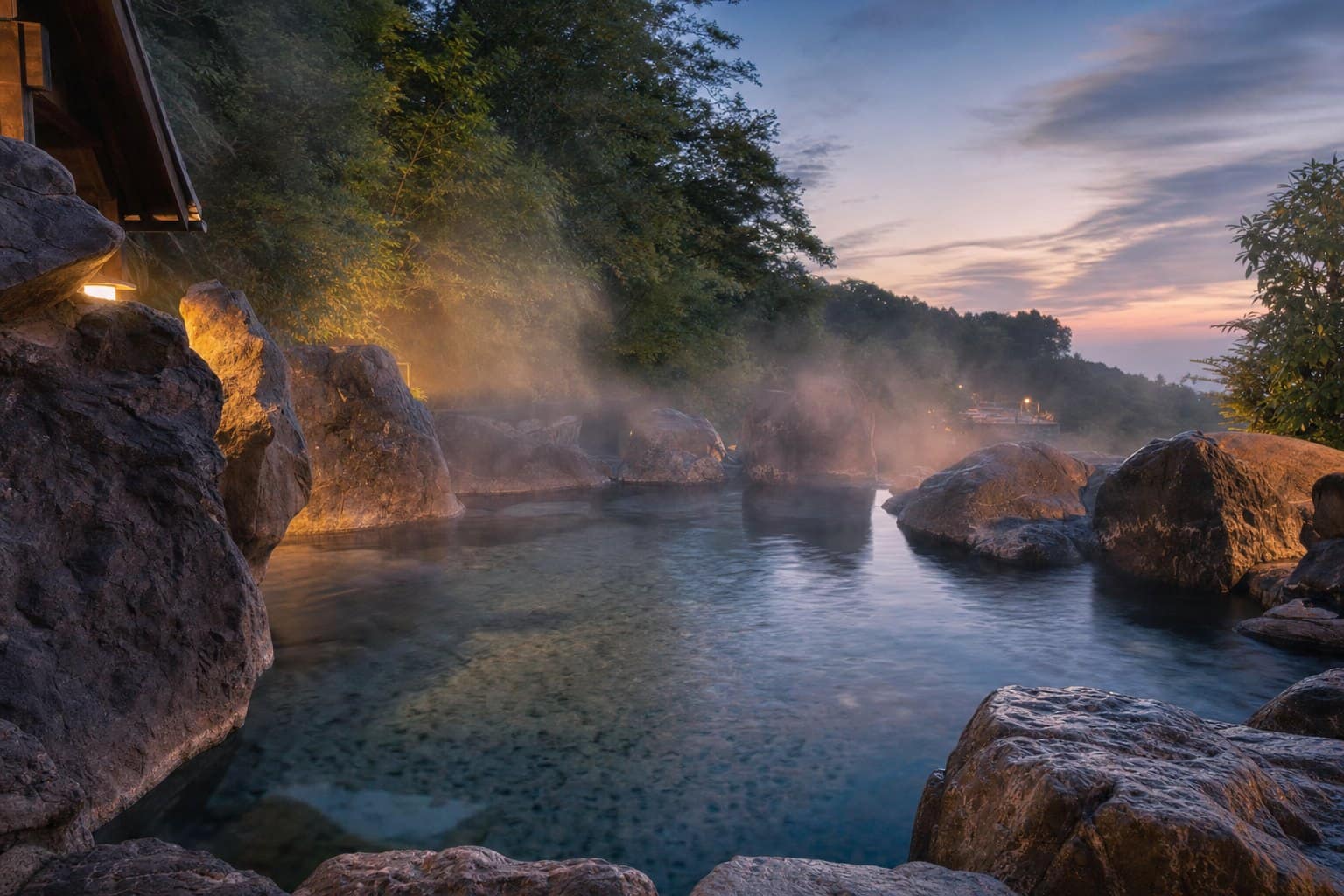
Short answer: Natural hot springs emerge at roughly 98 to 110°F and are usually managed to 98 to 104°F, where a productive soak runs about 15 to 20 minutes. The evidence supports reduced muscle tension, better sleep and less musculoskeletal pain. The heat, buoyancy and enforced stillness do the work, not mineral absorption.
Soaking in hot water is one of the oldest wellness practices on earth, older than every trend, every brand, and every influencer who has discovered it recently. That longevity is its own kind of evidence.
But it’s also worth understanding what the warm water is actually doing to your body, versus what the marketing material around springs and mineral baths tends to claim. Here’s a clear-eyed look.
What thermal soaking is
Thermal soaking, formally called balneotherapy when practiced for therapeutic purposes, means immersing the body in warm or hot water, often naturally mineral-rich, for a sustained period.
Natural hot springs emerge from geothermal activity and typically reach 98, 110°F (37, 43°C) at the surface, though the usable soaking temperature is usually managed to the 98, 104°F range. Many thermal facilities also offer designed contrast circuits: alternating between hot soaking pools, cool or cold pools, and rest.
The practice appears across cultures, Japanese onsen, Icelandic hot pots, Turkish hammam steam rooms, Roman thermae, and Mexican aguas termales are all variations on the same fundamental impulse.
What a hot spring soak is like
Most hot spring or bathhouse visits begin with a rinse shower, then entry into the primary hot pool. The initial sensation is one of total-body warmth and a noticeable drop in muscular tension, within the first few minutes, shoulders descend, breathing deepens, and the chatter in the mind tends to quiet.
At therapeutic temperatures (100, 104°F), a productive soak runs about 15, 20 minutes before you begin to feel the heat tax setting in.
Many facilities offer progressively hotter pools, steam rooms, and cold-plunge options. Alternating between these, hot pool, cold rinse or plunge, rest, repeat, is contrast soaking, and the sequence amplifies the circulatory and mood effects of heat alone. For a full discussion of contrast therapy mechanics, see why contrast therapy actually works.
Visits typically run 60, 120 minutes total, though some people spend a half-day at larger thermal resorts. The restorative feeling is real, and so is the fatigue that often follows, many people sleep unusually well the night of a long soak.
What the evidence says about balneotherapy
- Reasonable evidence for: Warm water immersion demonstrably lowers muscle tension and perceived stress. Core body temperature rises, blood vessels dilate, and the parasympathetic (“rest and digest”) nervous system activates, this produces the profound relaxation that soaking is known for. Multiple studies also show that regular warm-water soaking improves sleep quality and sleep onset. For musculoskeletal pain, including lower back pain, osteoarthritis stiffness, and fibromyalgia, the balneotherapy literature is reasonably consistent: warm water soaking reduces pain and improves mobility, with effect sizes that compare favorably to some physical therapy protocols. Post-soak drop in core temperature as the body cools down mirrors the mechanism behind warm baths improving sleep, which is well supported.
- Debated or mixed: Whether the minerals in hot spring water contribute meaningfully beyond the heat itself is genuinely contested. Some studies on sulfur springs and magnesium-rich waters show skin and pain benefits, but it’s methodologically difficult to isolate mineral absorption from the effects of heat, buoyancy, hydrostatic pressure, and relaxation. The buoyancy effect, reduced gravitational load on joints, is real and likely contributes substantially to the pain relief. Contrast soaking (hot-cold alternation) adds circulatory training effects to the relaxation, which is why it appears in athletic recovery protocols, but the additive benefit over heat alone for general wellness is not precisely quantified.
- Not established / overstated: Claims that specific spring minerals “detoxify” the body, “alkalize” the blood, or cure specific diseases are not supported. The body tightly regulates blood pH, and immersion in mineral water does not change it. “Healing” claims attached to specific spring minerals often extrapolate from folk tradition rather than controlled research. The heat, buoyancy, and deliberate rest are doing most of the work, that’s a lot already, and it doesn’t need embellishment.
Benefits people report from thermal soaking
People who soak regularly at thermal facilities consistently describe: deep release of chronic muscular tension (particularly in the neck, shoulders, and lower back), significantly improved sleep the night of a visit, a prolonged sense of mental calm that outlasts the session by several hours, reduced joint stiffness (especially in the morning following a soak), and a kind of social ease that comes from the unhurried, communal environment of most thermal spaces. These subjective reports are coherent with the mechanisms above.
Who hot springs suit, and who should skip them
Hot springs and thermal soaking are among the most accessible wellness practices: no skill, no gear, no fitness level required. But there are meaningful contraindications.
Who should consult a clinician first: Pregnant people should avoid hot soaks above approximately 102°F, sustained elevation of core body temperature carries risks, particularly in the first trimester; a warm (not hot) brief soak may be fine, but verify. Anyone with heart disease, congestive heart failure, or uncontrolled hypertension, hot water causes vasodilation and can produce rapid blood pressure changes. Anyone with low blood pressure who is prone to dizziness or fainting.
Absolute caution: Never soak after drinking alcohol, the combination of heat-induced vasodilation and alcohol significantly increases the risk of fainting and dangerous drops in blood pressure. Never soak alone in a very hot pool if you are prone to lightheadedness. Exit the water if you feel dizzy, nauseous, or begin to feel unusually cold.
Who it’s especially well suited for: People with chronic muscle tension and stress, those managing arthritis or other musculoskeletal conditions, people with disrupted sleep, and anyone who needs extended permission to stop moving and rest. The unhurried quality of thermal soaking is part of the prescription.
If you like the soak enough to want one at home, the choice is usually between a hot tub and a sauna rather than between brands. Our sauna vs hot tub comparison covers what buoyant warm water does that hot air cannot, and the weekly upkeep that comes with it.
What a hot spring visit costs
- Natural hot spring day use: Free (dispersed public springs) to $25, $60 at managed facilities.
- Bathhouse or thermal spa day pass: $30, $100 at most US facilities; premium destination resorts in places like Colorado, New Mexico, or California run $60, $200.
- Resort or overnight stay with thermal access: $150, $500+ per night at destination hot spring resorts (Ojo Caliente, Wilbur Hot Springs, Breitenbush, Ten Thousand Waves, etc.).
- Contrast therapy circuits (combining thermal pools and cold plunge): often included in bathhouse passes; dedicated facilities may charge $35, $75 for a timed circuit.
How to choose a thermal soaking experience
For a first experience, a managed bathhouse or thermal day spa is a better entry than a backcountry spring, the temperature is controlled, staff are present, and the facilities are clean. Look for facilities that maintain pools at a range of temperatures so you can choose your intensity.
If you’re interested in the contrast experience, look for venues that explicitly offer both hot and cold pools, see also therapeutic sauna and float tanks for complementary thermal experiences that pair well.
Natural springs are wonderful but require more judgment: test temperature with your hand before entering, be aware of water quality advisories, and don’t soak alone in remote locations.
FAQ: hot springs and soaking
How long is a good soak, and how hot is too hot? 15, 20 minutes per session at 100, 104°F is a productive range for most people. Above 104°F (40°C), the risk-to-benefit ratio shifts, heat stress increases and the relaxation benefit doesn’t meaningfully increase. Listen to your body: feeling uncomfortably hot, dizzy, or heavy is a signal to exit.
Does the water temperature matter more than the minerals? For most of the measurable benefits, muscle relaxation, stress reduction, sleep improvement, pain relief, yes, the heat is the primary driver. The minerals may add something, particularly in sulfur and magnesium-rich springs, but it’s difficult to isolate. Enjoy the mineral story if you like it, but don’t seek out a spring specifically because of mineral composition for a health outcome.
Can I soak every day? Brief, moderate-temperature soaks (15, 20 minutes at 100, 102°F) daily are generally well-tolerated and practiced widely in onsen and European spa cultures. Very hot, very long soaks daily can dry out skin and tax the cardiovascular system. Variety and moderation are sensible.
What’s the difference between a hot spring and a thermal spa? A hot spring uses naturally geothermally heated water, often with a distinct mineral profile from the local geology. A thermal spa heats water (often municipal or well water) to therapeutic temperatures. The experience can be similar; the mineral story is usually only authentic to a true hot spring.
The honest summary on thermal soaking
Hot springs and thermal soaking are a deeply restorative, well-evidenced way to unwind muscles, lower stress, and improve sleep, and have been doing exactly that across cultures for thousands of years.
The heat, buoyancy, and permission to be still are doing most of the work; the minerals may contribute, but they don’t need to be the reason you go. Keep soaks moderate in temperature and duration, hydrate well, skip the alcohol, and check with a clinician if you have cardiovascular concerns. The rest is just the pleasure of warm water.
The same logic holds in your own bathtub, which is why we looked at whether an Epsom salt bath does anything: the heat and the stillness carry the benefit, and the minerals are the part people overrate.