Cupping Therapy Explained: What the Marks Actually Mean
Ancient suction therapy, Olympic-athlete bruises, and what the evidence actually shows.
Short answer: Cupping uses suction cups on the skin to pull tissue upward. The dark circles are blood and interstitial fluid drawn into the skin, not detox, and they fade in 3 to 10 days. Reasonable evidence for neck and upper-back tension; none for detoxification or immunity. Expect $50 to $90 for a standalone 30 to 45 minute session.
Cupping therapy gets attention every few years, most recently when Olympic swimmers showed up on the podium covered in dark circular marks. It looks dramatic. The claims range from “reduces muscle soreness” (plausible) to “detoxifies the blood” (not how blood works). The reality is somewhere in between, and worth understanding before you book a session.
What cupping is
Cupping is a form of bodywork in which a therapist creates suction on the skin using cups made of glass, silicone, or plastic. The oldest recorded uses come from ancient Egypt, China, and the Middle East, practitioners have been doing some version of this for at least 3,000 years.
The proposed mechanism: the suction pulls the skin and superficial fascia upward, theoretically increasing local blood flow, loosening connective tissue, and creating a mild inflammatory response that the body then resolves. In Traditional Chinese Medicine, cupping is also described as moving “qi” and clearing stagnation along meridians, a framework not supported by Western physiology, but the mechanical effects on tissue are real and measurable.
Dry cupping uses suction only. Wet cupping (hijama) involves small incisions made before cupping to draw a small amount of blood, less common in Western wellness clinics, and carries higher infection risk. Sliding cupping moves the cup across oiled skin like a reverse-pressure massage. Most sessions in the US use dry or sliding methods.
What a cupping session is like
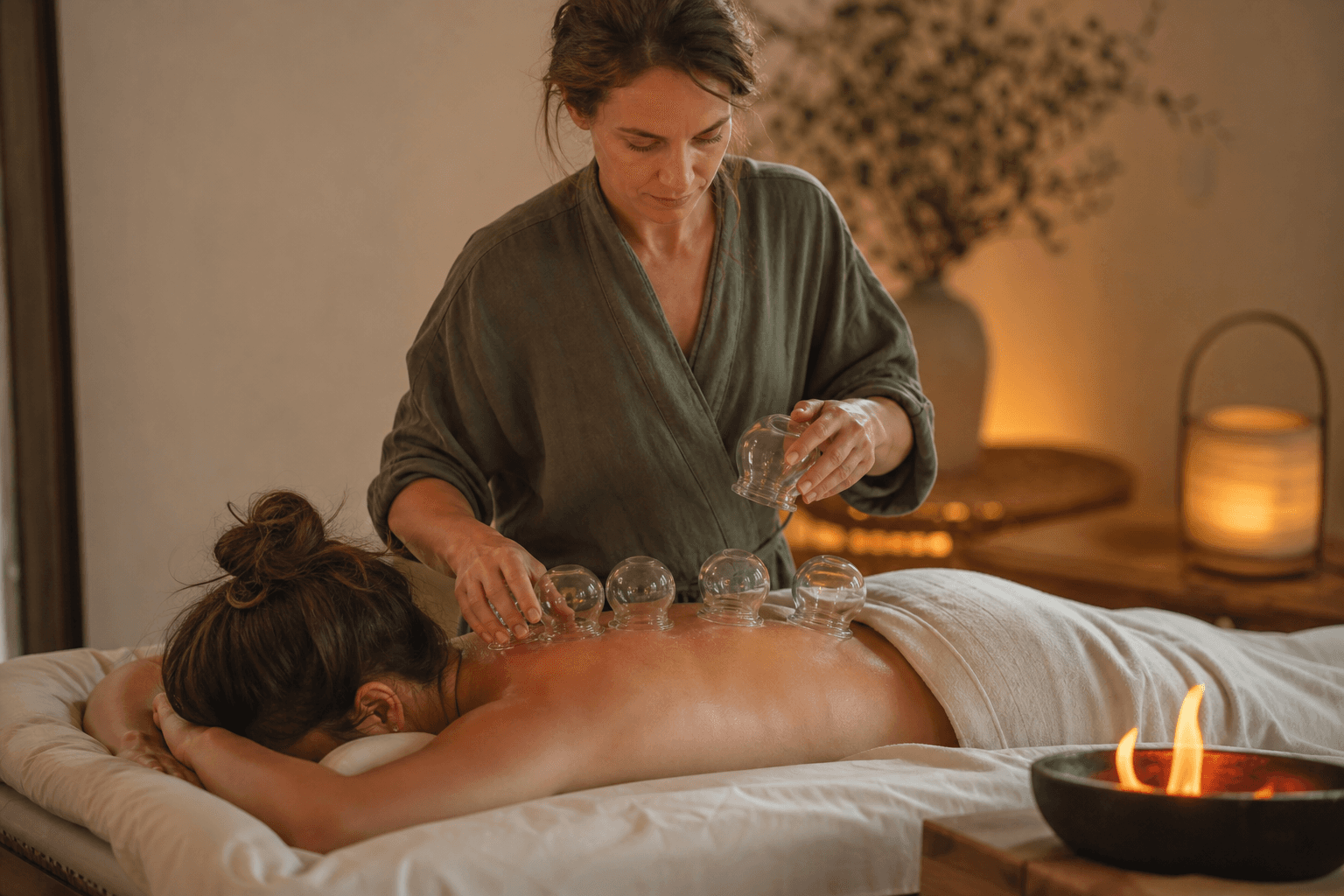
You’ll typically lie face-down on a massage table. The practitioner applies oil to your skin, then places cups, usually 4, 10 of them, across your back, shoulders, or wherever you’re targeting. With glass cups, they briefly pass a flame inside to create heat-vacuum suction before placing the cup. With silicone cups, they simply squeeze and release.
The cups stay in place for 5, 15 minutes. The suction feels like a firm, pulling pressure, not painful for most people, though strong suction can feel intense. Sliding cupping feels more like a deep-tissue massage stroke in reverse.
The dark circular marks left behind are not bruises from tissue damage in the traditional sense. They’re caused by blood and interstitial fluid being drawn into the skin. They typically fade in 3, 10 days.
The darker the mark, the more fluid was drawn, practitioners sometimes read this as a sign of “stagnation,” though there’s no clinical evidence that mark color maps to anything diagnostically meaningful.
A full cupping session usually runs 30, 60 minutes, often combined with massage or acupuncture. You may feel relaxed, slightly lightheaded, or mildly sore afterward. Drinking water and avoiding intense exercise for a day is standard aftercare advice.
What the evidence says about cupping
- Reasonable evidence for: Temporary relief of upper-back and neck muscle tension; short-term reduction in pain perception; subjective relaxation response similar to massage. A 2018 systematic review found moderate evidence supporting cupping for neck and shoulder pain specifically.
- Debated or mixed: Whether cupping outperforms sham cupping (a cup placed without real suction) for pain outcomes. Several trials show benefit, but blinding is nearly impossible in these studies, so placebo effects are hard to rule out. Evidence for low back pain is mixed across studies.
- Not established / overstated: “Detoxification” of any kind, the lymphatic system and liver handle metabolic waste, not suction marks. Claims that cupping treats internal organ disease, boosts immunity, or cures skin conditions lack clinical support. Wet cupping has a small body of research in Islamic medicine contexts but has not been validated by large randomized controlled trials in Western medicine.
The honest read: cupping is a legitimate bodywork modality with real mechanical effects on tissue. For muscular tension and pain, the evidence is reasonable. For most of the other things it’s marketed for, the evidence isn’t there.
Benefits people report from cupping
- Reduced muscle tightness and soreness, particularly in the upper back and neck
- A sense of relaxation and “release” during and after the session
- Improved range of motion in targeted areas
- Faster perceived recovery after athletic training (though controlled evidence is thin)
- A feeling of warmth and increased circulation in treated areas
Who cupping is for, and who should skip it
Cupping is a reasonable option if you carry chronic tension in your back and shoulders, recover slowly from training, or simply enjoy deep bodywork and want to try something different.
Skip it or get medical clearance first if you:
- Take blood thinners or have a clotting disorder
- Have active skin conditions, sunburn, eczema, or open wounds in the treatment area
- Are pregnant (abdominal and lower-back cupping is contraindicated)
- Have a history of deep vein thrombosis
- Have active cancer or are undergoing chemotherapy
The marks can be alarming to people who don’t know what they are, worth mentioning to a doctor or partner before your appointment. Talk to your doctor if you have cardiovascular conditions, as the suction creates a localized increase in blood flow.
What a cupping session costs
In the US, cupping is often added onto a massage or acupuncture appointment. Expect:
- Add-on to massage or acupuncture: $15, $40 extra
- Standalone cupping session (30, 45 min): $50, $90
- Longer integrative session (60, 90 min): $80, $140
Traditional Chinese medicine clinics tend to be on the lower end. Upscale day spas and sports-recovery studios trend higher. Wet cupping, if available, is typically more expensive and less common outside of practitioners trained in hijama specifically.
How to choose a good cupping provider
Look for a licensed acupuncturist (L.Ac.), licensed massage therapist (LMT), or a Traditional Chinese Medicine practitioner, these are the professionals most likely to have formal training in cupping technique and hygiene. Certification in cupping specifically exists but is not universally standardized, so asking about training background matters.
Ask about the cups used and how they’re sterilized between clients. Glass cups should be autoclaved or replaced. Silicone cups should be properly sanitized. If anyone offers wet cupping, make sure they’re using single-use lancets and following bloodborne pathogen protocols.
Avoid providers who promise dramatic medical outcomes, cupping is bodywork, not a cure for chronic disease.
FAQ: cupping therapy
Will the marks hurt? They’re usually not painful, just visually striking. Some people report mild tenderness if you press on the area, similar to a fading bruise. They typically resolve in 3, 10 days.
Can cupping help with athletic recovery? Many athletes use it, and some report it helps. The evidence that it meaningfully accelerates recovery over, say, a regular massage is not strong, but if you find it helpful, it’s low-risk enough to be worth trying.
Is cupping the same as a massage? No. Massage applies downward pressure into tissue; cupping applies upward suction. They’re complementary, many practitioners combine both in one session. Both are forms of manual therapy with overlapping effects on muscular tension. See also: Thai massage and bodywork and acupuncture explained for related modalities.
How often should I get cupping done? Most practitioners suggest starting with one session and seeing how your body responds. Weekly to monthly is typical for ongoing maintenance; daily cupping is not recommended.
If you take an anticoagulant, the marks cupping is designed to leave become a reason to skip it, which our guide to wellness on blood thinners explains.
The honest summary on cupping
Cupping is a legitimate, low-risk bodywork practice with reasonable evidence for muscle tension and pain relief, particularly in the neck and upper back. The marks look intense but are harmless and temporary. The “detox” and immune-boost marketing that often accompanies it isn’t supported by research.
If you enjoy deep tissue work and want to try something different, it’s worth a session; just go in with calibrated expectations.