The best plant-medicine-adjacent retreats in the US for 2026 (and what 'legal' actually means)
A grounded look at ceremony-style retreats that stay inside US law, from breathwork and kambo to ketamine-assisted programs and integration weeks.
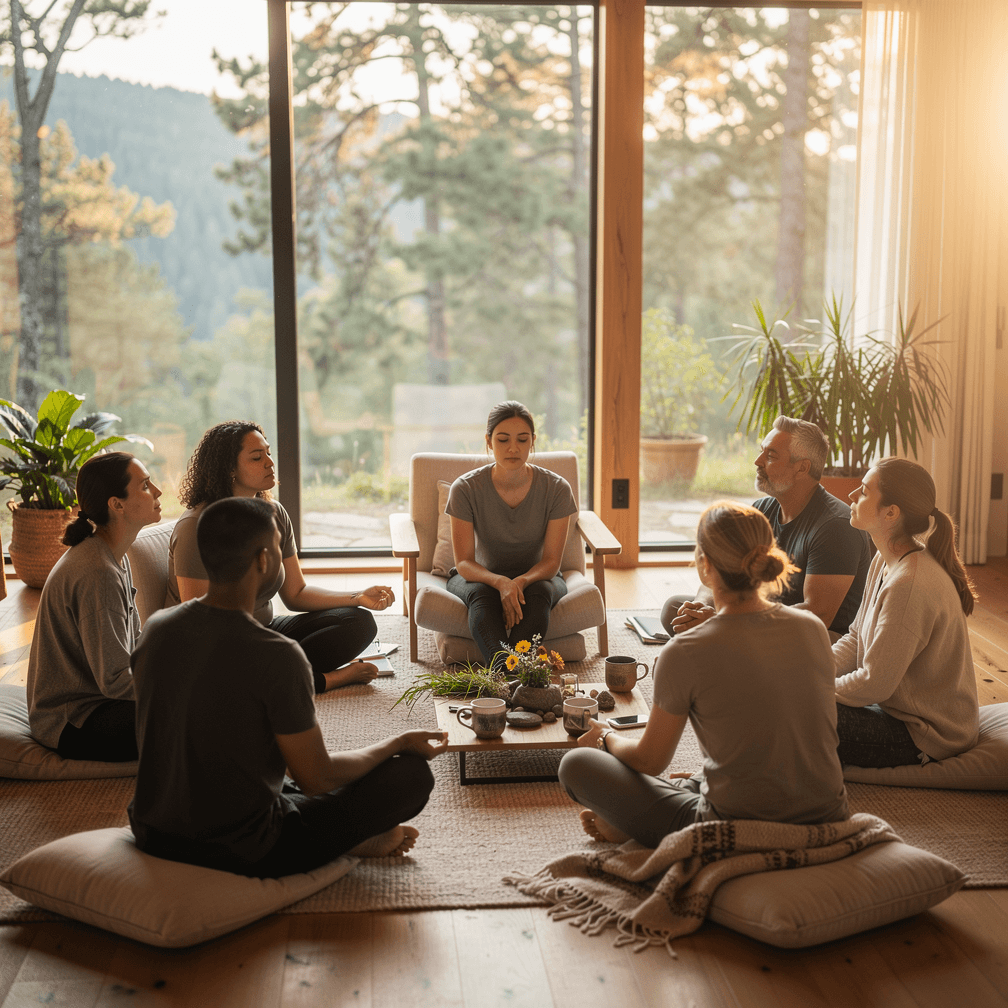
Short answer: Legal in the US means ketamine-assisted programmes run by licensed medical providers, cannabis-assisted retreats in the 24 adult-use states plus DC, kambo ceremonies, substance-free breathwork intensives, and integration-only weeks. Ayahuasca, psilocybin, ibogaine and 5-MeO-DMT on US soil are excluded here because the legal picture is too unsettled to recommend.
We get a version of this question almost every week: “Where can I do a legal plant medicine retreat in the US?” The honest answer is that the phrase covers a wider, stranger landscape than most marketing pages admit.
Some retreats are fully legal because they use substances that are federally scheduled but administered in clinical frameworks. Some are legal because the modality, breathwork, fasting, somatic work, never involved a controlled substance in the first place. And some operate in legal gray zones that we wouldn’t recommend to a friend.
This is our shortlist of the best wellness retreats 2026 has to offer in the plant-medicine-adjacent category, along with the framework we use to evaluate them.
What “plant-medicine-adjacent” actually means
The term gets used loosely, so it helps to be precise. When we say adjacent, we mean a retreat that produces effects, depth, integration, and community, similar to what people seek from ayahuasca or psilocybin work, without using a federally illegal substance on US soil.
That covers a few real categories:
- Ketamine-assisted programs run by licensed medical providers, legal in all 50 states when prescribed appropriately.
- Cannabis-assisted retreats in states where adult-use cannabis is legal (currently 24 states plus DC), structured around intentional dosing rather than recreation.
- Kambo ceremonies, which use the secretion of a tree frog applied to small skin burns. Not a controlled substance federally.
- Breathwork intensives (holotropic, conscious-connected, Wim Hof variants) that produce non-ordinary states without any substance at all.
- Integration-only retreats for people who have done plant medicine work abroad or in indigenous contexts and need structured time to metabolize it.
What we deliberately exclude from this list: anywhere claiming to offer ayahuasca, psilocybin, ibogaine, or 5-MeO-DMT on US soil outside of Oregon’s regulated psilocybin services or Colorado’s natural medicine program. Those exist, some are church-affiliated and operate under religious exemption, but the legal picture is too unsettled for us to recommend in a general guide.
How we picked
Four things mattered. First, the facilitators have real credentials and traceable training, not just a website. Second, screening is rigorous (medical history, medication interactions, mental health background) before anyone gets a deposit invoice. Third, integration is built in, not sold as an upsell. Fourth, the cancellation and refund terms are reasonable for a program of this depth.
Texas Hill Country: breathwork and somatic intensives
For a wellness retreat texas hill country has become a surprisingly strong option for ceremony-style work without controlled substances. The terrain helps. Limestone canyons, spring-fed rivers, cypress shade, all within ninety minutes of Austin’s airport. Several operators near Wimberley and Dripping Springs now run four and five day intensives combining holotropic-style breathwork, somatic experiencing, and group integration circles.
What we like about the better programs here: small cohorts (eight to fourteen people), trauma-informed facilitators with actual clinical backgrounds, and meals that don’t pretend a juice fast is the same as nourishment. The breathwork sessions themselves run two to three hours and can produce genuinely deep states. People cry, shake, laugh, sometimes have what they describe as visionary experiences. No substances involved.
Between sessions, contrast therapy is a common addition. If you’re flying into Austin a day early, the cold plunge Austin and sauna Austin scene is well developed now, and a session before the retreat can settle the nervous system in a useful way.
Sedona: integration and quiet
A sedona wellness retreat tends to attract a different person than a Hill Country one. The energy is slower, more contemplative, more oriented toward people processing something they’ve already done elsewhere.
Several Sedona operators specialize in integration-only programs, five to seven days of guided journaling, somatic practice, hiking, and small-group dialogue for people who came back from Costa Rica or Peru or Jamaica with experiences they haven’t fully metabolized.
Integration is the part most retreat marketing skips, and it’s the part that actually determines whether a profound weekend becomes a durable shift or a story you tell at dinner. The Sedona programs we’d recommend are explicit about this: they don’t promise new revelations, they help you finish processing the ones you already had.
Ketamine-assisted retreats: Oregon, Colorado, and a few East Coast clinics
Ketamine-assisted therapy is the most legally clear option on this list. It’s a scheduled medication, prescribed and administered by licensed providers, often with a licensed therapist in the room or available between sessions. A growing number of clinics now offer it in retreat format: three to six dosing sessions over a week, with preparation and integration built around them.
The better programs are clear that ketamine is a tool, not a sacrament, and that the heavy lifting happens in the therapy conversations around it. Costs run $4,500 to $9,000 for a week, and insurance rarely covers the retreat format even when it would cover individual sessions. Worth asking.
Cannabis-assisted ceremony in legal states
This is a smaller category and a more uneven one. In legal states, a handful of operators run intentional cannabis ceremonies that look more like a guided journey than a recreational session: set and setting, dosing protocol, eye shades, music, integration the next day. Done well, it can be meaningful. Done poorly, it’s a group of strangers being too high in a yurt.
We’d ask three questions before booking: who is the facilitator, what’s their training, and what happens if someone has a difficult experience. If those answers are vague, pass.
Kambo, with caveats
Kambo retreats are legal in the US and there’s a real tradition behind the practice. We include them here with two honest caveats. The physical experience is intense (vomiting, swelling, transient changes in blood pressure) and the safety record depends entirely on the practitioner’s training and screening protocols.
If you’re considering it, look for practitioners certified through the International Association of Kambo Practitioners, ask about contraindications, and be honest about your cardiovascular history.
How to book without getting burned
A few practical notes if you’re ready to book a wellness retreat online for 2026. Pay with a credit card when you can, the chargeback protection matters for programs this expensive. Read the cancellation policy before the deposit, not after.
Talk to the lead facilitator on a video call before committing, any program worth doing will offer one. And give yourself a full week of soft landing on the other side, no major meetings, no big decisions, no flights to another time zone.
The right retreat at the right time can be one of the most useful weeks of your life. The wrong one is expensive and occasionally harmful. Slow down enough to tell the difference.
A short closing note
We update this guide as programs change and as the legal picture shifts, which it will. If you’ve been to one of these retreats and want to tell us what was accurate or what wasn’t, we read every note. The goal here is the same as everywhere on this site: help people find care that actually helps, and steer clear of the rest.