Plant-medicine-adjacent retreats, explained: what 'adjacent' actually means
No psychedelics on site, but a container designed to support the work around them. Here's what these retreats include, who they suit, and how to vet one before you book.
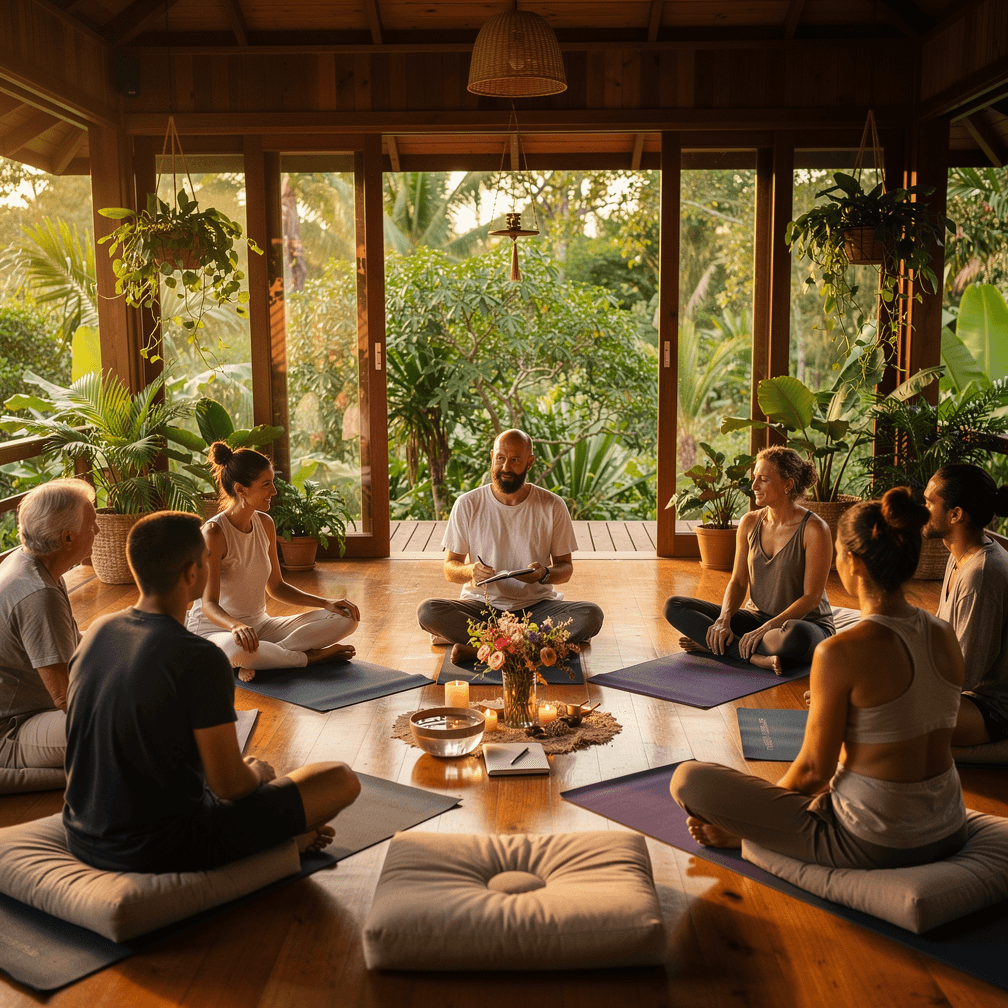
Short answer: Adjacent means no psychedelics are served: no psilocybin, ayahuasca or iboga, and nobody sits with you in ceremony. These retreats prepare you for, or help you integrate, legal work done elsewhere, using breathwork, somatic therapy, group process and time outdoors. Vet the named facilitators and the screening process first.
The phrase “plant-medicine-adjacent” started showing up on retreat brochures around 2022 and has only gotten more common since. It’s doing real work in the language, and it’s also occasionally used as cover. This guide is meant to help you tell the difference, and to decide whether one of these retreats is actually what you’re looking for.
What “adjacent” means, plainly
Adjacent means the retreat does not administer psilocybin, ayahuasca, peyote, iboga, or any other federally scheduled substance. No one is dosing you. No one is sitting with you in ceremony. If a program in the United States is telling you otherwise on a public website, that’s a separate conversation and a different kind of risk.
What these retreats do offer is the container around plant medicine work: preparation before a journey you’ll take legally elsewhere (Oregon, Colorado, Jamaica, the Netherlands, a clinical trial), or integration after one. Some are built specifically for veterans or trauma survivors who have done MDMA or ketamine work in a clinical setting.
Others serve people coming back from an ayahuasca retreat abroad who need a soft landing.
The tools are familiar: breathwork, somatic therapy, group process, time in nature, sober community, journaling, body work, sometimes IFS or Hakomi-trained facilitators. None of these tools require a substance to be useful. They’re also the tools most experienced facilitators will tell you matter more than the medicine itself.
The two flavors you’ll see
Preparation retreats
These run three to seven days, typically before a scheduled journey. The work is about clarifying intention, mapping your nervous system’s baseline, and practicing the skills you’ll actually need in an altered state: staying with discomfort, breathing through fear, trusting the people in the room.
A good preparation retreat will also surface whether you should be doing this at all. Some people leave and cancel their booked ceremony, and a thoughtful facilitator will treat that as a successful outcome.
Integration retreats
These happen days, weeks, or months after a journey. The premise is that insights from a single session are perishable; without integration, most of what felt revelatory dissolves back into ordinary habit within a quarter. Integration retreats give structure to the work of translating an experience into changed behavior.
Expect group sharing circles, one-on-one sessions with a therapist or integration coach, embodiment practice, and a lot of quiet.
Where they tend to happen
The Texas Hill Country has become a real hub for this work, partly because of proximity to Austin’s recovery and therapy communities, partly because the land itself lends to it. Live oak, limestone, spring-fed creeks, dark skies. A handful of operators between Wimberley, Dripping Springs, and Fredericksburg run preparation and integration programs through most of the year.
Sedona is the other obvious one. The red rock landscape has a long association with this kind of inner work, for better and for worse, and a sedona wellness retreat in this category will usually lean more into somatic and energetic modalities than a Texas program might. Both can be legitimate. Both can be theater. The land doesn’t tell you which is which; the facilitators do.
You’ll also find good programs in the Blue Ridge, the Catskills, Joshua Tree, and pockets of the Pacific Northwest. When we put together our list of the best wellness retreats 2026 in this category, geography mattered less than three other things: who’s leading, what their training is, and how they handle the people who shouldn’t be there.
What a day usually looks like
Mornings are quiet. Most programs start with movement, gentle yoga or a walk, before any talking. Breakfast is usually communal and often silent. The main therapeutic block runs from mid-morning into early afternoon: group circle, breathwork session, or somatic work. There’s a long break in the middle of the day. People nap. People journal. People sit by water.
Late afternoon brings a second block, often more body-based or experiential. Dinner is communal. Evenings vary: some programs do a closing circle, some do sound work, some leave the night open. Phones are typically collected on arrival or stored voluntarily. Alcohol is almost universally off the table for the duration.
Who these retreats actually suit
People who have done, or are about to do, legal psychedelic work and want serious support around it. Veterans working with PTSD through clinical MDMA or ketamine programs. People with a steady therapy relationship who want a concentrated container for a specific piece of work. People in long-term recovery from substances who are exploring whether this path is even appropriate for them.
Who they don’t suit
People in acute crisis. People hoping the retreat will secretly be “more than adjacent.” People with a personal or family history of psychosis, bipolar I, or schizophrenia who are using these retreats as a step toward unsupervised use. People who want to skip the slow work of therapy by compressing it into a week. Our guide to wellness with bipolar disorder covers why that history rules these retreats out.
A good operator will screen for these in intake and turn applicants away. If no one asks you hard questions before taking your deposit, that tells you something.
How to vet one before you book
Ask who is leading, by name, and look them up. Look for licensed clinical training (LCSW, LPC, PhD, MD, PsyD), or for somatic credentials with verifiable lineage (Somatic Experiencing, Hakomi, Sensorimotor, certified breathwork schools with named teachers). Ask what their screening process is and what would cause them to decline an applicant.
Ask what happens if someone has a difficult night. Ask whether there’s clinical backup on call.
Ask about group size. Eight to fourteen participants with two or three facilitators is a reasonable range. Twenty-five participants and one charismatic leader is not.
Read the cancellation policy before you put money down. Reputable programs offer a clear refund window and a payment plan. They publish their address. They have a real phone number. You can book the wellness retreat online through a normal checkout, not by wiring money to a personal account.
A quick note on the Austin connection
A lot of the people running and attending these Hill Country programs also keep regular practices in town between retreats. The same nervous system work shows up in shorter form at a cold plunge austin studio or a sauna austin session a few times a week.
None of that is a substitute for the deeper container of a retreat, but it’s worth saying: the daily practice is where the actual change lives. The retreat just gives it shape.
The honest summary on adjacent retreats
Plant-medicine-adjacent retreats are useful when they’re honest about what they are. They’re a structured, sober, well-facilitated week of inner work that happens to be designed for people whose path includes legal psychedelic experiences elsewhere. They are not ceremonies. They are not a workaround. At their best, they make the medicine work safer, deeper, and more durable. At their worst, they’re spa weekends with extra vocabulary.
The difference, almost always, is the facilitators. Ask about them first.