Best wellness retreats in Arizona and the desert for 2026
Sedona's red rocks and the wider Arizona desert draw people for a reason: the landscape itself feels like a reset. Here's how to choose a retreat that uses it, and how to handle the heat.
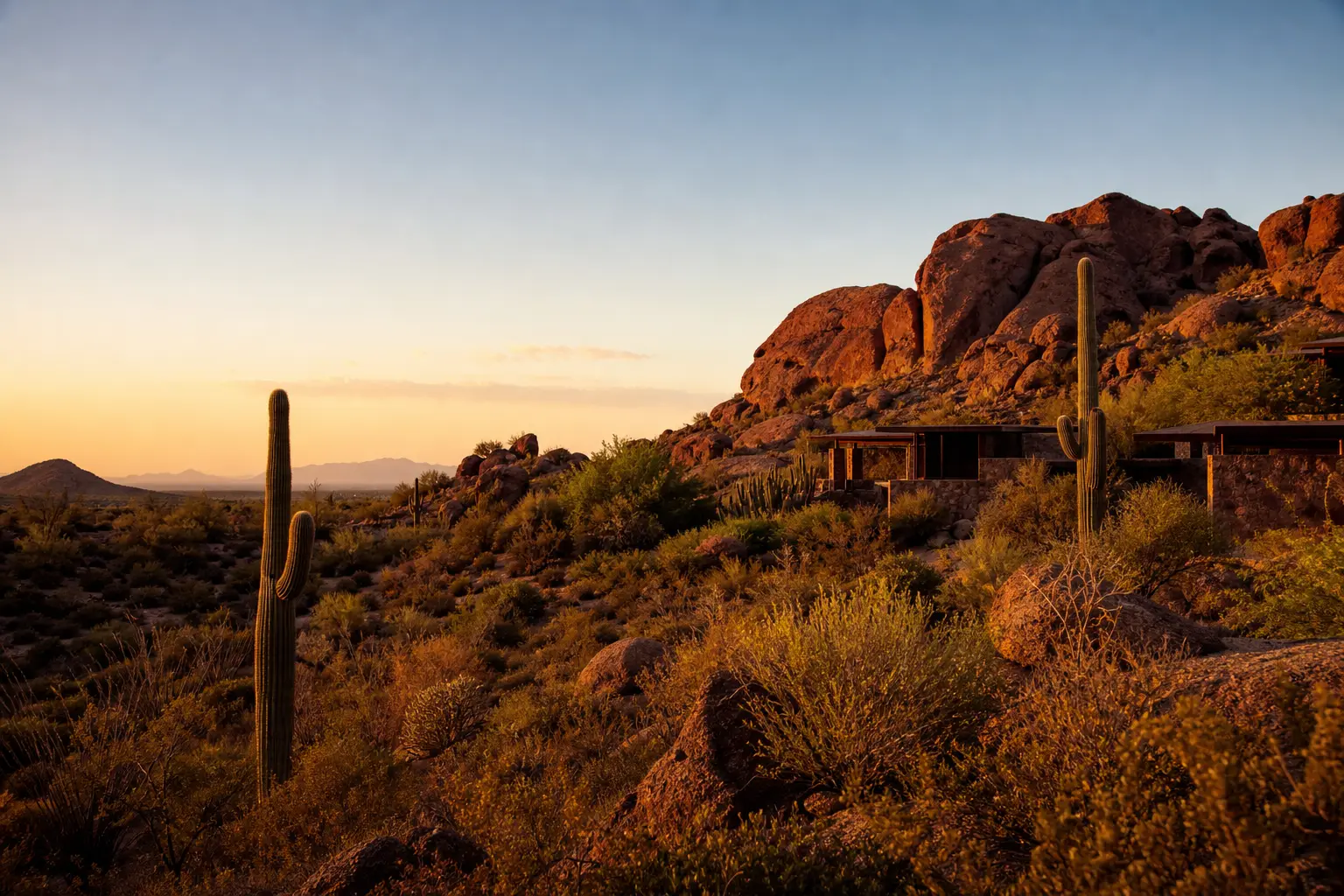
Short answer: Go between October and April; midsummer desert heat is brutal. Decide the format before the town: Sedona has the widest selection and the heaviest marketing, Tucson and the southern desert are quieter and better for nature immersion, Scottsdale and Phoenix are polished and easy. Expect $250 to $500 a night mid-range, $600 to $900 at resorts.
Go between October and April, decide your format before you pick a town, and treat anything that leans spiritual with the same scrutiny you would give a medical claim. Sedona has the widest selection and the heaviest marketing. Tucson and the southern desert are quieter and better for real nature immersion. Scottsdale and Phoenix are the polished, easy-logistics option. Expect roughly $250 to $500 a night for mid-range retreats and $600 to $900 or more at the resort-style properties, before flights and transfers.
Why the desert works as a reset
There is a reason the Arizona desert has become one of the country’s wellness magnets. The vast open space, the dramatic red rock, the dry warmth, and the quiet all make a reset feel natural, and Sedona in particular has built a whole culture around it.
Arizona offers the full range, from spiritual and energy-focused retreats to polished desert spa resorts, with the landscape doing much of the work. It is also one of the few regions where the setting alone changes how people behave. The light and the silence make it easier to stop checking your phone, which is half of what most people are actually buying.
We do not take placement fees, so nothing here is paid for, and we only recommend what we would send a friend to.
Desert retreat formats worth the trip
Nature-immersion and reset retreats. Built around the desert, hiking, and big-sky stillness. The format that genuinely uses the setting, and the one that suffers least from thin programming, because the landscape is doing the work. Our guide to nature immersion and wilderness retreats covers what separates a good one from a hotel with a trailhead.
Spiritual and energy-focused retreats. Especially around Sedona, which is known for this. Some are deep and well-led. Others lean heavily on vague claims about vortexes and energy fields, so vet the facilitators and trust your read. If the sales page cannot say plainly what happens each day, that is your answer.
Yoga and meditation retreats. Plentiful across the state, from gentle to intensive, with the desert as a striking backdrop. Sunrise sessions are the draw here, and they are genuinely worth the early alarm in the cooler months.
Desert spa and resort retreats. Comfort-first stays, especially around Scottsdale. Genuinely restful, though closer to a luxury break than deep inner work. Nothing wrong with that if it is what you want, but price it as a vacation rather than a program.
Plant-medicine-adjacent retreats. Arizona has these too, and the category is easy to misread. Start with our explainer on what “adjacent” actually means before you book anything in this space.
How Arizona’s retreat regions compare
| Region | Best for | Season sweet spot | Rough nightly range |
|---|---|---|---|
| Sedona | Widest choice, spiritual and yoga work | Mar to May, Sep to Nov | $300 to $800 |
| Tucson and southern desert | Nature immersion, serious resets | Nov to Apr | $250 to $700 |
| Scottsdale and Phoenix | Spa-and-resort comfort, easy logistics | Nov to Apr | $400 to $900+ |
| Small towns and remote desert | Real quiet, intimate groups | Oct to Apr | $200 to $500 |
Those ranges assume meals and core sessions are included. Treatments, private rooms, and transfers usually are not.
Sedona. The headline destination: red rock scenery, a dense wellness and spiritual scene, and the widest range of retreats. Also the most marketing to filter through. Our Sedona guide goes deeper on the specific formats there.
Tucson and the southern desert. Quieter and more rugged, strong for nature immersion and serious resets away from the crowds, with some well-known wellness resorts.
Scottsdale and Phoenix. The most polished and accessible, leaning toward spa-and-resort wellness with easy logistics. If you want to build your own day rather than book a program, the Scottsdale sauna and cold plunge studios and Phoenix recovery studios are a cheaper way in.
The wider desert and small towns. More remote, intimate retreats for people who want real quiet.
The season and heat reality
This is the honest part. The Arizona desert gets genuinely extreme in summer, and a retreat in July heat is a very different experience than one in spring.
For most people the comfortable windows are fall through spring. Midsummer is best avoided unless a retreat is built around it or sits at higher, cooler elevation like parts of Sedona, where the altitude takes real heat off the afternoon. Even then, expect the schedule to shift outdoor work to early morning and late evening.
Whenever you go, the dry desert air dehydrates you faster than you expect, and you will not notice sweating because it evaporates immediately. Drink more than feels necessary, especially if the program includes sauna, sweat lodge, or long hikes.
Summer pricing is worth knowing too: the resort properties around Scottsdale drop noticeably in the hot months for exactly this reason.
What to ask before booking a desert retreat
Format first. Decide between nature immersion, spiritual work, a movement focus, or a resort stay before the photos pull you in.
The season and the daily timing. Confirm when outdoor sessions actually happen, especially outside the cooler months.
Who is leading it. For spiritual or therapeutic work especially, the facilitators’ training matters most. Our guide to checking a practitioner’s credentials covers what to ask for and what a good answer sounds like.
The all-in cost. With flights, transfers, the rental car, and the resort premium in places like Scottsdale, treat the total as the real price. The retreat cost guide breaks down what each budget tier actually gets you.
Elevation. Sedona sits high enough that some visitors feel it on day one. If you are coming from sea level and the schedule opens with a hike, plan an easy first day.
FAQ: Arizona and desert wellness retreats
When is the worst time to book an Arizona retreat? June through August in the low desert, which includes Phoenix, Scottsdale, and Tucson. Daytime highs make outdoor programming unpleasant or unsafe, and the retreats that run anyway tend to move everything indoors. Sedona’s elevation makes summer more tolerable, but it is still hot.
Is Sedona worth it, or is it too commercial? Both are true. Sedona has genuinely excellent practitioners and the best red rock scenery in the state, and it also has more vague spiritual marketing per square mile than anywhere else in the country. Judge the individual retreat, not the town.
How does Arizona compare to New Mexico for a desert retreat? New Mexico tends to be quieter, cooler at elevation, and less commercially developed, with a stronger arts and traditional healing thread. Arizona has more choice and easier flights. Our Santa Fe guide covers the alternative if the Sedona scene is not for you.
Do I need to be fit for a desert retreat? For most of them, no. Nature-immersion retreats usually offer graded hike options, and resort programs are built around comfort. Ask for the actual distance and elevation gain of any hike on the schedule rather than trusting the word “gentle”, and factor in that heat makes everything harder than the same walk at home.
The bottom line on Arizona retreats
Arizona is one of the best desert resets in the country if you choose a retreat that actually uses the landscape, vet anything that leans spiritual, and get the season right. Decide the format, plan around the heat, and count the real all-in cost rather than the nightly rate.
If you are comparing big-nature options, our guides to Colorado and the Rockies and Southern California use the same approach, and the first-timer’s checklist covers how to choose well.
Arizona is also where the price line in this category is easiest to see: our head-to-head on Civana vs Miraval compares the state’s accessible wellness resort against its famous inclusive one.