Best wellness retreats in the Texas Hill Country for 2026
Rolling hills, spring-fed rivers, and wide-open ranch land make the Hill Country an easy, central place to reset. Here's how to choose a retreat that uses it, and how to read the season.
Short answer: Book a ranch, river or movement retreat in the Hill Country for fall or spring, when the weather cooperates and the landscape does half the work. Summer trips work only at places built around early mornings, shade and the spring-fed rivers. Most properties sit a short drive from Austin or San Antonio.
The verdict on the Hill Country
The short answer: the Hill Country is one of the easiest genuine resets in the country, and the right move is to book a ranch, river, or movement retreat for fall or spring, when the weather cooperates. Summer trips can work, but only at retreats built around early mornings, shade, and water. Get the season right and the landscape does half the work for you.
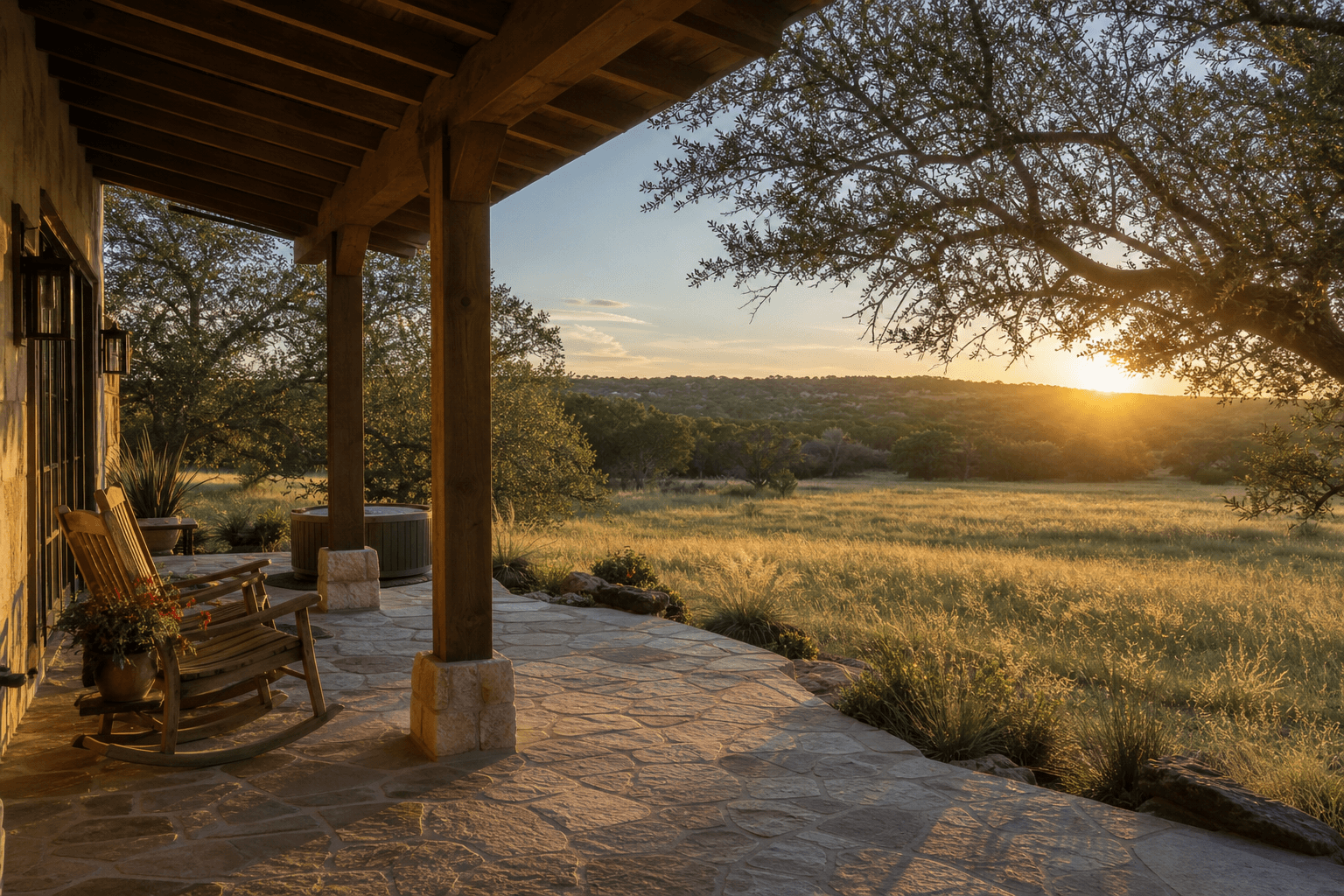
The stretch of central Texas between Austin and San Antonio has a soft, rolling beauty that surprises people who picture Texas as flat and dry. Spring-fed rivers, live oaks, wildflowers, and wide ranch land make it a genuinely calming place, and it’s reachable from two major airports. It offers everything from rustic ranch retreats to polished resort stays.
This guide covers the formats, how the area works, and the thing people underestimate: the heat and the season. We don’t take placement fees, so nothing here is paid for.
Hill Country formats worth the trip
| Format | Best for | Season sensitivity |
|---|---|---|
| Ranch and nature retreats | Big-sky rest, hiking, disconnection | High: outdoor-heavy days need mild weather |
| River and water retreats | Restful, water-adjacent stays | Lower: the rivers are the summer refuge |
| Yoga and movement retreats | Structure and a group | Moderate: outdoor practice moves indoors in summer |
| Resort and spa retreats | Comfort-first recovery | Low: air conditioning changes the math |
Ranch and nature retreats are built around the land, the rivers, hiking, and rest, often on working or former ranch land. This is the format that truly uses the Hill Country.
River and water-focused retreats lean on the spring-fed rivers and swimming holes that are a local signature. The water stays cool year-round, which makes these the most summer-proof option.
Yoga and movement retreats run from gentle to active, often outdoors in the cooler months. Read the schedule against the calendar before you book.
Resort and spa retreats are comfort-first stays, some well known. Genuinely restful, though closer to a luxury break than deep inner work. If you are weighing that trade-off, our hotel spa vs standalone retreat comparison covers it.
How the area works
The Hill Country isn’t one town but a spread of small towns, ranches, and river valleys west of Austin and north of San Antonio: places like Wimberley, Fredericksburg, Dripping Springs, and the surrounding countryside. Most retreats sit on rural land a short drive from those hubs, which means easy airport access paired with genuine quiet once you arrive.
That geography is the region’s quiet advantage. You can land in Austin at noon and be watching the light go gold over a meadow by late afternoon, no connecting flight, no mountain pass. If you only have a day rather than a weekend, Austin’s day wellness scene covers saunas, cold plunges, and breathwork in the city itself.
The season and heat reality
This is the honest part. Central Texas summers are long and hot, and a July or August retreat with much outdoor activity can be tough. The comfortable windows are broadly fall and spring, when the weather is mild and the spring wildflowers are a highlight. Winters are generally mild but variable.
If summer is your only window, don’t write the trip off; just choose for it. Look for river access, early-morning scheduling, and real indoor space, and ask directly how the retreat runs its hot-month programming. Whenever you go, hydrate more than feels necessary. For the broader timing question across regions, our guide to when to go on a retreat lays out the calendar.
What Hill Country retreats cost
Expect a wide range: simple ranch stays and small group retreats often land in the low hundreds per night per person with meals, while polished resort retreats run considerably more. All in, a multi-day Hill Country trip typically costs less than the equivalent in coastal California or a destination spa, and the short travel from Texas’s own cities keeps the total down. Our retreat cost guide breaks down what the tiers buy you nationally.
What to ask a Texas retreat before booking
Format first. Decide between a ranch-and-nature focus, a river or water focus, a movement focus, or a resort stay before the photos pull you in.
The season plan. Confirm the timing and, for summer trips, exactly how they handle heat and outdoor sessions.
Who’s leading it. For any therapeutic or specialized work, the facilitators’ training matters most.
The all-in cost. With travel to a rural property and any resort premium, treat the total as the real price.
FAQ: Hill Country retreats
When is the best time for a Hill Country retreat? Fall and spring. Spring adds wildflowers; fall adds stable, mild weather. Summer works only at retreats designed around heat, and winter is usually fine but less predictable.
Do I need a car in the Hill Country? Usually yes. Most retreats sit on rural land outside towns like Wimberley or Fredericksburg. Some offer airport pickups from Austin or San Antonio, so ask before renting.
Is the Hill Country good for a first retreat? Yes. Easy access, gentle landscape, and a wide range of formats make it forgiving. Pair it with our first-timer’s checklist and you’re well covered.
How does the Hill Country compare to Sedona or Big Sur? It’s the accessible, lower-cost option of the three, with water instead of drama. Our Sedona vs Big Sur vs Hill Country head-to-head makes the direct comparison.
The bottom line on Hill Country retreats
The Texas Hill Country is an easy, central, and genuinely calming reset if you choose a retreat that uses the land and rivers and you get the season right. Decide the format, plan around the summer heat, and account for the real all-in cost.
If you’re comparing options, our guides to Arizona and Colorado and the Rockies use the same approach.