The best yoga retreats in the US for 2026: an honest regional guide
Where to go, what each region is actually like, and how to pick a retreat that matches what you need right now.
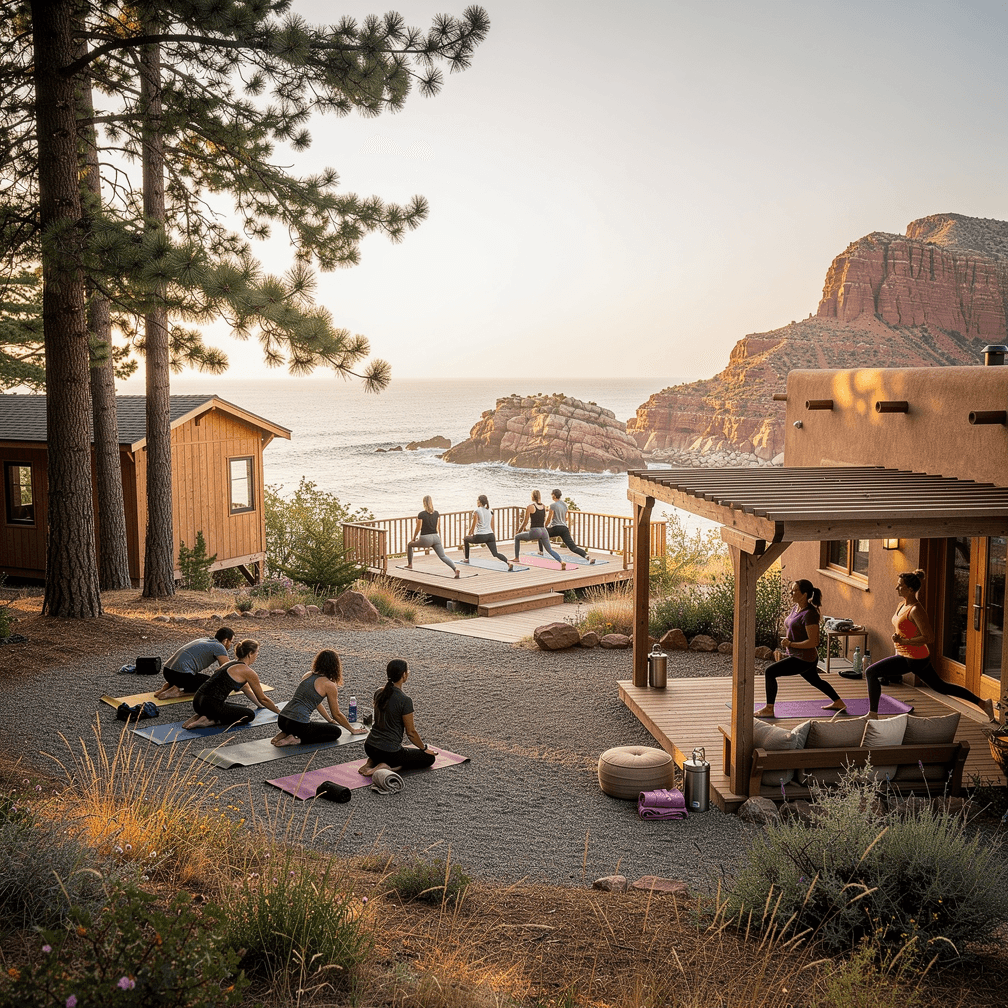
Short answer: Pick the region by the rest you’re short on. Texas Hill Country for warmth, 70-degree rivers and an easy first retreat; Sedona at 4,500 feet when you want the landscape to do the work; the Blue Ridge to deepen an existing practice; the Northern California coast for ocean, booked six to nine months out.
The phrase “best wellness retreats 2026” gets used a lot, and most of the lists you find are roughly the same forty places shuffled into a different order. This guide is narrower and more useful: a regional read on where yoga-centered retreats are strongest in the US right now, who each region actually suits, and a few practical notes on booking without losing a whole Saturday to tabs.
We spent the last year visiting properties, talking to lead instructors, and watching how guests came out the other side. What follows is what we’d tell a friend.
How to think about picking a region
Yoga retreats in the US tend to cluster around a few landscapes, and the landscape matters more than people expect. A week of asana hits very differently next to a river in Texas than it does on red rock in Arizona or under cedars in the Pacific Northwest. Before you compare itineraries, it helps to be honest about which of these you want:
- Quiet and warm, with long pool afternoons and gentle hikes.
- Big-landscape silence, where the geology does some of the work for you.
- Cool, green, and rainy, with saunas and woodstoves.
- Coastal, with sea air and an early bedtime.
The right retreat for you in 2026 is mostly the one whose setting matches the kind of rest you’re short on.
Texas Hill Country: warm water, cedar shade, and a softer pace
A wellness retreat in the Texas Hill Country is the answer for a lot of people who think they want Sedona and actually want this. The terrain rolls instead of looming. Spring-fed rivers stay around 70 degrees year-round. Cedar and live oak give real shade, and the small towns nearby (Wimberley, Fredericksburg, Comfort) make for an easy half-day off the property.
What the best Hill Country retreats do well in 2026:
- Two-a-day yoga without grinding you down. Morning vinyasa or hatha, a long open afternoon, and a candlelit yin or restorative class before dinner. Most properties teach to a mixed-level room and mean it.
- River time as part of the practice. Floating, swimming, or simply sitting on a limestone bank counts as the nervous system work it is.
- Hill Country food. Local produce, pasture-raised eggs, and good bread. Vegetarian by default, with thoughtful options for everyone else.
Who it suits: people driving in from Texas, Oklahoma, Louisiana, or anywhere the flight to Arizona feels like more than the retreat is worth. Also a strong pick for first-time retreat guests, the landscape is welcoming rather than dramatic, and that lowers the activation energy.
Who it doesn’t suit: anyone who wants altitude, desert, or a sense of being far from anywhere. The Hill Country is rural but not remote.
Sedona: red rock, altitude, and the meditative practice you didn’t plan on
A Sedona wellness retreat earns its reputation. The red rock formations are genuinely striking, the air at 4,500 feet changes how you sleep and breathe, and the local guiding community has spent decades figuring out how to teach in this terrain.
The better 2026 programs in Sedona pair a steady yoga practice with one or two of: guided silent hikes, breathwork at sunrise on the rocks, sound sessions in the evening, and trauma-informed somatic work in smaller groups. The risk in Sedona is over-programming. Look for itineraries with real white space.
A practical note: altitude is real. If you’re coming from sea level, build in a slow first day. Drink more water than feels reasonable. The yoga will feel harder for 48 hours and then easier than it does at home.
Who it suits: people who want the landscape to do some of the spiritual heavy lifting, and who don’t mind a 90-minute transfer from Phoenix.
Who it doesn’t suit: anyone who finds dry heat punishing, or who wants to be near a coast.
The Blue Ridge and Asheville: green, cool, and quietly serious
Western North Carolina has become one of the most interesting yoga retreat regions in the country. The properties tend to be smaller, the teaching tends to be unhurried, and the food culture in and around Asheville is excellent. Late spring and early fall are the windows to aim for in 2026.
This region rewards retreat-goers who already have a home practice and want to deepen it. Expect more philosophy, more pranayama, and longer holds than you’d find on a brighter, sunnier itinerary.
Big Sur and the Northern California coast
If you want ocean, fog, hot springs, and a feeling of being held by big trees, this is the coast for it. Retreats here are not cheap and tend to book six to nine months out. Plan for 2026 dates now if a coastal week matters to you.
The trade-off is weather. Even in summer, mornings are gray and cool. Pack like you’re going to Maine and you’ll be glad.
The Pacific Northwest: cedar, sauna, and cold water
The sauna and cold plunge culture that shows up so clearly in Austin and Sedona has deeper roots in the Pacific Northwest. Yoga retreats on the Olympic Peninsula, the San Juans, and the Oregon coast often build a daily sauna and cold dip into the rhythm of practice. It works.
The combination of asana in the morning, sauna in the afternoon, and a short cold plunge before dinner settles the nervous system in a way that’s hard to match.
A short note on Austin if you’re flying in
A fair number of people pair a Hill Country retreat with a few days in Austin on either end. If that’s your plan for 2026, two practical bookmarks:
- Cold plunge in Austin. The studio cold plunge scene has matured. Most reputable spots run between 38 and 45 degrees and offer single sessions without a membership. Two or three minutes is plenty.
- Sauna in Austin. Traditional Finnish sauna and infrared are both well represented. If you’re acclimating before a Sedona trip, a couple of traditional sauna sessions in the week beforehand makes the altitude adjustment noticeably easier.
Both pair naturally with the kind of retreat we’re describing, and both are easy to fit into a travel day.
How to book a wellness retreat online without losing the weekend
A short, practical checklist we use ourselves:
- Decide the region first, then the dates. Most people do this backwards and end up with an itinerary that doesn’t match the rest they need.
- Read the daily schedule, not the marketing copy. A retreat is its schedule. If it isn’t published, ask for it.
- Ask who the lead instructor is and what their teaching lineage is. A good answer is specific. A vague answer is a flag.
- Check the cancellation policy before the price. A flexible policy on a $2,800 week is worth more than a $200 discount on a rigid one.
- Book directly when you can. Most properties take direct online bookings in 2026, and you’ll usually get a better cancellation window and a real human to email if something changes.
What we’d choose for 2026, briefly
If you’re new to retreats and want warmth and water, look at the Texas Hill Country in April, May, or October. If you want the landscape to change you, look at Sedona in March or November.
If you have a steady practice and want to go deeper, look at the Blue Ridge in May or September. If you want the ocean and you can plan ahead, look at the Northern California coast in early summer.
None of these are the single best choice. They’re four good ones, and the right one is the one that matches the rest you actually need this year.
Related reading on yoga retreats
- Best women’s wellness retreats in the US for 2026: a grounded guide to circles, cabins, and quiet weeks
- Best wellness retreats in the Texas Hill Country for 2026
- How much does a wellness retreat cost? An honest 2026 price breakdown
And if you have seen the novelty end of the spectrum advertised, our honest read on goat yoga covers what it is and is not.