Breathwork retreats explained: Holotropic vs Wim Hof vs SOMA
Three breathwork modalities, three completely different weekends. Here's which one matches what you're actually looking for.
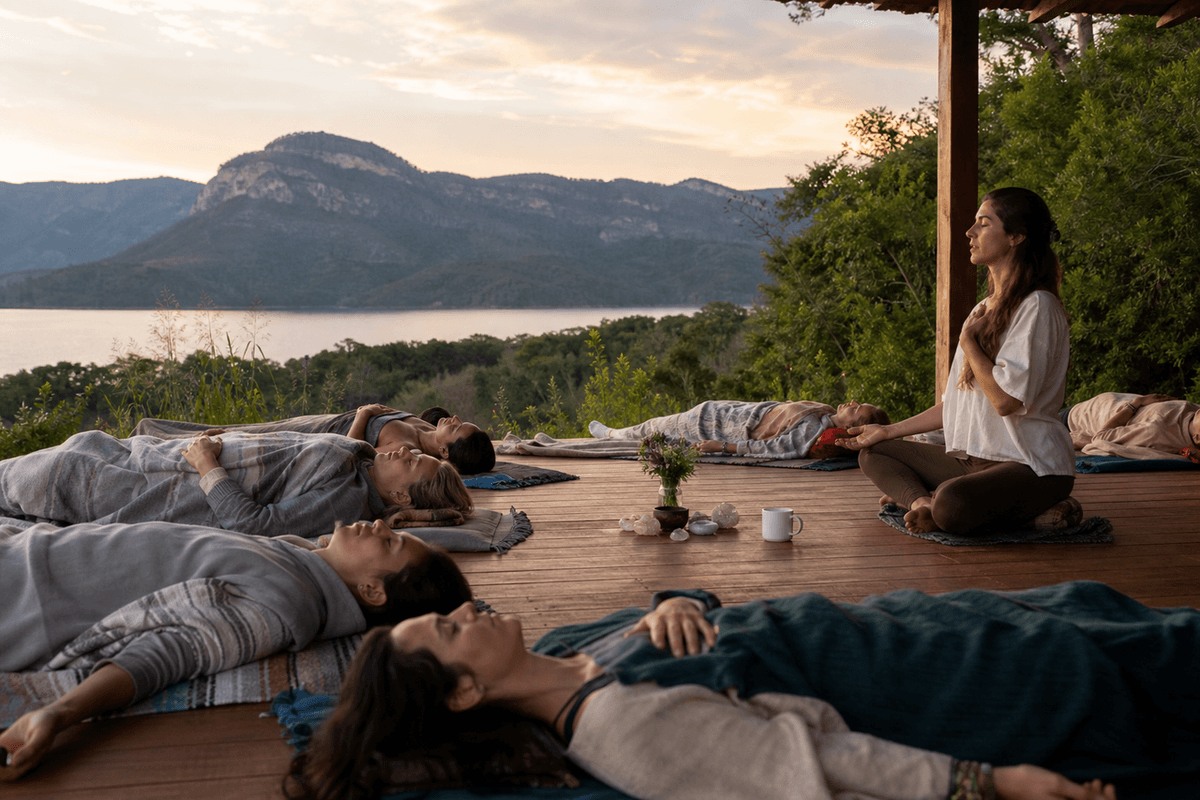
Short answer: Holotropic is the deepest: two to three hours of continuous breathing with heavy emotional release. Wim Hof is the most physical, short rounds of power breathing paired with ice baths around 38°F. SOMA sits in the middle, structured hour-long music-driven sessions, and is the most accessible first breathwork retreat.
Why this guide exists
“Breathwork retreat” is a category, not a product. Three people can book three different weekends, all labeled breathwork, and walk away with completely different stories, one floated through a four-hour emotional release, one stood in an ice bath at sunrise, one had what they’d describe as a psychedelic trip without taking anything.
Here’s an honest, researched comparison of all three so you can pick the one that matches what you’re actually after.
The short version: Holotropic, Wim Hof, SOMA
- Holotropic, long sessions (2, 3 hours), heavy emotional release, closest thing to a non-chemical psychedelic. Best for people doing trauma work or curious about altered states.
- Wim Hof, short rounds of hyperventilation paired with cold exposure. Best for people who want energy, resilience, and a measurable physical practice.
- SOMA, structured three-part breath sessions (around an hour), music-driven, less intense than Holotropic but more emotional than Wim Hof. Best for the middle of the spectrum.
If you want one line: Holotropic is the deepest, Wim Hof is the most physical, SOMA is the most accessible.
Holotropic Breathwork
Developed by Stanislav Grof in the 1970s after LSD research was made illegal. The protocol is simple and the experience is not: you breathe deeply and continuously for two to three hours while loud, evocative music plays. There’s a facilitator and usually a partner (a “sitter”) who watches over you.
What a session feels like
The first 20 minutes feel like exercise. Your hands and face start to tingle from the change in blood chemistry. Around the 40-minute mark, things shift. People cry. People shake. People see things behind closed eyes. You may not. The experience is highly variable, which is part of why facilitators don’t promise outcomes.
Aftermath is real. Most retreats build in integration time, journaling, sharing circles, a quiet afternoon, because you don’t walk straight from a Holotropic session into traffic.
Who it’s for
People with prior meditation or therapy experience, people processing grief or trauma with professional support already in place, and people specifically curious about altered states without substances.
Who it’s not for
First-timers looking for a gentle introduction. People with cardiovascular conditions, history of seizures, or unmanaged severe mental health conditions, every reputable facilitator will screen for these, and you should be honest on the intake form.
Wim Hof Method
Popularized by Wim Hof, a Dutch athlete who built a brand around cold exposure and a specific breathing pattern. A retreat weekend usually combines three things: breathwork rounds, ice baths, and movement (often outdoors, often in cold weather).
What a session feels like
The breathwork itself is short and structured. You do 30, 40 power breaths, exhale fully, and hold your breath for as long as you can. Then a recovery inhale and hold. Repeat for three or four rounds. The whole sequence takes about 15 minutes.
You feel lightheaded, then clear-headed, then slightly euphoric. It’s not subtle, but it’s also not a two-hour journey. The bigger event is the ice bath after, two to three minutes in 38°F water, breathing slowly, not flinching.
Who it’s for
People who like a physical challenge, athletes, people who want a daily practice they can do in 20 minutes at home, anyone working on stress resilience in a measurable way.
Who it’s not for
People looking for emotional or spiritual depth, it’s there if you go looking, but it’s not the main course. People with heart conditions, high blood pressure, or pregnancy should clear cold exposure with a doctor first.
SOMA Breath
Founded by Niraj Naik, SOMA blends pranayama-style techniques with rhythmic music and guided visualization. A typical session has three parts: a warm-up of slower breathing, a peak round of rapid breathing with breath retention, and a long integration phase with slow breathing and visualization.
What a session feels like
The peak round is intense, fast, rhythmic, music-driven, but the session is bookended by calm. You’ll likely feel emotional, but the structure keeps it contained. Most people describe SOMA as “the version of Holotropic I could actually sit with the first time.”
Sessions run about an hour, which makes weekend retreats less brutal on the body than a Holotropic weekend.
Who it’s for
First-time breathwork retreat-goers. People who want something deeper than Wim Hof but less destabilizing than Holotropic. People who respond to music and guided imagery.
Who it’s not for
People specifically seeking the longest, deepest altered state, SOMA is structured by design, and the structure is part of why it’s safer for beginners but also why it caps out earlier than Holotropic.
How to pick
Ask yourself three questions:
- What do you want to walk away with? A daily practice (Wim Hof), an emotional opening (SOMA), or a deep inner journey (Holotropic).
- What’s your tolerance for intensity? Be honest. “I want the deepest one” sounds good in theory and is a hard weekend in practice.
- What’s your support system after? Holotropic especially benefits from a therapist or integration coach in your life. Wim Hof you can integrate by yourself with a notebook and a cold shower.
What to ask any retreat before you book
- Who is the lead facilitator and what’s their training lineage?
- What’s the screening process? (If there isn’t one for Holotropic or strong SOMA work, that’s a red flag.)
- What’s the group size and the facilitator-to-participant ratio?
- What does integration look like, is there time built in, or does the schedule pack you out the door?
- What’s the cancellation and refund policy if you need to step out medically?
A good retreat will answer these without flinching. A great one will have already put the answers on their website.
One last thing
None of these modalities are competing for the same person. The mistake is treating “breathwork retreat” like a single decision. It’s three different decisions wearing the same label. Pick the one that matches what you actually want, not the one with the most dramatic Instagram footage.