Contrast therapy (hot and cold): what it is and the benefits
Alternating a hot sauna with a cold plunge is the ritual behind the whole sauna-and-plunge boom. Here's what contrast therapy actually is, what the evidence shows, and how to do it.
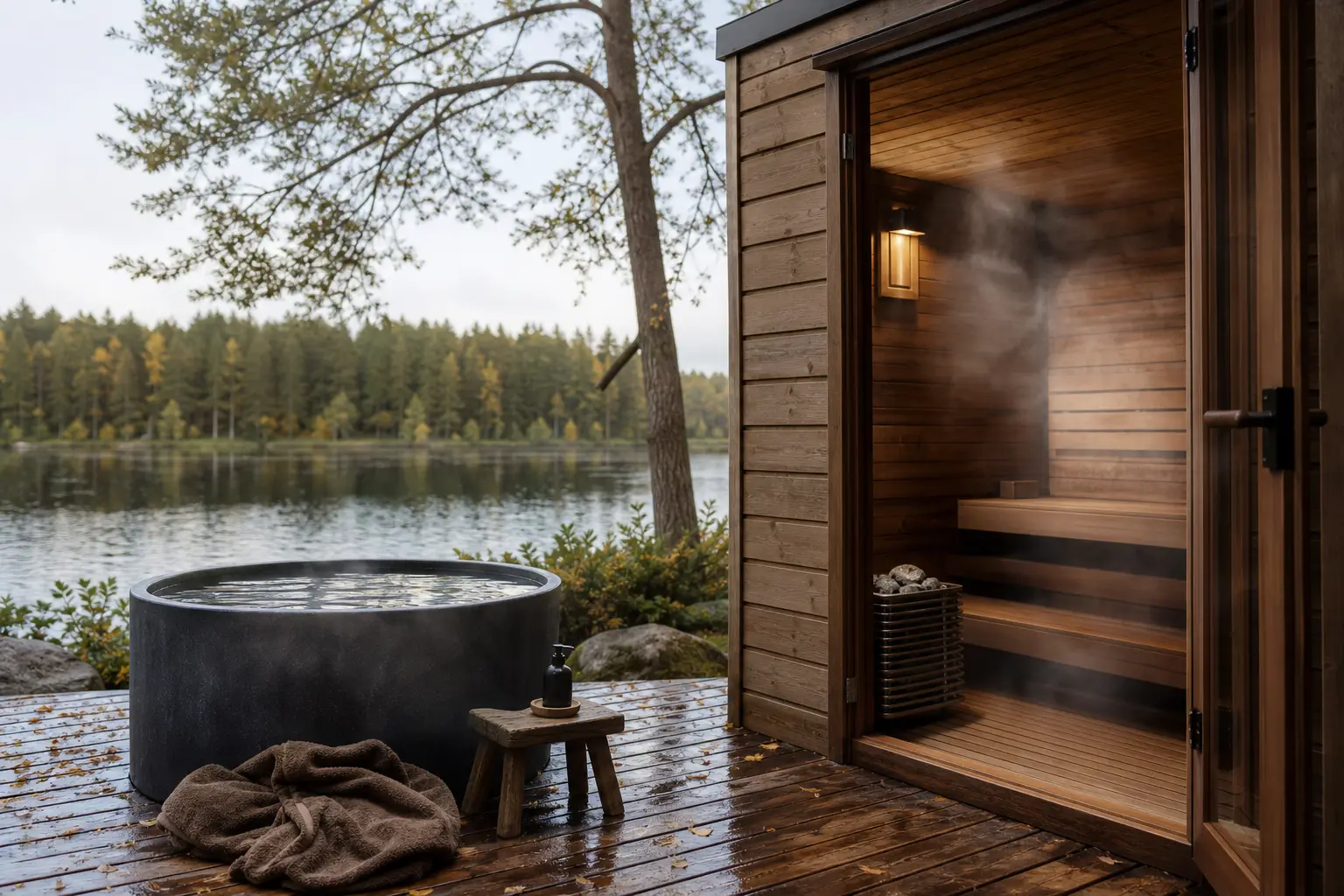
Short answer: Alternate a hot sauna with a cold plunge, two to four rounds with real rest between. The reliable payoff is easier-feeling recovery, deep relaxation and a clear head for a few hours afterward. Detox, metabolism and cure-all claims are not supported. A US studio session runs $30 to $60 and takes about an hour.
Contrast therapy means deliberately alternating heat and cold, most often a hot sauna followed by a cold plunge, repeated two to four times with rest in between. It works, as long as you are honest about what “works” means. The reliable benefits are easier-feeling recovery, deep relaxation, and a clear, calm head for a few hours afterward. The detox, metabolism, and cure-all claims are not supported. A typical session at a US studio runs $30 to $60 and takes about an hour.
What contrast therapy actually is
Contrast therapy is the ritual behind the whole sauna-and-cold-plunge boom. You sit in serious heat until you are thoroughly warm, get into genuinely cold water for a short burst, rest until your body settles, and repeat.
The idea is that swinging between hot and cold does more together than either does alone, leaving you both physically eased and mentally sharp. Studios sell it under different names (contrast bathing, hot-cold cycles, the Nordic cycle), but the structure is the same everywhere.
This guide covers what it is and what the evidence supports. We don’t sell anything here, so there’s no reason to inflate it.
The theory behind it
The appeal is simple to picture. Heat opens up blood vessels and relaxes muscles; cold constricts them and jolts the system awake. Alternating the two is often described as a “pump” for circulation.
Whatever the exact mechanism turns out to be, the cycle reliably produces a strong contrast of sensations: deep relaxation from the heat, sharp alertness from the cold, and a calm, clear afterglow when you’re done. That afterglow, more than any single physiological pathway, is why people keep coming back.
If you want the physiology in more depth, our longer read on why contrast therapy actually works covers the mechanisms without selling anything.
What the evidence supports
Held honestly, the research is a mixed but reasonable picture.
Recovery feel. Contrast water therapy is used widely in athletics, and many people find it genuinely eases muscle soreness and helps recovery feel easier. The evidence is decent for how it feels, even if not every study agrees on the mechanism.
Relaxation and mood. The combination of heat’s deep relaxation and cold’s alertness leaves most people feeling notably calm and clear afterward. This subjective benefit is one of the most consistent findings, and it matches what regulars will tell you unprompted.
Cardiovascular and stress angles. Both halves individually have some supporting research: sauna use for heart-health markers, cold exposure for stress-response training. Pairing them is a pleasant way to get both. Our guides to sauna benefits and cold plunge benefits go deeper on each half separately.
Where the claims outrun the evidence
The honest caveats matter. Much of the strongest evidence is on how contrast therapy feels rather than on dramatic, proven medical outcomes. Claims about detoxing, big metabolism boosts, or curing illness go beyond what’s shown.
Sweating does not flush toxins in any meaningful sense; your liver and kidneys handle that job. Cold-driven calorie burn is real but small. And nothing about the cycle treats a medical condition.
The reliable payoff is recovery feel, relaxation, and a clear head, which is plenty to make it worthwhile without the hype.
A sensible cycle to follow
Most studios and traditions converge on a similar structure. Here’s a common starting pattern:
| Round | Sauna | Cold plunge | Rest |
|---|---|---|---|
| 1 | 10 to 15 min | 30 sec to 1 min | 5 to 10 min |
| 2 | 10 to 15 min | 1 to 2 min | 5 to 10 min |
| 3 (optional) | 8 to 12 min | 1 to 3 min | 10+ min |
A few notes on making it work:
Start conservative. Shorter, gentler rounds first. You can build up as you learn how your body responds. Whether to end on hot or cold is mostly preference; our guide to sauna or cold plunge first covers the ordering question properly.
Use a sauna for the hot half. A hot tub at 100 to 104°F does not get you hot enough for the swing to register, which is one of the practical differences in our sauna vs hot tub comparison.
Don’t skip the rest. The rest between rounds is where a lot of the calm lands. Let your breathing and heart rate settle before the next round.
Hydrate. You lose real fluid in the heat, so drink water before and after. For specific numbers on heat and cold, see our guide to temperature and time.
What a session costs
Expect roughly $30 to $60 for a communal session at a dedicated contrast studio in most US cities, with private suites typically running higher. Gym and spa add-on saunas are often included in a membership but rarely offer a real cold option. Our session cost guide breaks down the pricing tiers.
A safety note
Contrast therapy is generally fine for healthy adults in moderation, but the cold half especially isn’t for everyone. Cold immersion spikes heart rate and blood pressure in the first seconds, which is exactly why it feels so bracing.
Skip it or check with a doctor first if you’re pregnant or have heart or blood-pressure conditions. Ease into the cold rather than shocking yourself, and never do intense cold exposure alone. There’s no benefit to pushing past what feels safe. Our guide to who should avoid cold plunging covers the contraindications in detail.
FAQ: contrast therapy
How often should you do contrast therapy? Two or three sessions a week is plenty for most people, and once a week still delivers the relaxation and recovery feel. Consistency beats intensity: regular moderate sessions do more than occasional extreme ones. Our guide to how often to sauna or cold plunge covers frequency honestly.
Should you end on hot or cold? Tradition and most studios end on cold for the alert, refreshed finish, but ending on heat is fine if you prefer to leave relaxed. Neither choice changes the core benefits, so pick the finish that suits the rest of your day.
Is contrast therapy better than sauna alone? Not provably. The cold adds the alertness lift and the recovery feel that many people value, but if you hate cold water, a sauna habit alone still carries most of the relaxation and cardiovascular upside. Do the version you’ll actually repeat.
Does contrast therapy help you lose weight? No meaningful amount. The calorie cost of shivering and warming back up is small, and no honest read of the research supports contrast therapy as a fat-loss tool. Go for the mood, recovery feel, and relaxation instead.
The bottom line on contrast therapy
Contrast therapy is the hot-cold cycle behind the sauna-and-plunge trend, and its real benefits are recovery feel, deep relaxation, and mental clarity, with the bigger medical claims unproven. Done sensibly, two to four rounds with real rest between, it’s one of the more enjoyable rituals going.
To go deeper, our sauna benefits and cold plunge science guides cover each half, and sauna vs steam room covers the heat options if you’re choosing a home base.