Do you need electrolytes after a sauna? What sweat actually takes out
Sweat is mostly water and salt. The magnesium and potassium in it are tiny by comparison, and a review of sweat physiology found mineral deficiencies from sweating are a minimal risk. Here is what you lose in a session, and when an electrolyte drink is worth it.
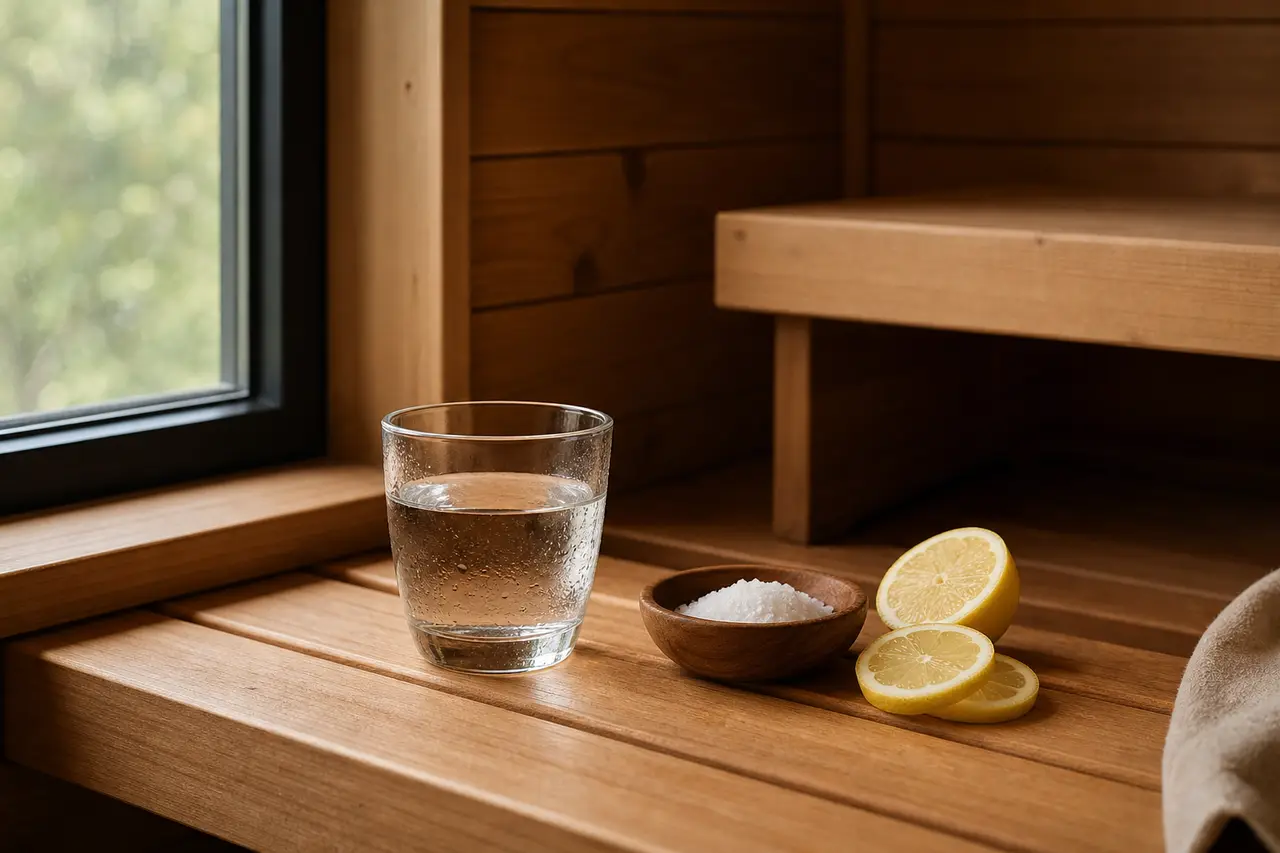
Short answer: For most people after an ordinary sauna session, water and a normal meal replace what sweat takes out. Sweat is mostly water and sodium: in one study it carried about 4 times more sodium than potassium and about 680 times more sodium than magnesium. A major review of sweat physiology found that deficiencies of minerals from sweating are a minimal risk, while salt balance matters mainly in long, heavy sweating. An electrolyte drink earns its place after long or repeated hot sessions, especially combined with exercise, or if you sweat heavily and saltily. Magnesium after a sauna is mostly marketing.
“Electrolytes after a sauna” has become a ritual, sold with powders, salts and coconut water. The question underneath is reasonable: if you sweat, you lose something besides water. What matters is what, and how much.
The answer is less dramatic than the marketing. Sweat is mostly water, the main mineral in it is sodium, and the minerals that supplements focus on, magnesium above all, are present in tiny amounts.
This is general information, not medical advice. If you have kidney or heart problems, or take a diuretic or other medicine that changes potassium or sodium, ask your doctor before using electrolyte products.
What sweat is made of
Sodium leads by a long way. In a 2007 study by Montain and colleagues, seven heat-acclimated people exercised for hours in hot conditions while sweat was collected and analysed. At 27°C, the sweat held, by weight, about 4 times more sodium than potassium, about 50 times more sodium than calcium and about 680 times more sodium than magnesium. The study also found sodium, potassium and calcium losses stayed predictable over seven hours of sweating.
A 2019 review of sweat gland physiology by Baker in Temperature puts it in context. It concludes that sweat-induced deficiencies appear to be of minimal risk for trace minerals and vitamins, and that people with very salty sweat, such as those with cystic fibrosis, face a higher risk of salt imbalance during prolonged heavy sweating.
How much a sauna session takes out
It depends on how long, how hot, how often you go back in, and you. A 2017 review by Baker in Sports Medicine notes that sweat rate and sweat sodium vary considerably between people and within the same person, and that the simplest and most accurate way to measure sweat loss is the change in body mass.
That gives you a practical test. Weigh yourself before and after a session, without clothes or a damp towel. The difference is roughly the water you sweated out, and replacing it with water over the next hour or two is the main job. Our sauna sweat loss calculator does the arithmetic and shows what sauna studies measured. Our guide to how often to sauna or cold plunge covers session length and frequency.
When water is enough, and when electrolytes help
Water is enough after an ordinary session of a few rounds, followed by a normal meal. Food supplies sodium, potassium and magnesium, and the amounts lost in a short session are small.
Electrolytes can help in three situations:
- Long or repeated sessions, or a sauna after a long workout in the heat, where sweat losses add up.
- Heavy, salty sweating, the kind that leaves white marks on clothing or skin.
- Several days of heavy heat in a row, such as a retreat with daily sauna and hot yoga.
In those cases, the useful electrolyte is mainly sodium. A salty meal does the same job as a powder for most people.
Too much plain water is possible too. MedlinePlus lists drinking too much water alongside heavy sweating and not drinking enough among the causes of fluid and electrolyte imbalance. Drink to replace what you lost, not to set a record.
Magnesium after a sauna
Magnesium is the mineral most often sold for after the sauna, for cramps, sleep or recovery. The sweat data does not support the idea that a session drains it: in Montain’s measurements sweat held about 680 times more sodium than magnesium.
MedlinePlus’s magnesium page says most dietary magnesium comes from dark green leafy vegetables, with fruits, nuts, legumes, soy, whole grains and milk adding more, and that taking magnesium supplements is not currently advised for preventing disease. It adds that high magnesium intake mainly causes problems in people with significantly reduced kidney function.
If you like an Epsom salt soak after the sauna, our guide to whether an Epsom salt bath does anything covers what the magnesium in the water does and does not do.
Potassium, coconut water and medicines
Potassium is the second mineral in sweat, and also the one where more is not always better. Coconut water is naturally rich in it: USDA FoodData Central lists about 165 milligrams per 100 grams for ready-to-drink unsweetened coconut water and about 250 for the liquid straight from the coconut.
For most people that is simply a drink. For people on medicines that raise potassium, it is worth checking. Our spironolactone guide covers why its label tells patients to avoid potassium supplements and salt substitutes, and our blood pressure medication guide covers diuretics, which change both sodium and potassium.
Electrolytes before, during or after?
There is no evidence that timing matters much for an ordinary session. Arriving well hydrated matters more than any powder, and our guide to eating before a sauna or cold plunge covers the meal side. If you are doing a long, hot day, small amounts of water and a salty snack between rounds are a reasonable approach, and a larger drink afterwards replaces the rest.
If you take caffeine before a session, our guide to coffee and pre-workout before a sauna covers what the research says about caffeine and fluid.
Electrolytes after a sauna at a glance
| Situation | What to drink | Notes |
|---|---|---|
| A few rounds, then a meal | Water | Food replaces the minerals |
| Long or repeated sessions | Water plus some sodium | A salty snack or electrolyte drink |
| Sauna after a long hot workout | Water and sodium | Losses add up |
| Heavy, salty sweater | Water and sodium | Weigh before and after to gauge losses |
| Magnesium supplements | Not needed for sweat losses | Sweat carries very little magnesium |
| Coconut water | Fine for most people | High in potassium; check if on potassium-raising medicines |
| Kidney or heart problems, diuretics | Ask your doctor | Electrolyte products may not suit you |
What is oversold about electrolytes and saunas
The idea that a sauna “detoxes” you and leaves you depleted is the most common pitch. The Baker review found sweat plays only a minor role in clearing waste products compared with the kidneys and gut, and that mineral deficiencies from sweating are of minimal risk.
The second is that everyone needs a special post-sauna drink. The people who benefit from extra electrolytes are those who sweat long, hard and saltily. For an ordinary session, a glass of water and dinner do the job.
FAQ: electrolytes after a sauna
Do you need electrolytes after a sauna? Usually not after an ordinary session. Sweat is mostly water and sodium, and a major review found mineral deficiencies from sweating are a minimal risk. Water and a normal meal are enough for most people; electrolytes help after long or repeated sessions, or if you sweat heavily.
Should I take magnesium after a sauna? Sweat carries very little magnesium: in one study it held about 680 times more sodium than magnesium. MedlinePlus says most magnesium comes from food and supplements are not currently advised for preventing disease. There is no sweat-loss reason to take it after a sauna.
Is coconut water good after a sauna? It is a fine drink for most people and is naturally high in potassium, about 165 to 250 milligrams per 100 grams by USDA data. If you take a medicine that raises potassium, such as spironolactone, check with your prescriber first.
Should I drink electrolytes before or after a sauna? For an ordinary session, timing matters less than arriving hydrated and drinking water afterwards. For a long, hot day, water and a salty snack between rounds and a drink afterwards is a reasonable approach.
The bottom line on electrolytes after a sauna
Sweat costs you water first and sodium second. The magnesium and potassium that supplements focus on leave in small amounts, and a major review of sweat physiology found deficiencies from sweating are a minimal risk.
So drink water after a session, eat a normal meal, and save electrolyte drinks for long or repeated heat, a sauna after a hard workout, or heavy, salty sweating. Weigh yourself before and after if you want to know your own number.