Does an Epsom salt bath do anything?
Warm water immersion has real, well-supported effects on muscle tension and sleep. The magnesium-through-skin story is much weaker, and the detox version has nothing behind it at all.
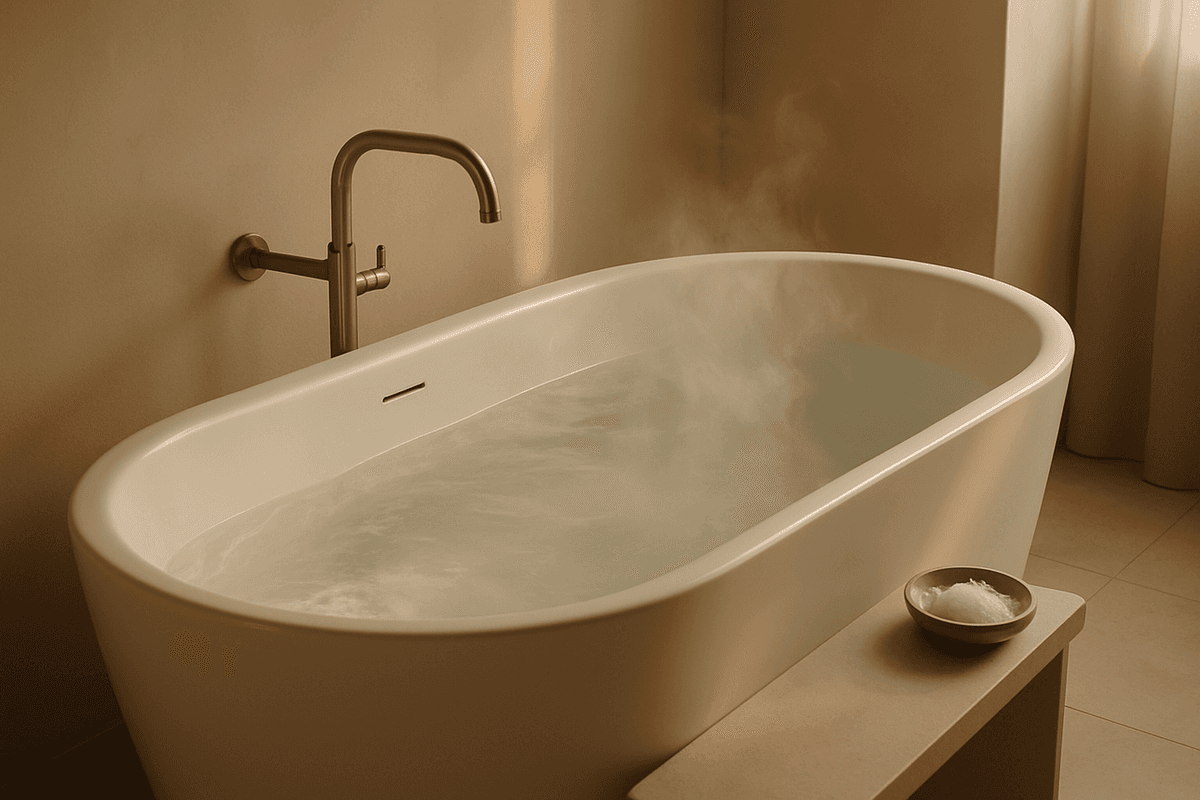
Yes and no, and the distinction is the whole point. A warm bath with Epsom salt in it will very likely leave you looser, calmer, and sleeping better. Almost all of that is the hot water. The salt is along for the ride.
That is not a reason to stop. Epsom salt is cheap, pleasant, and low risk for most people, and the ritual of measuring something into the tub is part of why people take the bath at all. It just helps to know which part earns the result.
Our hot springs guide makes the same argument about mineral water at a much larger scale: the heat, the buoyancy, and the enforced stillness do the work, and the minerals get the credit. Your bathtub is that story in miniature.
What warm water immersion actually does
Warm immersion has real, well-supported effects, and none of them require a single grain of salt.
Heat relaxes muscle tissue and reduces the guarding that follows a hard workout or a long day of sitting badly. Blood vessels widen and stiff joints move more easily while you are in the water. Buoyancy takes load off your hips, knees, and lower back, which is a break most joints rarely get.
The sleep effect is the best documented one. A warm bath an hour or two before bed raises your core temperature, and the drop that follows as you cool down mirrors the temperature fall your body uses to trigger sleep. People fall asleep faster and report sleeping better. It is one of the more reliable free levers going, which is why it sits in our list of wellness that costs nothing.
A bath is also twenty minutes with no phone, and that stillness counts.
The magnesium question, honestly
This is where the evidence gets thin, and where most of the marketing lives.
Epsom salt is magnesium sulfate. The claim is that soaking in it raises your magnesium through the skin, easing cramps, soreness, and tension. It is an appealing story, since magnesium genuinely matters for muscle and nerve function.
The problem is the skin. Intact skin is a barrier built specifically to keep things out, and charged mineral ions are not the kind of molecule that crosses it easily. A few small studies have reported rises in blood or urine magnesium after bathing, but the ones usually cited lack proper controls and have not been replicated in a way that would settle the question.
So the honest position is not that it does nothing. It is that the evidence is thin. We take the same line in our float tank guide, where you lie in far more concentrated Epsom water than any bathtub holds and the absorption question is still open. If you suspect you are low on magnesium, that is a conversation with a doctor, not a bathtub.
Why the detox claim fails
Drawing out toxins is the claim to drop.
There is no mechanism by which salt in bathwater pulls waste through your skin and into the tub. Skin does not filter in that direction. Your liver and kidneys clear waste continuously, which is exactly why sweating in a sauna does not detox you either.
The lactic acid version is just as weak. Lactate clears on its own within an hour or so of exercise, long before your bath, and it was never the cause of next-day soreness anyway, as the lactic acid myth explains.
When a bath additive is sold as removing something from your body, run the label through our checklist for spotting a nonsense wellness claim.
What the evidence supports, claim by claim
| Claim | What the evidence supports | Verdict |
|---|---|---|
| Eases muscle tension and stiffness | Warm immersion reliably relaxes muscle and improves mobility | Well supported, from the heat |
| Helps you fall asleep | Warm bathing before bed improves sleep onset and quality | Well supported, from the heat |
| Eases sore muscles after exercise | Real short-term comfort, no sign it speeds repair | Partly supported, comfort not healing |
| Raises magnesium through the skin | A few small, weakly designed studies, no replication | Not established |
| Draws out toxins | No plausible mechanism, no supporting evidence | Not supported |
| Flushes lactic acid | Lactate clears on its own well before the bath | Not supported |
| Feels pleasant, softens the water | Consistent with reports, mild and cosmetic | Supported, modest |
How to take a bath that actually helps
Aim for warm and long enough to matter, not hot and heroic.
Temperature is the main dial. Somewhere around 98 to 104°F suits most people, and hotter is not better: above that you trade relaxation for heat stress, and the standing-up risk below gets sharper.
Twenty minutes is a good target, and past about thirty most people are just wrinkling. If you are chasing the sleep effect, take the bath one to two hours before bed rather than right before, so your body has time to do the cooling that brings on sleepiness. Our guide to a sauna or cold plunge before bed covers the same timing logic.
A couple of cups of salt is the usual amount, and nothing fancy is needed. For a fresh injury in the first day or two, though, heat is the wrong tool: ice versus heat sorts out which belongs where.
Who should check with a doctor first
Most people can take a warm bath safely, but one risk is more common than people expect.
A hot soak widens your blood vessels and lowers blood pressure, so the real hazard is standing up too fast and getting dizzy. Get out slowly and sit for a moment before you walk. Our guide to sauna, cold plunge and blood pressure goes deeper into what heat does to circulation.
Check with a clinician first if you have heart disease, blood pressure poorly controlled in either direction, or a tendency to faint. Pregnancy is another case to ask about, since a sustained rise in core temperature carries risk, particularly early on.
Skip the salt on broken or irritated skin, where it will sting and can dry things further, and ask first if you have eczema or a skin condition under treatment, which our guide to wellness with eczema or psoriasis covers in more detail. Never take a hot bath after drinking alcohol.
FAQ
How much Epsom salt should I put in the bath? One to two cups in a standard tub is the common amount, and there is no evidence that more does more. Since the reliable benefit comes from the water rather than the salt, treat the quantity as preference.
Will an Epsom salt bath help sore muscles after a workout? It will make them feel better for a while, which is worth something. Warm immersion relaxes tense muscle and eases stiffness, but it does not appear to speed repair, so treat it as relief rather than recovery.
Is a warm bath or a cold plunge better after exercise? They do different jobs. A warm bath is for comfort, stiffness, and winding down in the evening; cold is aimed at blunting soreness, with an ongoing debate about whether it blunts training gains too. If tonight’s goal is sleep, take the bath.
Can I take an Epsom salt bath every day? For most healthy adults, a daily warm soak is fine. Very hot or very long baths can dry your skin, and anyone with a cardiovascular condition should keep them moderate and ask a clinician.
The bottom line on Epsom salt baths
Take the bath. Warm water immersion has genuine, well-supported effects on muscle tension, stiffness, and sleep. Add the Epsom salt because it is cheap and pleasant, not because you expect magnesium to cross your skin. That claim rests on thin evidence, and the detox version rests on none.
We only recommend what we would send a friend to, and this one is easy: warm water, twenty minutes, no phone, an hour or two before bed. The salt is optional. The bath is the point.