Nature and mental health: what the science says about time outdoors
The idea that nature is good for you sounds soft, but it's one of the better-supported findings in wellness. Here's what the evidence shows and how much you actually need.
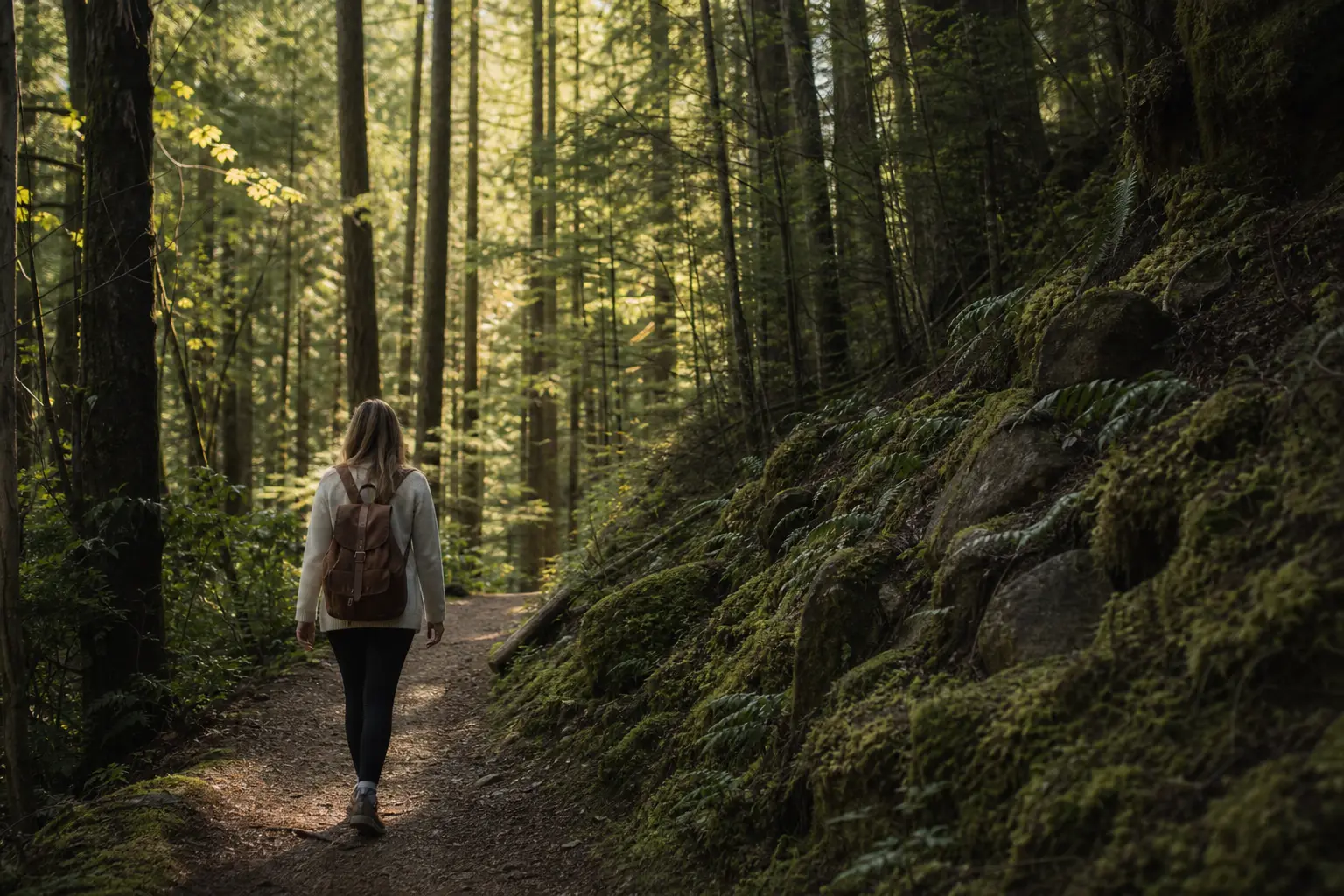
Short answer: Time outdoors reliably lowers stress, lifts mood and restores attention, and the usable target is about 120 minutes of nature a week in whatever chunks fit. A city park counts; you do not need a forest or a retreat. What it does not do is treat a diagnosed condition, so keep it alongside care.
Yes, and the effect is more reliable than most things sold in the wellness aisle. Research generally supports time outdoors for lower stress, better mood, and restored attention, and the practically useful dose is around 120 minutes of nature per week, in whatever chunks fit your life. What the evidence does not show is that nature treats a diagnosed mental health condition, or that you need a forest, a retreat, or a program to get most of the benefit. A park will do.
Softer than it sounds, stronger than you would think
“Nature is good for you” sounds like a greeting-card truism, easy to dismiss. But it is actually one of the better-supported ideas in wellness, backed by a growing and fairly consistent body of research.
Time outdoors reliably helps the mind, and unlike many wellness claims, we have a decent sense of how much you need and why. This is the honest picture behind every nature retreat and forest walk.
We do not sell anything here, so there is no reason to inflate it.
What the nature evidence genuinely supports
Lower stress. The most consistent finding. Time in natural settings reliably reduces stress, with measurable drops in cortisol, blood pressure, and heart rate compared with urban environments. This is the strongest part of the evidence.
Better mood. Spending time in nature improves mood and reduces feelings of anxiety and low mood, with some studies showing benefits for people with mild depression and anxiety.
Restored attention. A well-supported idea in psychology: natural settings help restore depleted attention and focus in a way busy urban environments do not. It is why a walk in the park leaves your head clearer.
Overall wellbeing. Broader research links regular access to green space with better long-term mental health and life satisfaction, even accounting for other factors.
How strong is each claim?
Not every part of this literature is equally solid. Here is our honest read of where each claim sits.
| Claim | How strong the evidence looks | What that means for you |
|---|---|---|
| Lowers stress in the moment | Strong and consistent | Reliable enough to plan your week around |
| Improves mood and eases mild anxiety | Reasonably good | Worth doing, though not a substitute for care |
| Restores depleted attention | Well supported in psychology | Useful before or after demanding mental work |
| Green space linked to long-term wellbeing | Suggestive, mostly observational | Real, but tangled with income and neighborhood |
| Treats clinical depression or anxiety | Not established | Do not swap therapy or medication for a walk |
What the evidence does not show
It is worth being equally clear about the limits, because nature gets oversold alongside things that deserve more scrutiny.
Time outdoors is not a treatment for a diagnosed mental health condition. It can sit alongside therapy, medication, sleep, and exercise, and for some people it makes those easier to sustain, but the research does not support swapping one for the other.
Much of the long-term green space research is observational, which means it can show that people with more nearby nature tend to do better without proving nature is the reason. People with access to parks and trees often also have more money, safer streets, and quieter nights, and untangling those is genuinely hard.
The evidence is thinner on mechanism. Researchers still debate how much comes from the greenery itself versus the movement, the daylight, and the break from screens. And many short-term studies rest on self-reported mood right after a pleasant walk, which is a real result but an easy one to get.
If a retreat or an app promises that nature will fix something specific, our guide to spotting a nonsense wellness claim is a useful filter.
How much you actually need
Here is the practically useful part. Research suggests there may be a rough “dose”: studies point to around 120 minutes of nature per week, spread out however you like, as a threshold linked to better health and wellbeing, with little extra required beyond that.
That is about two hours a week, an achievable target rather than a lifestyle overhaul. Even short, frequent doses, a daily walk in a park, help.
Treat the number as a useful anchor rather than a law of physics. It comes from a body of self-reported survey work, and nobody thinks 119 minutes fails and 121 succeeds. What it gives you is permission to stop aiming for a wilderness expedition and start aiming for twenty minutes most days.
Why time outdoors works
You do not need a mystical explanation. Nature lowers stress, invites gentle movement, encourages you to unplug, restores attention, and often brings a sense of awe or perspective, all of which support mental health. The green setting seems to add something beyond just being outdoors or exercising, though how much is still studied. For the practical benefit, the mechanism matters less than the result.
It is also why nature stacks well with other practices. Walking meditation is the simplest version of that combination.
How to get it
Aim for the two hours. Around 120 minutes a week is a sensible target, in whatever chunks fit your life.
Frequent beats rare. A short daily dose of green often does more than one big outing.
Any green helps. A dense forest is ideal, but a city park, a garden, or a tree-lined street delivers much of the benefit if that is what you can reach. This is one of the genuinely free things that works.
Attach it to something you already do. A walking phone call, the long way to the train, lunch outside. Desk workers in particular tend to get the biggest return here, as our guide for desk workers covers.
Be present. Putting the phone away and actually noticing the surroundings deepens the effect, as our forest bathing guide explores.
FAQ: nature and mental health
Does it have to be a forest, or does a city park count? A park counts. The research does not support the idea that only wilderness works, and the practical benefit of a green space you will actually visit twice a week beats a forest you reach twice a year. Denser, quieter green tends to feel better, but the difference is smaller than the difference between going and not going.
Can time outdoors replace therapy or medication? No. The evidence supports nature as something that helps mood and stress, not as a treatment for a diagnosed condition. If you are dealing with persistent depression or anxiety, treat time outdoors as a support alongside proper care, not instead of it.
Is a nature retreat better than doing this at home? For most people, the weekly habit matters more than the trip. A retreat can be genuinely valuable for a reset or a transition, and our guide to nature immersion and wilderness retreats covers what to look for. But nobody gets the long-term benefit from one week a year.
Does gardening or sitting outside count, or do I have to walk? It counts. Much of the research looks at time spent in green space rather than exercise specifically. Movement adds its own separate benefits, so combining the two is better, but stillness outdoors is not wasted time.
The bottom line on nature and mental health
Time in nature is one of the most reliable, free, and evidence-backed things you can do for your mind: lower stress, better mood, restored focus, with a usable target of about two hours a week. Treat it as a genuine part of mental health, not a nicety, and be honest that it supports care rather than replacing it.
To go further, see our forest bathing and meditation benefits guides, the evidence review on grounding and earthing for a claim that holds up far less well, and our nature-focused retreat guides to the Pacific Northwest and Colorado and the Rockies.