Does forest bathing actually work? An honest look at the evidence
Shinrin-yoku sounds like a wellness buzzword, but there's more real research behind it than behind most. Here's what the science actually supports, and what it doesn't.
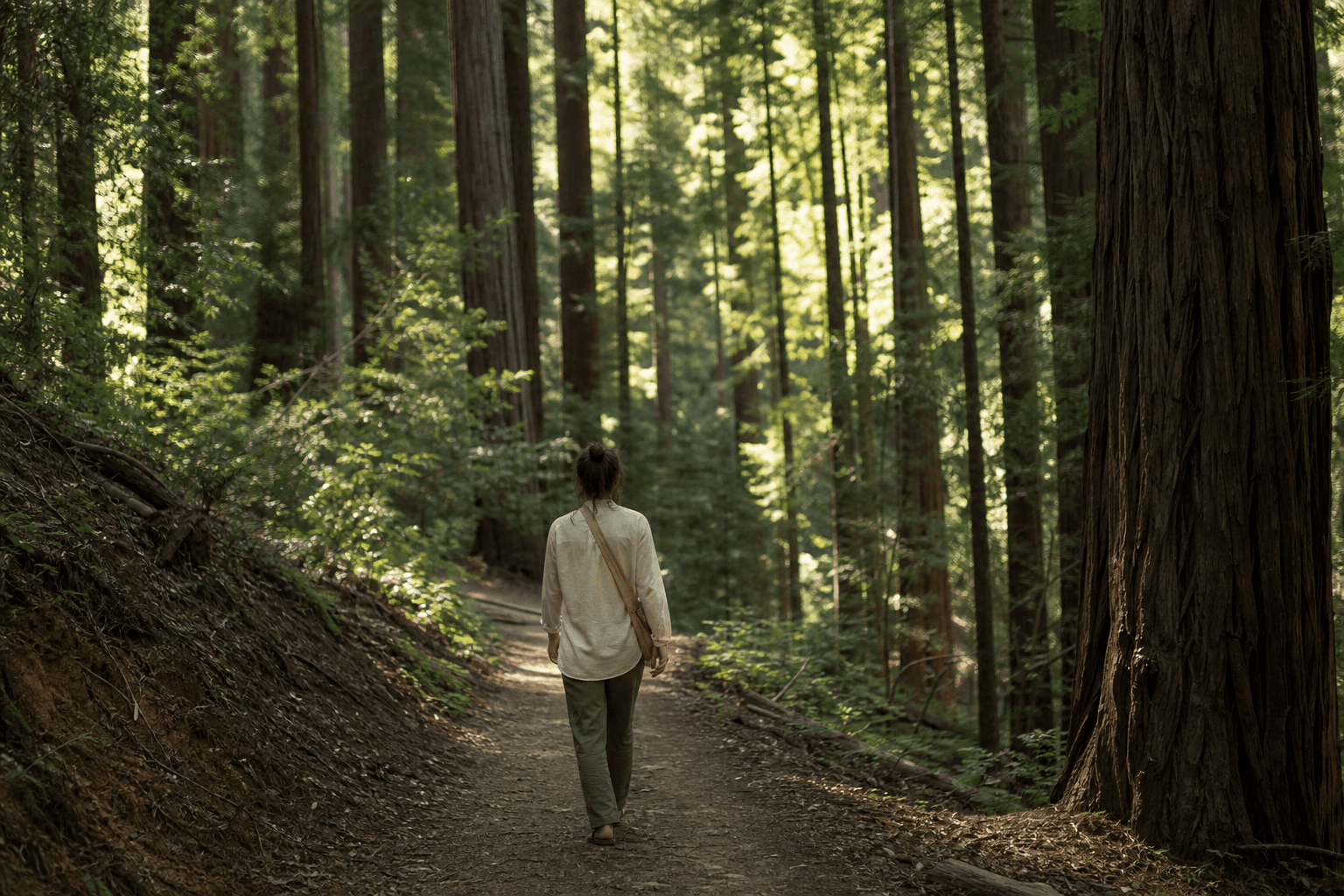
Short answer: Yes, within limits. Slow, attentive forest time reliably lowers cortisol, heart rate and blood pressure and lifts mood, and it restores depleted attention, which is better evidence than most wellness practices carry. The immune-boost and phytoncide claims come from small, unreplicated studies. A quiet park delivers much of it, free.
Yes, for stress and mood, and the evidence is better than for most wellness practices. Studies consistently show lower cortisol, lower heart rate, lower blood pressure, and improved mood after slow, attentive time in forests. The bigger claims, especially the immune-boost and disease-prevention ones, rest on much thinner evidence and shouldn’t be treated as settled.
That makes forest bathing one of the rare wellness practices where the honest answer is mostly encouraging. Here’s what it is, what the research supports, and where the marketing runs ahead of the science.
What forest bathing actually is
Forest bathing, or shinrin-yoku, is a Japanese practice that means spending slow, attentive time in a forest. It is not hiking and not exercise. The whole point is to move slowly, put the phone away, and pay attention with your senses: the light, the sound, the smell, the air.
The name makes it sound mystical. The practice is closer to mundane, which is part of why it works. There’s no technique to master and nothing to buy.
This explainer covers what the research genuinely supports and where it gets oversold. We don’t sell anything here, so there’s no reason to inflate it.
What does the shinrin-yoku research support?
Of all the nature-and-wellness practices, forest bathing has more real research behind it than most, much of it from Japan and South Korea where it’s taken seriously enough to be part of public-health thinking.
Stress goes down. The most consistent finding is reduced stress: studies have measured lower cortisol, lower heart rate, and lower blood pressure after time in forest settings compared with urban ones. This is the strongest part of the evidence.
Mood and calm improve. People reliably report feeling calmer, clearer, and in a better mood after forest time, and some studies back this with measures of reduced anxiety. This fits the broader research on nature and mental health, which points the same direction across many settings.
Attention recovers. This fits a well-supported idea in psychology called attention restoration: natural settings help replenish depleted focus in a way that busy urban environments don’t. If your work is cognitively demanding, this may be the benefit you notice first.
Where the claims get oversold
The honest caveats matter. Many studies are small, short, and hard to fully control, because you can’t blind someone to whether they’re standing in a forest. Comparison groups and measurement windows vary a lot between studies.
The popular claims about forest air compounds (phytoncides) and big immune-system boosts, including the widely repeated natural-killer-cell findings, rest on thinner evidence than the headlines suggest. The underlying studies are small and haven’t been replicated at the scale the claims imply. They’re interesting leads, not settled science.
The safest read: forest bathing reliably helps with stress, mood, and mental restoration, and the more dramatic medical claims are not yet proven. That’s still a genuinely useful result. If you want a general toolkit for reading claims like these, our guide to spotting a nonsense wellness claim applies well beyond forests.
Why it likely works
You don’t need an exotic mechanism. Slowing down, unplugging, gentle sensory attention, and simply being among trees all calm the nervous system, and combining them does more than any single part.
Whether the forest itself adds something beyond a quiet green space is still an open question, and for the practical benefit it barely matters. The intervention is free either way.
How to actually do it
Go slow and leave the phone. This isn’t a workout. Wander, pause, and let the pace drop. If you’re covering ground quickly, you’re hiking, which is also good for you, but it’s a different thing.
Use your senses on purpose. Notice the light, the sounds, the smell of the air. The attention is the practice. If your mind wanders to your inbox, that’s normal; just come back to what’s in front of you.
Give it real time. Even an hour helps, but a longer, unhurried stretch tends to do more. Many people find a rhythm of one deliberate forest session a week, with shorter park visits between.
Any green will do in a pinch. A dense forest is ideal, but a quiet park delivers much of the same calm if that’s what you can reach. The practice also stacks naturally with walking meditation if you want more structure.
Forest bathing vs the alternatives at a glance
| Practice | Strongest evidence for | Cost | Time to feel it |
|---|---|---|---|
| Forest bathing | Stress, mood, attention | Free | One session |
| Meditation | Attention, emotional regulation | Free | Weeks of practice |
| Cold plunge | Alertness, mood spike | Free to $ | Minutes |
| Sauna | Relaxation, cardiovascular markers | $ | One session |
Our full practice guide to shinrin-yoku goes deeper on the how, and the science pieces on cold plunging and meditation apply the same honest lens to the alternatives.
FAQ: forest bathing
How long should a forest bathing session last? Aim for at least an hour if you can. Studies typically use sessions of one to a few hours, and the calming effect deepens with unhurried time. Twenty minutes in a park still helps on a busy day; it’s just a smaller dose.
Does it have to be a forest? No. Dense forest is the studied ideal, but quiet parks, riversides, and gardens deliver much of the stress and mood benefit. The consistent ingredients are green surroundings, slowness, and attention, not a specific tree count.
Is forest bathing just walking? Not quite. Walking is exercise with a destination; forest bathing is slow, aimless, sensory time where the attention itself is the practice. A hike can include forest bathing if you stop rushing, but pace and intent are what separate them.
Can forest bathing boost my immune system? That claim outruns the evidence. The immune findings come from small studies that haven’t been replicated at scale. Treat forest bathing as a reliable stress and mood tool, and treat the immune claims as unproven.
The bottom line on forest bathing
Forest bathing is one of the better-supported nature practices: solid evidence for lower stress and better mood, thinner evidence for the bigger medical claims. Treat it as a reliable, free way to reset your nervous system, not a cure.
If you like evidence-led pieces, our look at cold plunge and the science takes the same honest approach, what wellness retreats actually do applies it to retreats, and the Pacific Northwest retreats guide is full of forest-rich places to try it.