Sauna after Botox: what dermatologists actually say about heat and the wait
The Botox Cosmetic label says nothing about saunas, heat or exercise. Published aftercare advice says to avoid physical activity and heat sources for the first 4 hours, though it rests mostly on anecdote. A sauna is a heat source, and it raises your heart rate.
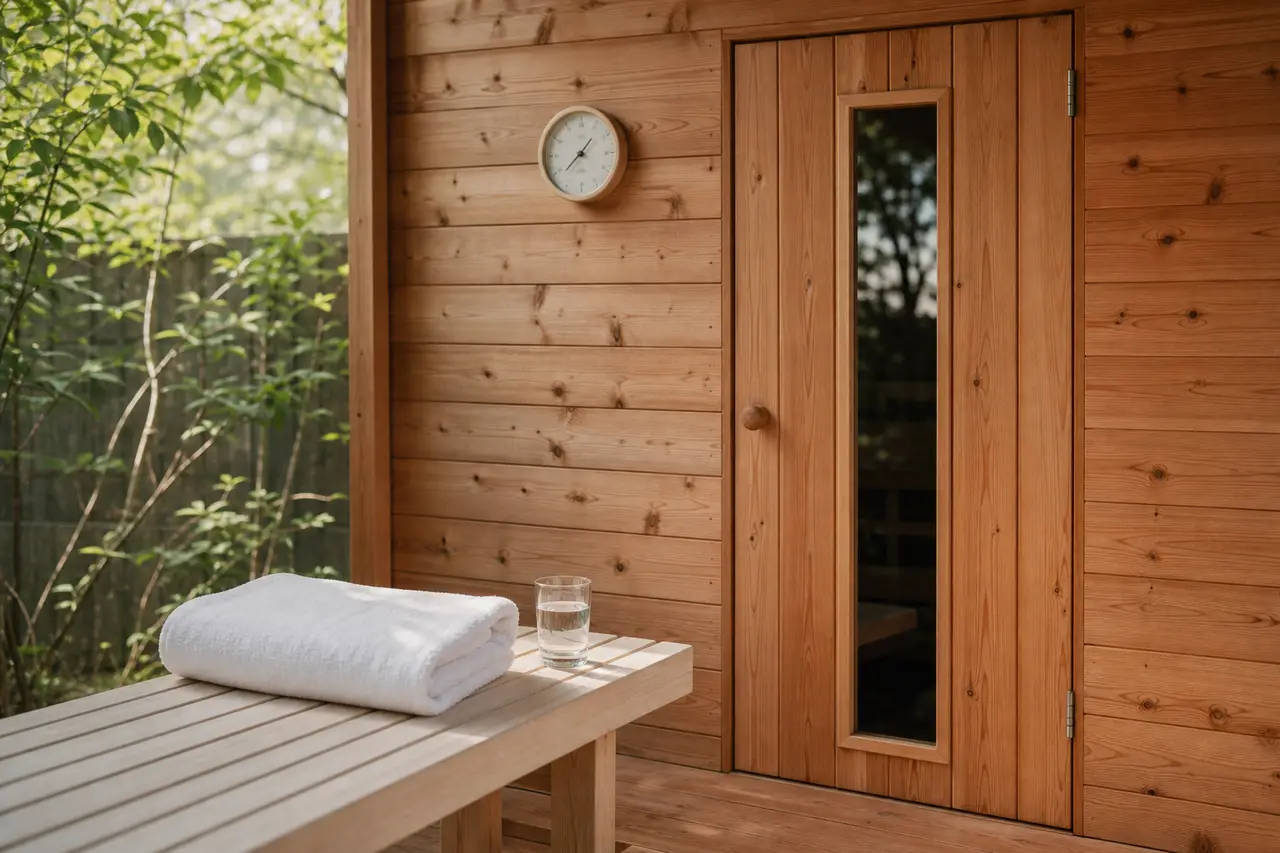
Short answer: Wait about 4 hours, and longer if your injector told you to. The Botox Cosmetic label says nothing about saunas, heat or exercise. Published aftercare advice says patients are normally told, for the following 4 hours, to refrain from physical activity and to avoid direct sun and heat sources, and a 2020 consensus says patients may resume normal activities after 4 hours. One NHS hospital leaflet asks for 24 hours away from saunas and hot baths. A sauna is a heat source and raises your heart rate. Those instructions rest mostly on anecdote, so treat the wait as caution, not proof.
“No sauna after Botox” is one of the most repeated aftercare rules, and one of the least sourced. The waiting times we could source range from about 4 hours to 24 hours.
Here is what we could actually find. The Botox Cosmetic label does not mention saunas, heat, exercise or lying down. Two papers describe the usual advice, and it is short: a 2020 consensus by Goodman and colleagues and a 2025 study of 5,014 patients by Santorelli and colleagues.
This is general information, not medical advice. If the person who treated you gave you an aftercare sheet with a longer wait, follow it.
When to get urgent help. Call 911 for trouble swallowing, speaking or breathing after Botox, even weeks later. The Medication Guide in the Botox Cosmetic label says to “get medical help right away” for these problems, which “can happen hours, days, to weeks after an injection” and can be life threatening. It says the same for wheezing, or for feeling dizzy or faint, which can be signs of an allergic reaction. A serious allergic reaction means calling 911.
Who should check with a doctor first. The same Medication Guide says to tell your doctor before treatment if you have a disease that affects your muscles and nerves, such as ALS, myasthenia gravis or Lambert-Eaton syndrome, or if you have or have had breathing or swallowing problems. It says people who already have swallowing or breathing problems “have the highest risk of getting these problems”. The label also asks for caution in people with heart disease.
What published advice says to do after Botox
A 2020 consensus by Goodman and colleagues in the Australasian Journal of Dermatology, funded by Allergan, says that in the authors’ experience patients may resume normal activities after 4 hours. A 2025 study by Santorelli and colleagues in Toxins lists what patients are normally told for those 4 hours:
- Refrain from physical activity.
- Avoid direct sun and heat sources.
- Stay upright and avoid facial expressions.
The same paper calls those recommendations “largely based on anecdotal evidence rather than robust clinical research”. Its 5,014 patients were observed for 10 minutes and given no other instructions, with no upper eyelid ptosis among the 4,000 followed up, but it had no control group.
Why a sauna falls under the 4-hour advice
Neither paper names saunas. One NHS leaflet does: a Lancashire Teaching Hospitals leaflet on botulinum toxin injections for medical conditions of the head and neck says to avoid heat such as saunas and hot baths for 24 hours. The list above names heat sources and physical activity, and a hot room raises your heart rate too, as our guide to whether a sauna is good for your heart explains. On a plain reading, a sauna belongs in the same 4-hour window as a workout.
The spa routine adds a second problem: towels. Wiping sweat off your forehead, pressing a hot towel to your face, or a facial massage in the relaxation room all press on the treated skin. A 2018 review by Dover and colleagues, funded by Galderma, says some authors counsel caution when massaging areas where diffusion can be a problem, and that no studies have assessed massage directly. That applies whether or not you are in the heat.
So the cautious version is simple. No sauna, steam room, hot tub or hot yoga in the first 4 hours, no rubbing the injected areas, and no facial treatments the same day. Many injectors ask for longer, and their instructions take priority, because they know which areas they treated. If you also had filler, the stricter 24-hour heat rule in our filler guide applies.
What the label warns about, and why it is not about saunas
The Botox Cosmetic label carries a boxed warning about distant spread of toxin effect. It says the effects of all botulinum toxin products “may spread from the area of injection to produce symptoms consistent with botulinum toxin effects”. The label’s Medication Guide lists them in plain words: muscle weakness all over the body, double or blurred vision, drooping eyelids, hoarseness or a change or loss of voice, trouble saying words clearly, loss of bladder control, and trouble breathing or swallowing. The warning goes on: “These symptoms have been reported hours to weeks after injection. Swallowing and breathing difficulties can be life threatening and there have been reports of death.” It says the risk “is probably greatest in children treated for spasticity but symptoms can also occur in adults”.
That warning is about the toxin itself, not about heat, and the label does not link it to saunas or exercise. The label adds that no definitive serious adverse event reports of distant spread of toxin effect have been reported with dermatologic use at the labeled doses.
If you ever notice trouble swallowing, speaking or breathing after an injection, call 911, whatever you were doing at the time.
The Medication Guide also says Botox may cause loss of strength or general muscle weakness, vision problems, or dizziness within hours to weeks: “If this happens, do not drive a car, operate machinery, or do other dangerous activities.” We read a sauna, a hot tub and a cold plunge as belonging on that list, until a doctor has checked you.
Botox for sweating, and the sauna afterwards
Botox is also used for heavy underarm sweating. The Botox label reports a median duration of response of 201 days, about six and a half months, after the first treatment.
That changes how a sauna feels. The label describes a “local reduction in sweating” where the drug was injected, so the rest of your body still sweats to cool you. We found no study of sauna use after underarm treatment, and the papers above are about the face, so the same first-hours caution is our reading: no rubbing the treated skin and no strenuous heat straight away.
Cold plunges after Botox
Neither the label nor the papers above address a cold plunge. Two of the papers, Dover and Santorelli, do say that cooling the treated area might reduce the toxin’s effect, on early evidence. A plunge raises your heart rate too, so the same 4-hour window is the cautious reading, and our guide to who should avoid cold plunging covers the rest.
Botox and heat at a glance
| Practice | First 4 hours | Later the same day | Notes |
|---|---|---|---|
| Sauna, steam room | Avoid | Follow your injector’s timing | Heat source, on the usual 4-hour list |
| Hot tub, hot bath | Avoid | Follow your injector’s timing | Same reasoning |
| Workouts, hot yoga | Avoid | After 4 hours, unless told otherwise | Usual advice: no physical activity for 4 hours |
| Rubbing, facial massage, pressing towels | Avoid | Avoid on the treated areas | Some authors counsel caution; not studied directly |
| Makeup | Ask your injector | Ask your injector | Not addressed in the label or papers above |
| Cold plunge | Avoid | After 4 hours, unless told otherwise | Not addressed; raises heart rate |
Our side-by-side table of aftercare waits sets this rule beside the ones after filler, laser hair removal, a sunburn, a new piercing, a new tattoo and surgery, each linked to its source.
What is oversold about saunas after Botox
Two claims travel together. One is that heat “breaks down” Botox and makes it wear off faster. The label and the papers we read say nothing of the kind, and we found no source for it.
The other is that you must avoid heat for days or a full week. None of those sources says so. The advice they report is about the first hours: no physical activity and no heat sources for 4 hours. If your injector asks for longer, that is their call, and a reasonable one.
FAQ: sauna and hot tub after Botox
How long after Botox can I go in a sauna? A 2020 consensus says patients may resume normal activities after 4 hours, and a 2025 study says patients are normally told to avoid heat sources for those 4 hours. The Botox Cosmetic label does not mention saunas. Wait about 4 hours, and longer if your injector told you to: one NHS hospital leaflet asks for 24 hours away from saunas and hot baths.
Can I use a hot tub after Botox? Not in the first 4 hours, for the same reason, and avoid pressing or rubbing the injected areas with towels or hands. After that, follow the timing your injector gave you.
Does heat make Botox wear off faster? We found no support for that in the Botox Cosmetic label or the papers we read. The label’s concern is spread of the toxin from the injection site, and the usual aftercare advice covers only the first 4 hours.
Can I work out after Botox? A 2025 study says patients are normally told to refrain from physical activity for the first 4 hours, and a 2020 consensus says normal activities can resume after 4 hours. A heated class combines exertion and heat, so treat it the same way.
The bottom line on saunas after Botox
The label is silent on heat, and the published advice is short: no physical activity, direct sun or heat sources for about 4 hours, on evidence one paper calls largely anecdotal. A sauna, a hot tub and a hot yoga class all count.
So give it about 4 hours, keep towels and hands off your face, skip same-day facials, and follow any longer wait your injector gave you.
Want Google to show you more from Tendground? Add us as a preferred source.