Is cold plunging safe? Who should avoid it, and why
Cold water is safe for most healthy people and genuinely dangerous for a few. The risk is not hypothermia, it is the first 60 seconds, and almost nobody selling plunges explains that.
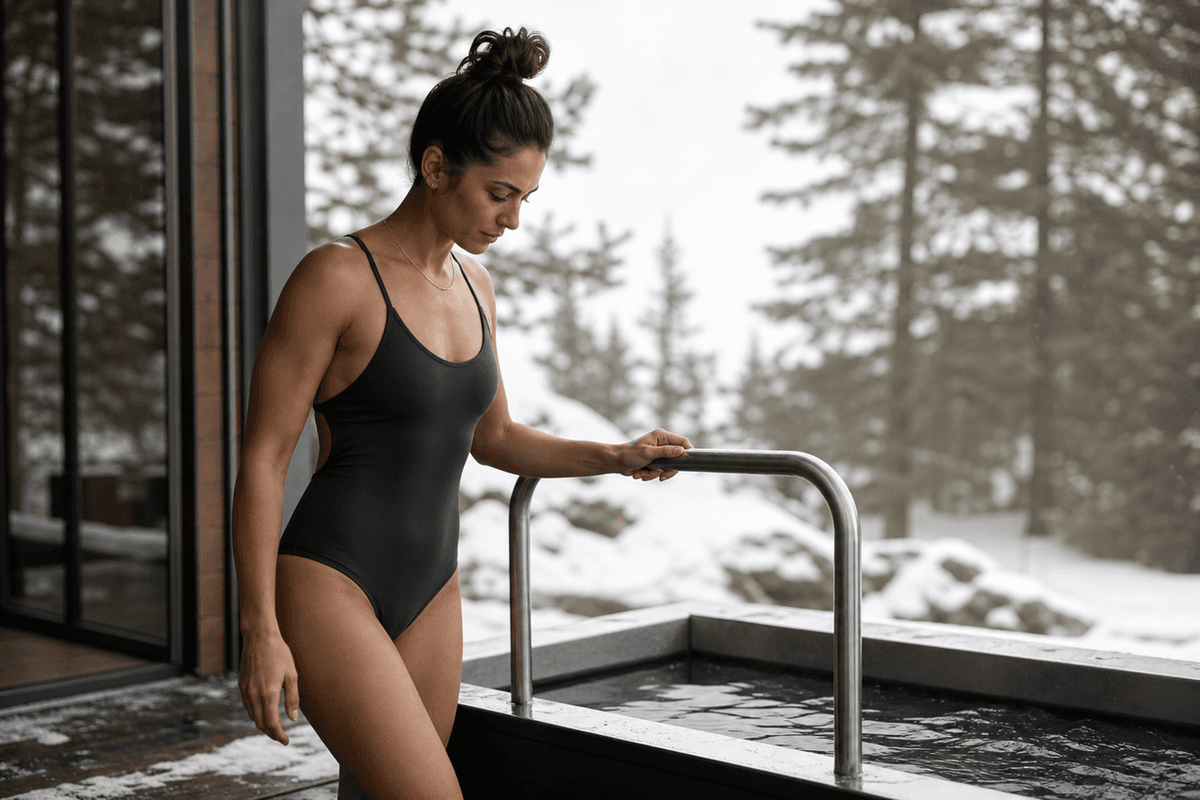
Short answer: Safe enough for most healthy adults who enter slowly, stay briefly and never go alone or after drinking. The risk sits in the first 30 to 60 seconds, when cold shock triggers an involuntary gasp and spikes heart rate and blood pressure. Heart disease, arrhythmia, uncontrolled hypertension and pregnancy mean ask a doctor first.
For a healthy adult, a short cold plunge in a supervised setting is low risk.
The danger is concentrated in the first 30 to 60 seconds of immersion, when the cold shock response can trigger an involuntary gasp, hyperventilation, and a surge in heart rate and blood pressure.
That is what makes cold water genuinely hazardous for people with heart disease, uncontrolled high blood pressure, or certain arrhythmias, and what makes plunging alone, or after drinking, a bad idea for everyone.
Most cold plunge injuries are not slow hypothermia. They are what happens in the first minute.
What is the cold shock response?
Your body’s automatic reaction to sudden cold water on the skin. Within seconds you gasp involuntarily, your breathing rate climbs sharply, and your heart rate and blood pressure spike.
Professor Mike Tipton and colleagues at Portsmouth have spent decades documenting this, and their work in Experimental Physiology is the reason cold water drowning is understood as a breathing problem rather than a temperature one.
The gasp is dangerous specifically because it can happen with your face underwater, and the hyperventilation makes it very hard to hold your breath or think clearly.
This response fades with repeated exposure, which is the strongest argument for building up gradually rather than starting with a two-minute submersion.
Why is the heart the real concern?
Because cold water asks it to do two contradictory things at once.
Shattock and Tipton described this in The Journal of Physiology in 2012 as autonomic conflict. Cold on the skin drives a sympathetic surge that speeds the heart, while cold on the face and breath-holding trigger the diving reflex, which is parasympathetic and slows it. Both signals arrive simultaneously.
In a healthy heart this is uncomfortable and unremarkable. In a heart with existing disease, or in people with long QT syndrome or other arrhythmia risk, it can provoke a dangerous rhythm.
This is the mechanism behind sudden cardiac events in cold water, and it is the reason the honest advice is medical clearance rather than “listen to your body.”
Who should avoid cold plunging?
Talk to a doctor before you plunge, or skip it, if you have heart disease, a history of arrhythmia (our guide to wellness with atrial fibrillation covers the commonest one), long QT syndrome, uncontrolled hypertension, a history of stroke, Raynaud’s (common in lupus, which our lupus guide covers), cold urticaria, peripheral neuropathy, epilepsy or a seizure disorder, or if you are pregnant.
Anyone taking beta blockers or blood pressure medication should also ask, because those drugs change how your cardiovascular system responds to the shock.
This is not a legal disclaimer bolted onto a wellness article. These are the specific groups for whom the cold shock response is not merely unpleasant.
What are the rules that actually make it safe?
Five, and they are not negotiable.
Never plunge alone, and never with your face able to go under. Never plunge after drinking alcohol, which impairs both judgment and thermoregulation.
Enter slowly and control your breathing rather than jumping in, which blunts the gasp reflex. Our breathing guide covers the technique.
Start short. Thirty seconds is a legitimate first session, and you build over weeks, as our beginner’s walkthrough sets out.
And get out before you stop shivering or lose dexterity in your hands, which is the signal that you have gone from a stimulus to a genuine cold stress.
What is afterdrop, and should you worry?
Your core temperature keeps falling for several minutes after you get out, as cold blood from your limbs circulates back inward. This is why people sometimes feel worse ten minutes after a plunge than during it.
It is normal after a short immersion and mostly matters after long or very cold exposures.
The practical response is to dry off, dress warmly, and move gently. Do not get into a hot sauna or a hot shower immediately to fix it, and do not drive while you are still shaking.
If you are cycling hot and cold deliberately, our contrast therapy guide covers how to do it sensibly.
The bottom line on cold plunge safety
Cold plunging is safe enough for most healthy adults who enter slowly, stay briefly, never go alone, and never drink first.
It is not safe for people with certain cardiac and circulatory conditions, and no amount of enthusiasm from a studio changes that.
If blood pressure is the specific concern, our guide on sauna, cold plunge and blood pressure covers why the heat and the cold pull in opposite directions.
Get cleared if you are in a risk group, and treat the first minute with the respect it deserves. For what cold actually delivers when done well, see our cold plunge evidence review.