Tea ceremony explained: Japanese chanoyu, Chinese gongfu cha, and mindful tea rituals
A tea ceremony is not just drinking tea slowly, it's one of the oldest mindfulness practices in the world, and you can participate without any prior knowledge.
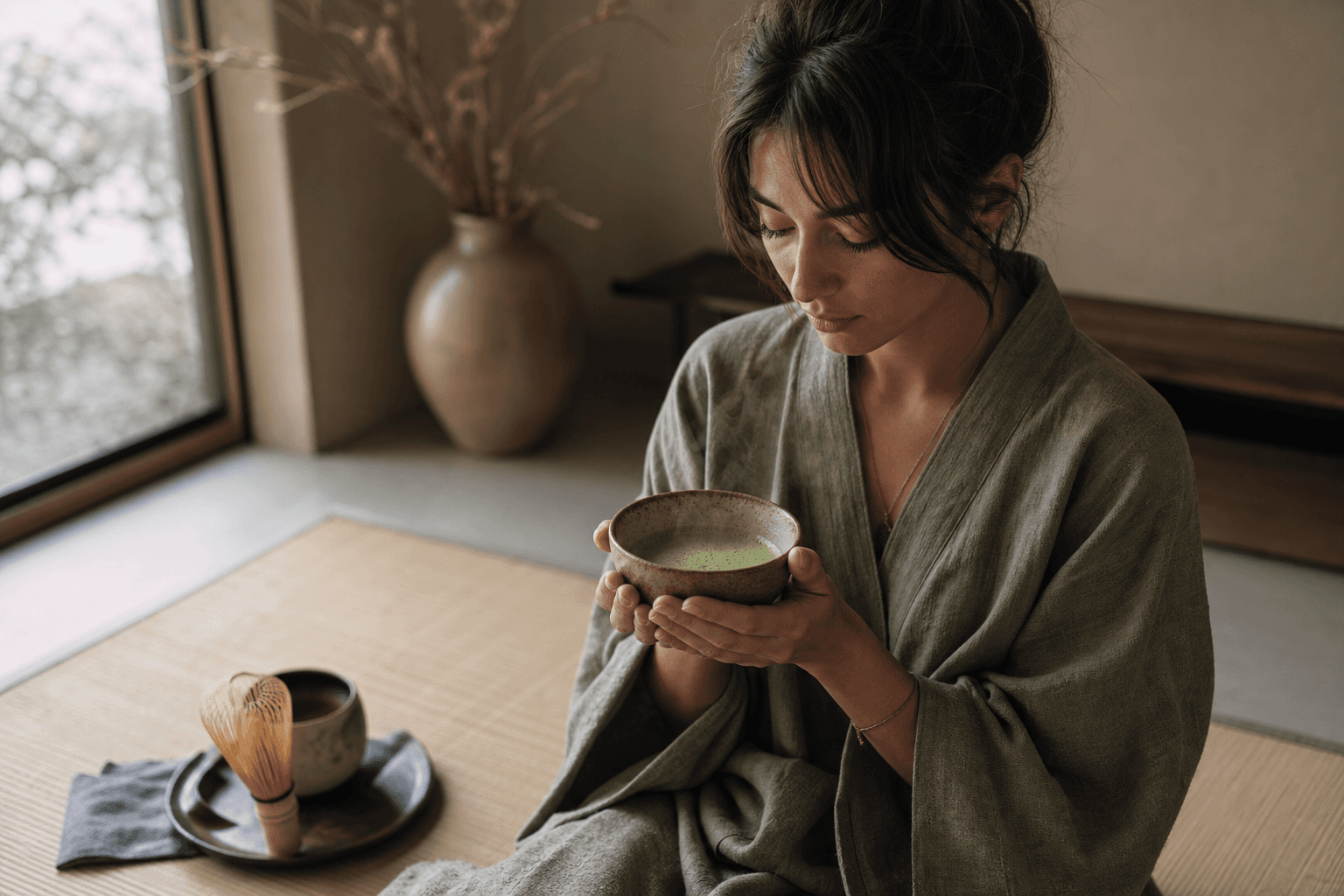
Short answer: A tea ceremony is structured attention while making and sharing tea: Japanese chanoyu whisks a single bowl of matcha through a formal sequence, Chinese gongfu cha brews many short infusions from the same leaves. No knowledge or belief is needed to attend, and an introductory session runs $20 to $60.
Tea ceremony is, at its most stripped-down, the art of paying full attention while making and sharing tea. At its most developed, in the Japanese chanoyu tradition, it is a complete aesthetic and philosophical practice that has shaped architecture, pottery, flower arrangement, and garden design over five centuries. Either way, you don’t need to know any of that to find a session genuinely quieting.
What a tea ceremony is
Japanese chanoyu (also called chado, “the way of tea”) is a ritualized tea practice developed in 15th and 16th century Japan, shaped largely by the tea master Sen no Rikyu, who codified its four core principles: wa (harmony), kei (respect), sei (purity), and jaku (tranquility). Powdered matcha is prepared and served in a specific sequence of precise, unhurried gestures, whisking, turning the bowl, receiving with both hands, within a purposefully spare environment. Every movement has been considered. Noise and distraction are minimized. The experience is, in effect, a structured meditation in which the preparation and drinking of tea is the object of attention.
Chinese gongfu cha (“skillful tea”) is China’s high-attention tea practice, developed primarily in Fujian and Guangdong provinces and centered on oolong, puer, or Taiwanese high-mountain teas. Where chanoyu uses a single bowl and a highly formalized sequence, gongfu cha uses a small clay teapot (yixing), a tea tray, and multiple cups, and brews many short infusions from the same leaves, observing how the character of the tea evolves across each pour. The host’s skill is in managing temperature, steeping time, and hospitality.
Wellness tea ceremonies in the current market draw on both traditions and sometimes blur them with elements from other practices, breathwork, intention-setting, even cacao-ceremony framing. At their best they offer genuine slowness and presence; at their weakest they offer expensive matcha and ambient music. The quality varies considerably.
Tea ceremony as a ritual context is adjacent to, but distinct from, cacao ceremonies: both center on a mindfully prepared drink in a group container, but tea ceremonies typically involve less emotional processing and more aesthetic attention to the preparation itself.
What a tea ceremony session is like
In a chanoyu setting:
- Guests remove shoes and enter a clean, spare room, often tatami-matted, with a single flower arrangement and a hanging scroll.
- A brief sweets course (wagashi) is served first, the traditional sequence prepares the palate for matcha’s bitterness.
- The host prepares the tea in silence or near-silence: cleaning the bowl, scooping matcha, adding hot water at just below boiling, whisking in a specific motion until the tea is frothy and even.
- The bowl is placed on the tatami and rotated toward the guest. The guest receives it with both hands, turns the bowl away from the “front” before drinking, a gesture of humility, and drinks in two or three sips.
- The bowl is admired, returned, and the host cleans everything with the same deliberateness used to prepare it.
Sessions range from a brief introductory ceremony (30, 45 minutes) to a formal chakai (1.5, 2 hours) or a full chaji (4, 5 hours, including a meal).
In a gongfu cha setting:
- The host arranges the equipment and welcomes guests around the tea table, small cups, a gaiwan or small yixing pot, a pouring pitcher, a tray to receive rinse water.
- The first short infusion rinses both the leaves and the cups. Guests observe the color and smell.
- Successive infusions are poured and shared in rounds, each with a slightly different character. Conversation is easy, natural. The host tracks time and temperature; guests drink and compare.
- A full gongfu session might span 8, 15 infusions over 45, 90 minutes.
In a wellness tea ceremony context: Expect more variation: breathwork to open, an intention-setting round, guided attention to the taste and sensation of the tea, and sometimes a sharing circle at the close. These sessions tend to be 60, 90 minutes.
What the evidence says about tea ritual
- Reasonable evidence for: the meditative attentiveness of tea ceremony aligns closely with what research supports in mindfulness-based practices, present-moment focus, slowing of the breath, reduced physiological arousal. The ritual structure itself (predictable sequence, deliberate pace) is consistent with what we know about how rituals reduce anxiety and increase sense of control. Tea’s L-theanine, especially in matcha, is an amino acid with well-supported evidence for promoting calm alertness and attenuating caffeine’s jittery edge.
- Plausible: that the social intimacy of sharing tea in a deliberate, unhurried context produces the same connection and belonging effects seen in other well-studied shared ritual contexts.
- Not established / overstated: specific therapeutic claims about particular teas curing disease, extending lifespan, or treating illness. Tea has real bioactive compounds with interesting research; none of it supports the language often used in premium wellness tea marketing.
Benefits people report from tea ceremony
Participants most consistently describe a feeling of being genuinely unhurried, rare enough in modern life that it stands out. The forced slowness of ceremony creates a kind of permission: you are not supposed to be anywhere else or doing anything else.
Many people find this more restorative than a general relaxation class because the structure gives the mind something specific to attend to, rather than trying to “relax” in the abstract.
In gongfu cha, people often describe a heightened sensory acuity, actually tasting the difference between infusions, noticing the way the same tea changes. This kind of sustained sensory attention is itself a form of mindfulness practice.
Who tea ceremony is for, and who should skip it
Tea ceremony is broadly accessible, there are almost no physical requirements, and no philosophical or religious commitments are necessary. It works well for:
- People drawn to aesthetic experience and craft
- Anyone who wants a meditative experience with structure but without spiritual instruction
- Those curious about Japanese or Chinese cultural practice in an experiential (rather than academic) form
- People who find silent meditation difficult and appreciate having something to do with their hands and attention
Caffeine sensitivity: matcha contains meaningful caffeine, roughly 30, 70mg per bowl, plus significant L-theanine. If you are sensitive to caffeine, afternoon or evening ceremonies can affect sleep. Ask whether caffeine-free options (herbal, roasted twig teas like hojicha) are available.
Who it’s less suited for: people who need vigorous physical movement to unwind, or who find slow, precise ritual frustrating rather than grounding.
What a tea ceremony costs
- Introductory group chanoyu session at a cultural center or tea school: $20, $60
- Gongfu tea tasting at a specialty tea shop: $20, $50 per person
- Wellness tea ceremony (in a retreat or studio setting): $35, $90
- Multi-week chanoyu study (ongoing lessons at a tea school): $80, $200/month
- Private ceremony (one-on-one host experience): $75, $200+
- At home: a quality gongfu cha setup (gaiwan or yixing pot, cups, tray) runs $40, $150; good-quality tea $15, $60 per session depending on the leaf
How to choose a good practitioner or experience
For chanoyu: seek out teachers affiliated with one of the major Japanese tea schools, Urasenke, Omotesenke, and Mushanokoji-senke are the three main lineages. Cultural centers, Japanese community organizations, and university Japanese culture programs often host accessible introductory sessions taught by trained practitioners. Ask how long the teacher has studied, and with whom. Chanoyu is taught through years of apprenticeship; a weekend-trained enthusiast and a 20-year practitioner offer quite different experiences.
For gongfu cha: look for specialty tea shops with knowledgeable staff, the quality of the tea and the host’s knowledge of origin and processing matter. True gongfu practice is about understanding the tea; a shop that can tell you the elevation, cultivar, and processing of what they’re serving is a good sign.
For wellness tea ceremonies: these are the most variable category. Ask what tea tradition the facilitator draws on and whether they have studied that tradition formally. “I love tea and mindfulness” is not the same as actual training, and the difference shows.
A note on cultural respect: both chanoyu and gongfu cha are living cultural practices with deep craft lineages. They welcome curious outsiders, both have long traditions of hospitality and teaching across cultural lines. The appropriate posture is genuine interest and respect, not costume or performance.
Wellness tea ceremonies that aestheticize the objects (the bowls, the rituals) without honoring the knowledge tradition that produced them sit in uncomfortable territory; choose facilitators who know the difference.
FAQ: tea ceremony
Do I have to know anything about tea to attend? No. Any good facilitator of introductory ceremony will teach as they go. Arrive curious, with no expertise required.
Is matcha the only tea used in tea ceremony? In chanoyu, yes, ceremonial-grade matcha is traditional. Gongfu cha uses a wide range: oolong, puer, white, green, roasted teas. Wellness ceremonies vary; some use matcha, some herbal blends, some whatever the facilitator prefers.
How is a tea ceremony different from just making a nice cup of tea at home? Intention and full attention. The ceremony’s power is in the deliberateness, preparing and receiving with complete focus, setting aside everything else for that duration. You can approximate this at home; a session with an experienced host deepens it considerably, at least at first.
Is a tea ceremony appropriate for someone not from Japanese or Chinese culture? Yes, both traditions have historically welcomed sincere guests of any background. The key is respectful engagement: follow the host’s cues, ask genuine questions, and approach the practice as a guest learning something rather than a consumer extracting an aesthetic experience.
The honest summary on tea ceremony
Tea ceremony is one of the most understated wellness experiences available: no equipment required, no physical challenge, no belief system necessary. What it offers, structured slowness, sensory attention, and the rare experience of being fully present for a single unhurried act, is genuinely hard to find elsewhere.
The research on mindfulness and ritual supports its effects. The tradition behind it is centuries deep. If you find yourself frequently rushing through everything, spending an hour with someone who moves deliberately and purposefully is its own kind of corrective.