Temazcal and sweat lodge ceremonies explained: heat, ritual, and real risks
Sweat lodge ceremonies are ancient, powerful, and carry genuine physical risk, here's what to know before you commit to the heat.
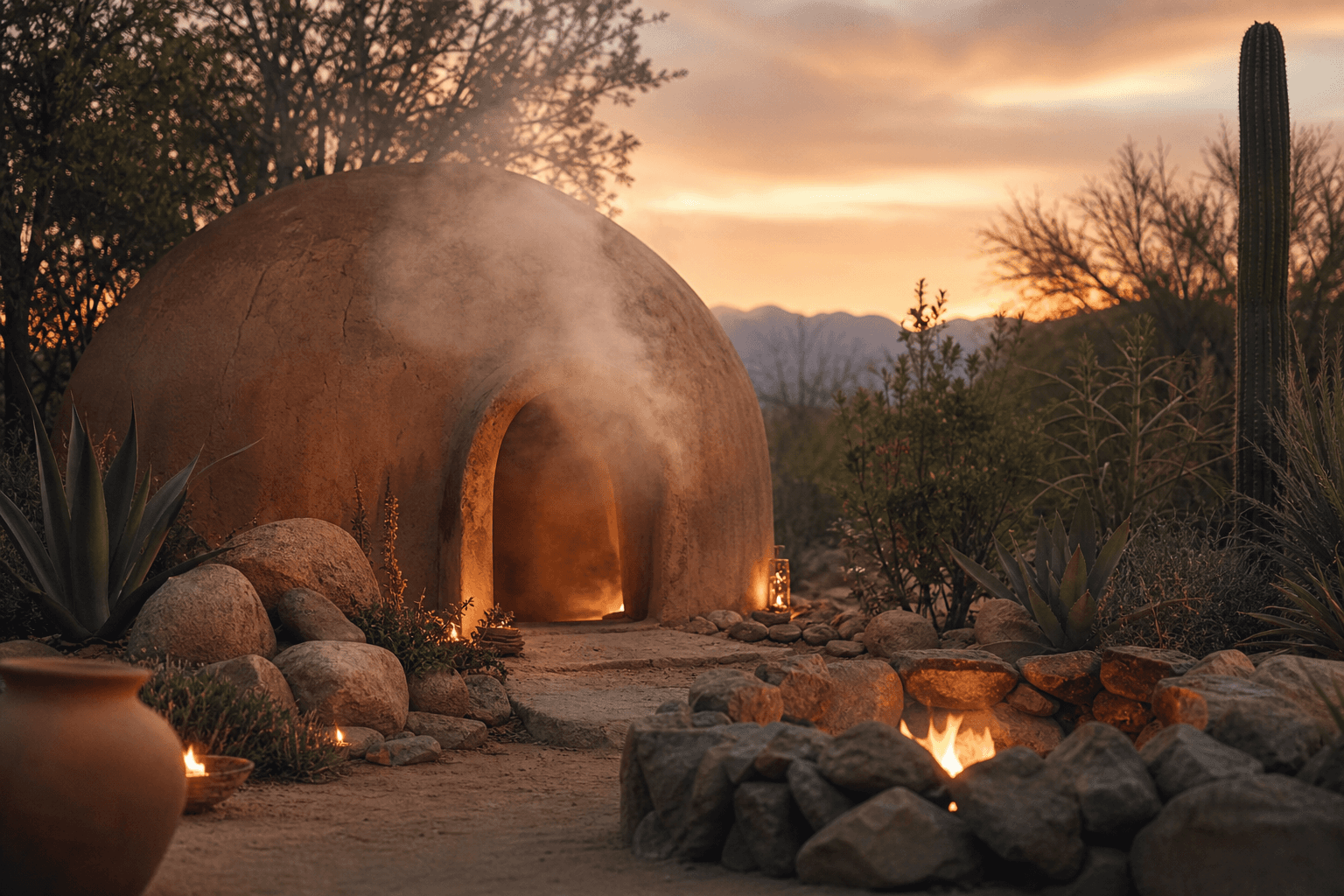
Short answer: A temazcal or sweat lodge is a ceremonial steam dome run in rounds of rising heat, 120 to 160°F, over one and a half to three hours. The experience is real and so is the risk: heat illness has killed participants. Vet the facilitator’s lineage, and never attend one that discourages leaving.
Temazcal and sweat lodge ceremonies have been practiced across the Americas for thousands of years. They are also, in commercialized wellness contexts, the site of some of the most serious safety failures in the modern retreat industry. Understanding what these ceremonies are, and what can go wrong, is not optional reading if you’re considering one.
What a temazcal is
A temazcal (from the Nahuatl temazcalli, “house of heat”) is a dome-shaped sweat structure used by Mesoamerican peoples, most prominently Aztec, Maya, and other indigenous groups of Mexico and Central America, for physical purification, healing, and ceremony. Water poured over heated volcanic stones (abuelitas, or “grandmothers”) creates steam inside the enclosed space. Medicinal herbs, copal incense, chanting, prayer, and guided breathwork typically accompany the heat.
Sweat lodge (or inipi in Lakota) is the term used primarily for the equivalent practice among Plains and other North American indigenous peoples. The structure is typically a low willow-frame dome covered with blankets or hides; heated stones (grandfathers in Lakota tradition) are brought in rounds, with participants crawling in and out between rounds.
Both practices are active, living spiritual and healing traditions held by specific indigenous communities. They are not historical artifacts, they are ongoing ceremonies that belong to real peoples with real lineages.
In the commercial wellness space, temazcal is widely offered at Mexican resorts and yoga retreats, sometimes responsibly, often not.
What a ceremony is like
A traditional or well-facilitated temazcal or sweat lodge typically unfolds in rounds, each one hotter than the last:
- Preparation. Participants arrive and are welcomed by the facilitator or curandero/a (healer). Intentions are set. You’re told what to expect, what the exit protocol is, and that you may leave at any time, a responsible facilitator insists on this.
- Entering the lodge. You crawl through a low door, the entrance is intentional, a gesture of humility. You sit close together on the earth or a simple mat, often in the dark.
- First round. Heated stones are brought in; water and herbs are poured over them. Steam fills the space. Chanting, prayer, or guided breathing begins. This round is typically the least intense.
- Subsequent rounds. More stones are added. Heat builds. Facilitators may lead song, invocations, or silence. Each round has a distinct intention in traditional practice.
- Exit and rest. Between rounds, you can exit, breathe fresh air, and rest. After the final round, participants exit fully, rinse or cool down, and the ceremony closes.
Duration: 1.5, 3 hours for the full ceremony. Heat inside can reach 120, 160°F (49, 71°C). This is not a sauna. The intensity is real.
What the evidence says about sweat lodges
- Reasonable evidence for: physical sweating, cardiovascular stimulation, and the general relaxation response associated with heat exposure. The stress-reduction and community-building effects of group ceremony are consistent with broader research on ritual and belonging. Some evidence supports heat exposure for muscle recovery and cardiovascular conditioning (see therapeutic sauna research).
- Debated or mixed: specific claims about detoxification through sweat (the liver and kidneys are the primary detox organs, not sweat glands), spiritual healing, or disease treatment go beyond what evidence supports.
- Not established / overstated: healing of specific medical conditions. The ceremony’s value is psychological, relational, and cultural, these are real and meaningful, but they are not the same as medical treatment.
Benefits people report from a temazcal
Participants most commonly describe a profound sense of physical release, emotional openness, and community connection. The extreme conditions create a kind of mental clarity, the ordinary noise of daily life becomes irrelevant when all your attention is on breathing through the heat. Many people describe the experience as genuinely transformative, particularly in authentic ceremonial contexts with knowledgeable facilitators.
Who a sweat lodge is for, and who should skip it
You should not participate if you:
- Have cardiovascular disease, high blood pressure, or a history of heart problems
- Are pregnant
- Have diabetes (heat significantly affects blood glucose regulation)
- Have a history of heat stroke or heat sensitivity
- Are taking medications that impair heat regulation (some antipsychotics, diuretics, antihistamines)
- Have consumed alcohol in the 24 hours prior, this is a serious risk factor
- Have a respiratory condition that could be aggravated by steam
Talk to your doctor before attending if you have any chronic medical condition. This is not standard spa-world caution, it is a genuine risk assessment.
Heat illness is a real danger. Multiple deaths have occurred in commercialized sweat lodge and temazcal ceremonies, most notably the 2009 James Arthur Ray tragedy in Sedona, Arizona, where three participants died and eighteen were hospitalized after a poorly facilitated ceremony with extreme heat and a facilitator who discouraged people from leaving. Responsible facilitators explicitly and repeatedly give participants permission, and a clear path, to exit at any time. If a facilitator ever discourages you from leaving, leave.
Signs of heat illness to watch for yourself and others: stopping sweating while others still are, confusion, weakness, nausea, fainting. These are emergencies, get out and cool down immediately.
What a temazcal ceremony costs
- At a Mexican resort or retreat center: $50, $200 for a ceremony included in a multi-day retreat. Some standalone offerings at $30, $80.
- At indigenous or community-run ceremonies: often donation-based or offered as part of a cultural/healing program. Pricing varies widely.
- Private temazcal sessions with a curandera/o: $100, $300.
How to choose a responsible facilitator
This section matters more here than in almost any other wellness context.
For temazcal: look for a facilitator with genuine lineage, someone who trained within an indigenous healing tradition, ideally under a recognized curandera/o, not someone who took a workshop at a retreat center and built a backyard dome. Ask directly: who trained you, and for how long? How many ceremonies have you led? What is your emergency protocol?
For sweat lodge: understand that the Lakota and other Plains nations have expressed significant concerns about non-Native people leading or commercializing inipi ceremonies. The Lakota Summit on Sovereignty has issued clear statements on this. If you are participating in a sweat lodge offered outside an indigenous community context, ask carefully about who is facilitating and what their relationship to the tradition is.
Non-negotiable safety questions:
- Can I leave at any time? (Answer must be an unambiguous yes)
- What is the exit procedure?
- What do you do if someone shows signs of heat illness?
- Is there water available inside and outside?
- Is there a cool-down area ready?
A facilitator who answers these questions confidently and without defensiveness is a good sign. One who minimizes the risks or frames “staying in” as spiritual commitment is a red flag.
FAQ: temazcal and sweat lodge ceremonies
Is temazcal the same as a sauna? The heat levels are comparable and some physiological effects overlap, but the cultural and ceremonial framing is entirely different. A sauna is a wellness amenity; a temazcal is a ceremony with spiritual meaning for the people who hold it. Treating them as interchangeable is a misunderstanding of both.
What should I wear? Most ceremonies: a bathing suit or lightweight shorts and a tank top. Bring a towel and a change of clothes. Remove jewelry. Your facilitator will specify.
Can I eat beforehand? Don’t eat a heavy meal in the 2, 3 hours before. Stay well hydrated in the hours leading up to it, but don’t overdrink immediately before. Alcohol and heat is a dangerous combination, abstain for at least 24 hours.
What if I need to leave mid-ceremony? You leave. This is always your right. In a responsibly run ceremony, the facilitator will have shown you the exit, which is always accessible. Crawl out, breathe, sit in the shade, drink water. No explanation required.
The honest summary on sweat lodge ceremonies
Temazcal and sweat lodge ceremonies offer a genuine and powerful experience of physical intensity, emotional release, and communal ceremony, rooted in living indigenous traditions that deserve respect, not consumption. The benefits are real. So are the risks: heat illness is not theoretical, and deaths have occurred under irresponsible facilitation.
Do your homework on the facilitator, know your own health picture, and insist on a clear exit. In the right hands, this is a meaningful experience. In the wrong ones, it is genuinely dangerous.