What to pack for a wellness retreat: a calm, minimal checklist for 2026
The best retreat packing list is short. Bring less than you think, a few things people always forget, and almost none of what the influencer hauls suggest.
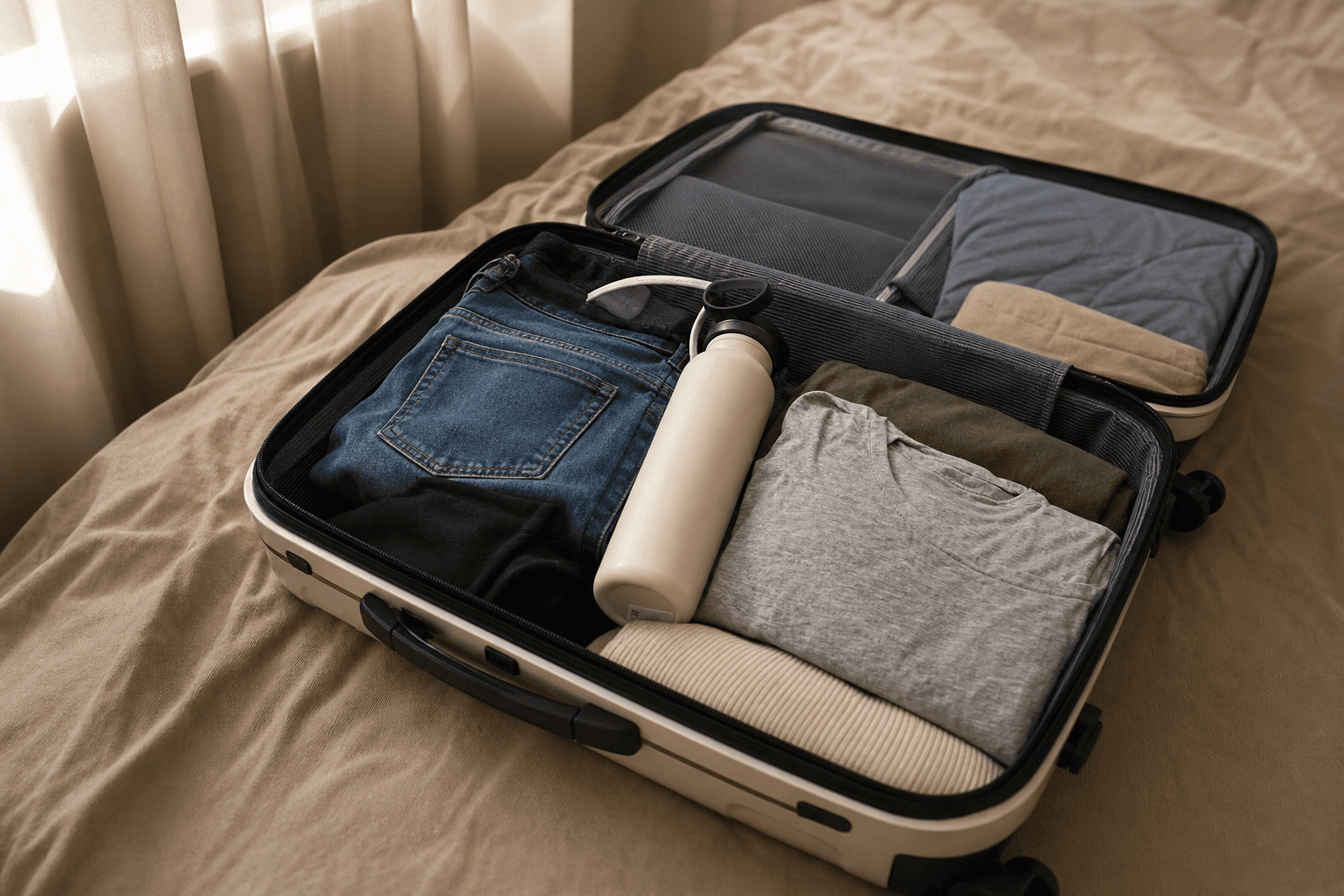
Short answer: Bring less than you think: soft layers you can move in, slip-ons plus one pair you can walk in, a swimsuit, a refillable water bottle, your medications and a notebook. A week needs only extra socks and underwear on top. Most forgotten: a warm evening layer, earplugs and an eye mask.
Soft layers you can move in, one pair of easy indoor shoes plus one pair you can actually walk in, a swimsuit, a refillable water bottle, your medications, and a notebook. That list covers a long weekend at almost any wellness retreat, and a full week needs little more than extra socks and underwear.
Everything beyond that is optional, and most of what you are tempted to add will come home unworn. Retreats are deliberately casual: the days revolve around comfort rather than presentation, and you will wear the same two or three outfits on rotation without anyone noticing.
Overpacking is the most common first-timer mistake, and it quietly works against the point of the trip.
The packing list at a glance
| Category | Bring | Leave at home |
|---|---|---|
| Clothes | 2 to 3 sets of soft layers, one warm evening layer | Going-out clothes, heels, anything that needs ironing |
| Shoes | Slip-ons for indoors, one pair you can walk or hike in | A third and fourth pair |
| Activities | Swimsuit, quick-dry towel if not provided, rain layer | A full gym kit unless the schedule calls for it |
| Health | Medications and supplements, small first-aid basics | A pharmacy’s worth of “just in case” |
| Comfort | Water bottle, earplugs, eye mask, notebook and pen | Pillows, blankets, candles, speakers |
| Tech | Phone, charger, a watch or small alarm clock | Laptop, tablet, work you plan to catch up on |
Check the retreat’s own list before you finalize yours. Most places publish one, and it will tell you the two things this table cannot: what they provide (towels, mats, toiletries, hair dryers) and what the weather actually does there in your month.
What the essentials really look like
Soft layers. Loose clothes you can stretch, sit cross-legged, and nap in. Nothing needs to be new or branded: leggings, sweatpants, a couple of t-shirts, and a hoodie is a complete retreat wardrobe.
Easy shoes. Slip-ons matter more than they sound, because many retreat spaces are shoes-off and you will take them on and off a dozen times a day. Add one pair you can walk a trail in if there is any outdoor time.
Anything the activities need. A swimsuit for a sauna, cold plunge, hot tub, or pool, plus rain gear if the region calls for it. If your retreat includes heat and cold work, our guide to what to wear and bring to a sauna or cold plunge covers the specifics.
A reusable water bottle. You will drink more than usual, especially around heat, movement, or altitude.
Basic toiletries, in small sizes. Many places provide the essentials. Check first, then pack travel sizes rather than full bottles.
If you do need to buy anything, keep it modest. A decent quick-dry towel and a refillable bottle together run somewhere in the $30 to $60 range, and there is no such thing as necessary retreat-specific clothing at any price.
The five things people always forget
A warm layer for evenings, even in summer. Retreat settings are often rural and higher up than the city you left, and the temperature drop after sunset surprises people year round.
Medication and supplements in your carry-on, never the checked bag. Bring enough for the full stay plus a couple of spare days, in labeled containers.
A notebook and a pen. A surprising amount happens on a good retreat that you will want to remember, and writing by hand fits the unplugged mood better than opening your phone.
Earplugs and an eye mask, especially for a shared room. Light sleepers regret skipping these more than any other item, and they cost almost nothing.
Small first-aid basics if you are going somewhere remote: blister plasters, painkillers, an antihistamine. Rural retreats are often well away from the nearest pharmacy.
What to leave at home, and why
Going-out clothes. You will not use them. Even at higher-end places, dinner is people in clean sweatpants.
Most of your tech. Bring the phone if you must, but the less screen you pack, the better the reset works. Leaving the laptop behind is the single most restful decision most guests make, and it is much easier to hold when the machine is 200 miles away.
A schedule of your own. Do not bring work to fill the gaps. The gaps are the point, and they are where most of the actual benefit shows up. Our piece on what wellness retreats actually do is honest about how modest and how real that benefit tends to be.
Does the retreat type change the list?
A little, and less than you would expect.
A yoga or movement retreat adds one more set of clothes, because you will sweat through them, and a mat only if the place asks you to bring one. A silent or meditation retreat usually asks you to leave books, journals, and phones behind entirely, so pack lighter rather than heavier: see what a silent retreat involves before you assume.
A spa-leaning stay is the only case where you might want one nicer outfit, and even then, one. A wilderness retreat is the only case where gear genuinely matters: proper boots, real rain protection, and layers that work wet. Going alone changes nothing about the list; our solo retreat guide covers the rest.
How to handle the unplug
If the retreat encourages a phone-light or fully offline stay, commit to it rather than half-doing it. Half-doing it is worse than either extreme, because you keep checking without ever settling.
Tell the people who need to reach you that you will be offline, give them the retreat’s emergency contact, and set an auto-reply. Pack a watch or a small alarm clock so your phone is not your only link to the time, which is the loophole that pulls most people back into the screen. If the phone is the actual thing you are trying to escape, a digital detox retreat targets it directly.
FAQ: packing for a wellness retreat
How many outfits do I need for a week-long retreat? Three or four sets of soft layers, plus extra socks and underwear. Most retreats have laundry access or at least a sink, and nobody is tracking what you wore yesterday.
Do I need to bring my own yoga mat or towels? Usually not, but check the retreat’s list rather than guessing. Most places provide mats, props, and bath towels. Quick-dry towels for pools, saunas, or plunges are the item most often left off it.
What should I pack if the retreat collects phones? A watch or small alarm clock, a notebook, and a paper book if reading is allowed. Also write down your travel details, since you cannot pull up a booking confirmation on a phone you handed in.
Is there anything a retreat will ask me not to bring? Alcohol is the common one, and many places ask you to leave it, along with recreational substances, at home. Some silent and meditation retreats also ask you to hand over books, journals, and electronics for the duration. Read the guidelines before you pack rather than after.
The bottom line on retreat packing
Soft layers, easy shoes, a swimsuit, a water bottle, your meds, and a notebook will carry you through almost any retreat. Add a warm evening layer, earplugs, and an eye mask, and you have covered the regrets people actually report.
If you are still choosing where to go, our first-timer’s checklist and the booking FAQ cover the practical side, what to expect at a wellness retreat covers how the days unfold, and you can browse the retreats page for places we would recommend. We only list what we would send a friend to.