Your first cold plunge: a calm beginner's walkthrough
The hardest part is the first thirty seconds, and almost nobody tells you what actually happens to your body in them. Here's the honest, unhurried version.
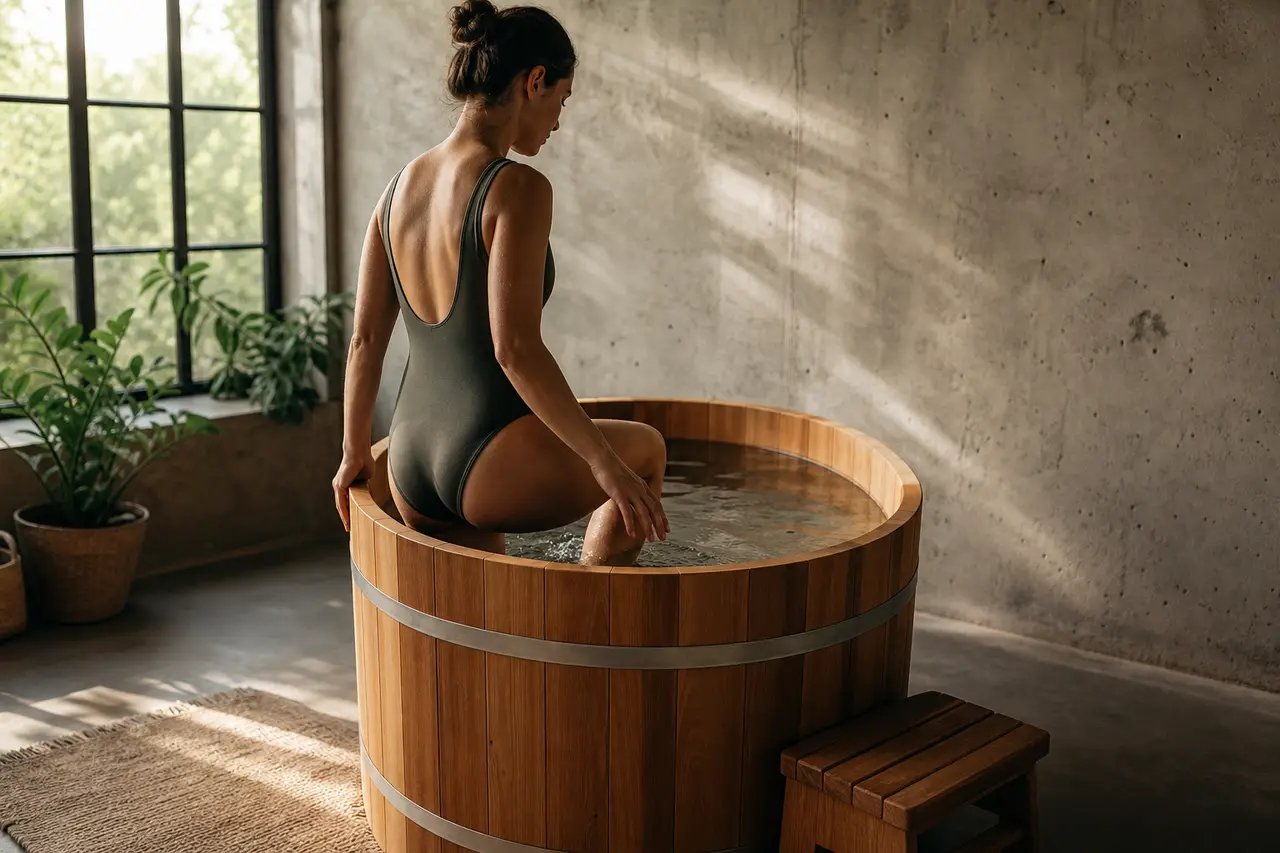
Short answer: Enter slowly to chest depth and breathe out long and slow through the first thirty seconds; that gasp and racing heart are the cold shock response and they settle. One to two minutes at 50 to 59°F (10 to 15°C) is plenty for a first go. Warm up gradually afterwards, not in a hot shower.
Your first cold plunge is simple: get in slowly to about the chest, exhale long and slow through the first thirty seconds while your body panics and then settles, stay in for 1 to 2 minutes, and get out before you start shivering hard.
The gasp and racing heart at the start are normal and they pass. You do not need ice-bath temperatures or heroics on day one; a plunge around 50 to 59°F (10 to 15°C) for a short time is plenty to get the real benefits and to learn that you can do it.
What actually happens when you get in?
The first thing you will feel is the cold shock response: a sharp involuntary gasp, a spike in heart rate, and an urge to hyperventilate.
This is a normal reflex, not a sign anything is wrong, and it is the single reason to never jump into very cold water or plunge alone as a beginner, because that gasp underwater is genuinely dangerous.
Enter slowly and stay upright, and within about 30 to 60 seconds the panic fades and your breathing settles. That settling is the moment beginners are chasing; it teaches your nervous system that it can meet a stressor and calm itself.
How should you breathe?
Slow, long exhales are the whole technique. When the cold hits and your body wants to gasp and pant, do the opposite: take a slow breath in and a longer breath out, and repeat.
Lengthening the exhale nudges your nervous system out of panic and into control, and it is the difference between two miserable minutes and two composed ones. If breathing through it feels like the hard part, our dedicated guide on how to breathe during a cold plunge goes deeper.
How cold, and how long, for a first time?
Start warmer and shorter than the internet suggests. A first plunge around 50 to 59°F (10 to 15°C) for 1 to 2 minutes is ideal; you get the full nervous-system and mood effect without a brutal experience that puts you off. Colder is not better for a beginner, and neither is longer.
Leave when you have settled and feel like you have had enough, not when a timer or an influencer says three minutes. Over a few weeks you can go a little colder or a little longer if you want, but there is no prize for suffering.
How do you get out and warm up?
Get out before you are shivering violently, and warm up gradually with dry clothes, movement, and warm (not scalding) drinks. Resist the urge to jump straight into a hot shower, a gentle, natural rewarming feels better and lets the afterglow last.
That afterglow, the clear, alert, genuinely good mood, is the honest reward, and it is driven mostly by a surge in noradrenaline; our explainer on cold exposure and dopamine covers what is really behind that feeling.
Who should be cautious about cold plunging?
Cold plunging is safe for most healthy adults who ease in, but check with a doctor first if you have heart disease, high blood pressure, are pregnant, or have Raynaud’s or a similar cold-sensitivity condition, since the cold shock puts real load on the heart.
Never plunge after drinking alcohol, and as a beginner, never plunge alone. If you feel genuinely unwell rather than just cold, get out.
The bottom line on your first plunge
Enter slowly, exhale long through the first thirty seconds, stay a minute or two, and warm up gently after. That is a complete, successful first cold plunge. Once the practice clicks, our guide on how often to sauna or cold plunge covers building it into a real routine, and if you want to add heat, sauna or cold plunge first covers the contrast cycle.
If you would rather rehearse the cold-shock response at home before booking anything, our cold plunge vs cold shower comparison covers what a free 30 to 60 seconds actually gives you and what the tub adds on top.