Your first yoga class: a beginner's guide to walking in
Which style, what to bring, where to put your mat, and how to survive the parts nobody warns you about. The honest version for anyone who feels too stiff or too new for yoga.
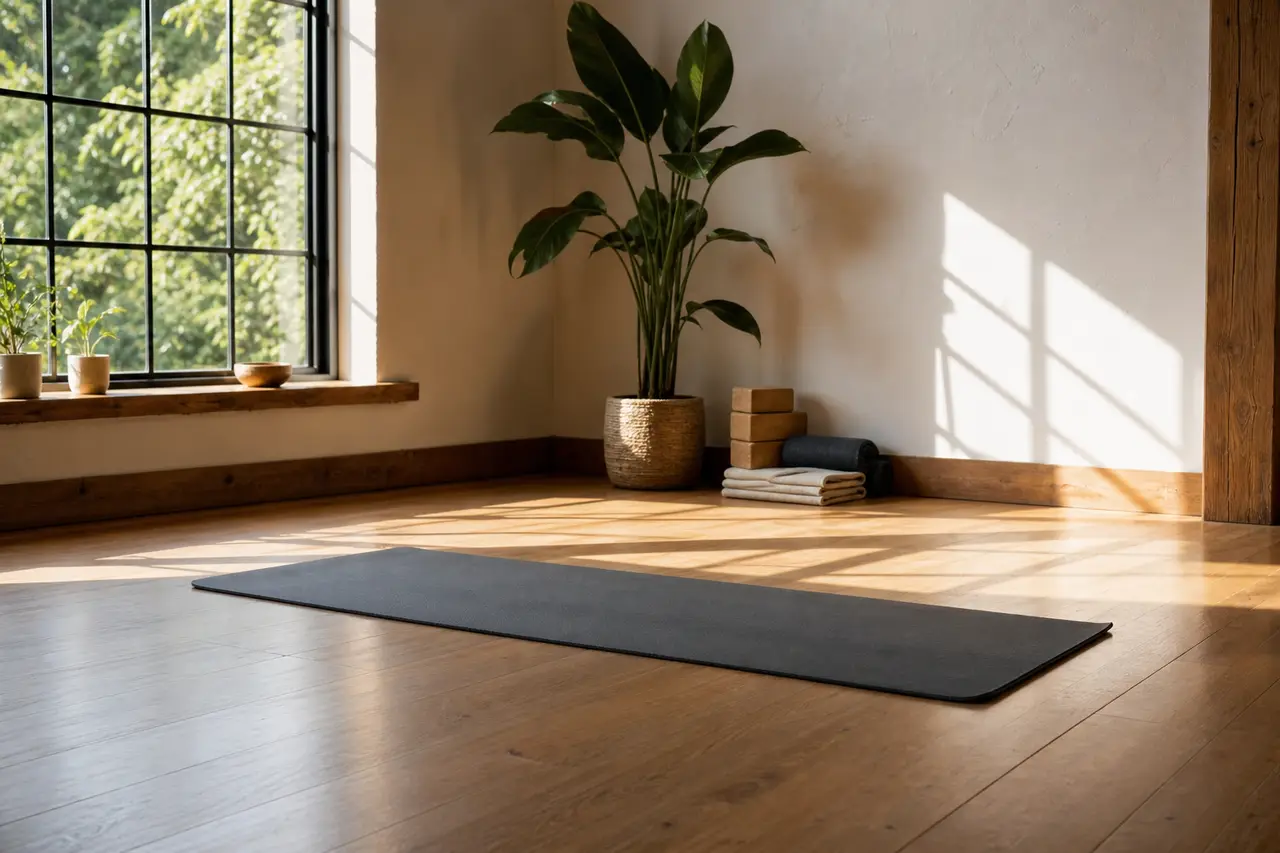
Short answer: Pick a class labelled beginner, gentle, hatha or slow flow, and leave hot, power and fast vinyasa for later. Arrive five to ten minutes early, tell the teacher it is your first class, and wear fitted clothes you can bend in. Child’s pose is always available. Flexibility is an outcome, not a prerequisite.
Your first yoga class is easiest if you pick the right style, arrive a few minutes early, and let go of keeping up. Start with a class labeled beginner, gentle, hatha, or slow flow, and avoid hot, power, or advanced vinyasa for a first try.
Bring a mat if you have one (studios usually rent them), water, and comfortable clothes you can move in. You will not be flexible enough, because nobody starts flexible, that is what the practice is for, and you can rest in child’s pose any time you need. A good teacher expects beginners and will offer easier options throughout.
Which style should you start with?
This is the whole decision. Yoga styles vary enormously in intensity, and walking into the wrong one is how beginners decide “yoga isn’t for me” when really they just picked a hard class.
Good first classes: anything called beginner, gentle, hatha, slow flow, or restorative. These move at a manageable pace with clear instruction.
Wait a while for: hot yoga (heat plus newness is a lot), power yoga, ashtanga, and fast vinyasa. They assume you already know the poses.
If you are choosing between the heated and unheated versions specifically, our hot yoga vs regular yoga comparison covers the difference. And for what yoga actually does for your body and mind, our yoga benefits explainer has the evidence.
What should you bring and wear?
Wear clothes you can stretch and bend in that will not fall or ride up when you are upside down, fitted is better than loose here. Bring a water bottle and a small towel. If you own a mat, bring it; if not, nearly every studio rents or lends one. That is genuinely all you need. Skip heavy scent, and practice barefoot, socks slip.
What happens in class, and where do you set up?
Arrive 5 to 10 minutes early, tell the teacher it is your first class (they will keep an eye out and offer modifications), and set your mat where you can see the teacher but toward the back or side so you can watch others without feeling on display.
Class usually opens with some settling and breathing, moves through a sequence of poses at the class’s pace, and ends lying down in a few minutes of stillness called savasana, which is not optional bonus time, it is part of the practice, so stay for it. Move at your own speed and skip anything that hurts.
What do you do when you can’t keep up?
Rest. The single most useful thing to know is that child’s pose, kneeling and folding forward, is always available and always acceptable; drop into it any time you are winded, lost, or overwhelmed, and rejoin when you are ready.
Nobody is judging you, most of the room is too focused on their own balance to notice. You are not supposed to nail every pose on day one. Falling out of a balance, being confused by a cue, and needing breaks are all completely normal and expected.
The etiquette that makes it easy
Shoes off before the mat area, phone silenced and away, arrive on time (walking into savasana is the one real faux pas), and clean the rented mat after. Do not worry about being the stiffest or newest person there; every regular in that room was exactly where you are, and yoga is genuinely not a flexibility contest. Flexibility is an outcome, not a prerequisite.
The bottom line on your first yoga class
Pick a gentle, beginner-labeled class, come in comfortable clothes, set up where you can see, and rest whenever you need to. Do that and a first yoga class is welcoming, not intimidating. When you are ready to go deeper or on a trip, our yoga retreats for beginners guide covers the next step.