Best couples wellness retreats in the US for 2026: where to go to actually reconnect
An honest, regionally specific guide to choosing a couples retreat that does the quiet work, not the spa-brochure version.
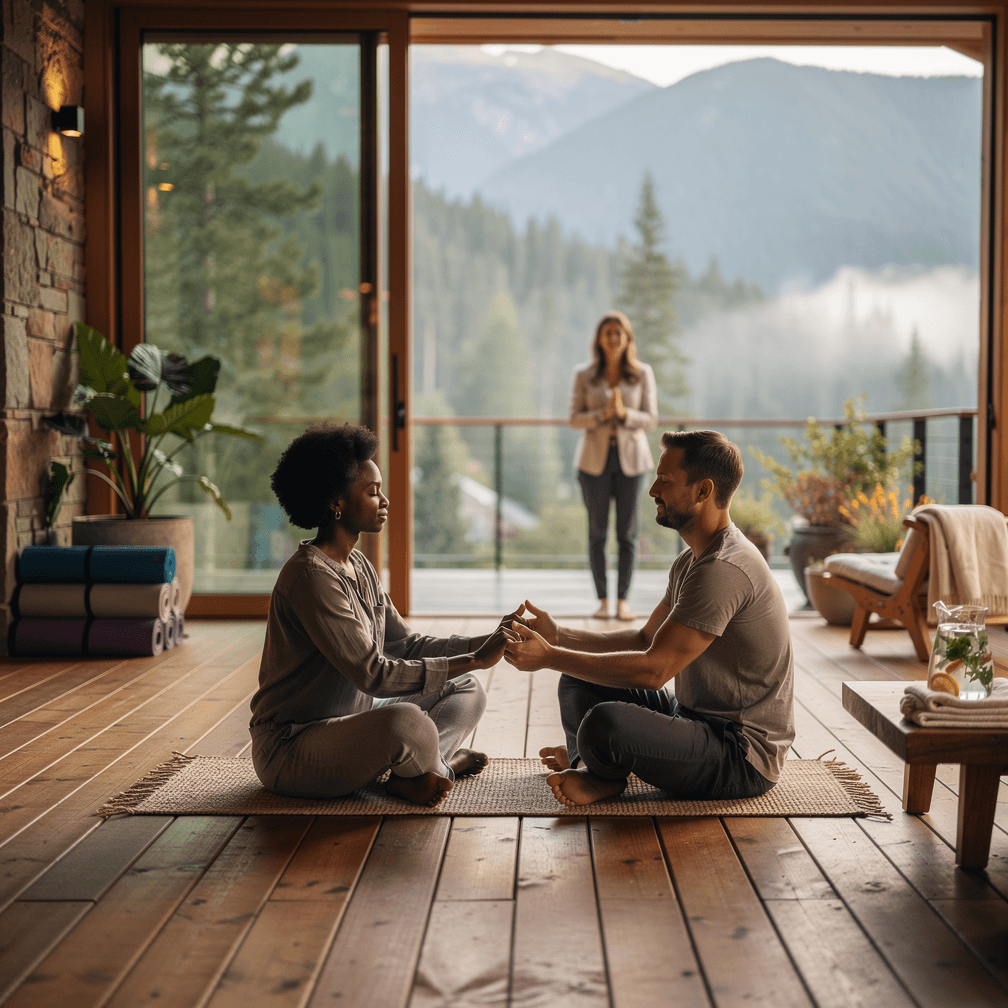
Short answer: A retreat does not repair a relationship; it gives one a quiet enough room to hear itself again. Decide first which of three things you are doing: maintenance, which can be almost anywhere without phone signal; repair, which needs a therapist-led container rather than a yoga schedule; or transition, which needs space and silence more than facilitation.
Most couples retreats are sold on the idea of a fix. You go away for a long weekend, breathe together in a beautiful room, and come home different. The honest version is gentler than that. A good retreat doesn’t repair a relationship; it gives the relationship a quiet enough room to hear itself again.
The choice of where you go matters less than people think, and more than the marketing admits.
This guide is a working shortlist of the best wellness retreats 2026 has on offer for couples in the United States, with notes on who each one actually suits. We’ve kept it to places we’ve either visited, vetted carefully, or sent friends to and heard back from.
What a couples retreat is really for
There are roughly three reasons couples book a retreat. The first is maintenance: you’re fine, you’d like to be more than fine, and you want a few days of structured quiet together. The second is repair: something’s been off, and ordinary weekends aren’t reaching it.
The third is transition: a new baby, a move, a loss, a long stretch of work that ate the marriage. Most retreats are built for the first group and quietly oversell to the other two.
Before you book, agree on which category you’re in. Repair work generally needs a therapist-led container, not a yoga schedule. Transition work often needs space and silence more than facilitation. Maintenance can be almost anywhere with good food and no phone signal.
Texas Hill Country: the quietly best-kept option
A wellness retreat in Texas Hill Country tends to surprise people who haven’t been. The land does a lot of the work. Limestone, live oaks, the rivers that run cool even in August, a sky that gets genuinely dark at night. For couples who live in a city, that recalibration alone is worth the trip.
What’s strong in the region for 2026:
- Slow-paced ranch retreats near Wimberley and Dripping Springs. Two to four nights, light yoga, breathwork, long walks, simple shared meals. These suit the maintenance group.
- Therapist-led intensives near Fredericksburg. Three-day formats with a licensed couples therapist, usually capped at four to six couples. These suit the repair group and tend to book out by late summer.
- Private cabin formats with optional sessions. You stay on your own, opt into a morning practice or a single facilitated conversation, and otherwise have the days to yourselves. These suit the transition group.
Hill Country also pairs well with a day or two in Austin on either end, which is how a lot of couples build the trip.
If you do that, the cold plunge Austin scene has matured a lot in the last two years, and a shared sauna Austin session at one of the bathhouses in East Austin or South Lamar is a surprisingly good way to start or end a retreat.
Heat, cold, no phones, and nothing to say for an hour. It works.
Sedona: the one to choose carefully
A Sedona wellness retreat is the most recognizable name on most couples’ shortlists, and for good reason. The red rock country is genuinely beautiful, the air is thin enough that your sleep changes by the second night, and there’s a long-standing community of practitioners in town. It’s also the place where the gap between excellent and theatrical is widest.
What to look for in Sedona:
- Practitioners who can name their training and lineages without dodging the question.
- Retreats that build in unstructured time. The land is part of the medicine; if every hour is programmed, you’re paying to sit indoors in Arizona.
- Honest pricing. Sedona has a high ceiling, and it’s easy to spend $6,000 for a long weekend that a $2,400 program would have delivered better.
Sedona suits couples who already have some shared practice, a little yoga, some meditation, a willingness to be uncomfortable in conversation. It’s less forgiving as a first retreat than the Hill Country or the Blue Ridge.
Asheville and the Blue Ridge: the green, forgiving option
If you want trees and water and a slower regional culture, the Blue Ridge around Asheville is hard to beat. The retreats here tend to lean nature-immersion and trauma-informed, with a lot of practitioners who came up through the somatic experiencing and IFS worlds. Food is generally excellent. Accommodations range from rustic to genuinely lovely.
This is a strong choice for the transition group: new parents who need to remember each other, couples coming out of a hard year, partners rebuilding after a loss. The pace is forgiving and the facilitators in the area tend to be unusually skilled at low-pressure work.
Big Sur and the Pacific Northwest: for couples who do well with weather
The California coast and the Olympic Peninsula attract a specific kind of couple: people who get more from a long silent walk in fog than from a workshop. Retreats here lean toward silence, simple food, and time outdoors in conditions that aren’t always cooperative.
If one of you loves that and the other tolerates it, this is a great trip. If both of you tolerate it, pick somewhere else.
Vermont and Maine: the winter option
A winter retreat in northern New England is underrated. Wood stoves, snow, a sauna at the end of a path, very little to do after 4 p.m. The 2026 calendar has more of these than usual, and they’re a good fit for couples who want the structure of weather to slow them down.
Pair sauna and a cold dip in a pond or river, and you have the same nervous system reset that costs three times as much in a city studio.
How to book without getting burned
A few practical notes for 2026:
- Read the cancellation policy before the website copy. A retreat that’s confident in its work tends to have a humane policy. A retreat that won’t refund anything past the deposit is telling you something.
- Ask about group size. Anything above twelve couples stops being a retreat and starts being a conference.
- Ask who’s actually leading. Some programs are marketed under a well-known name and run by associates you’ve never heard of. That can be fine. You just want to know.
- Book wellness retreat online directly with the operator when you can. Aggregators are convenient, but the operator usually has more flexibility on dates, dietary needs, and room assignments when you talk to them.
- Build in a buffer day on either side. Couples who fly in, retreat, and fly out in the same 96 hours rarely get the full benefit. A quiet night before and a quiet night after is the cheapest upgrade you can make.
A short framework for choosing
If you’re still narrowing it down, three questions sort most of it:
- What do we want to be true on the flight home? If the answer is “rested,” go somewhere quiet with good food. If it’s “we talked about the thing,” book a therapist-led format. If it’s “we remembered we like each other,” pick a place with land and unstructured time.
- How much structure do we actually want? Some couples do better with a full schedule. Others do better with two anchors a day and nothing in between. Be honest with each other before you book, not after.
- What’s the recovery look like at home? A retreat that ends on Sunday with a Monday meeting at 9 a.m. usually undoes itself by Wednesday. Give the trip a soft landing.
A note on what we don’t recommend
We don’t recommend booking a retreat as a surprise for a partner who hasn’t asked for one. We don’t recommend the formats that promise transformation in a weekend. And we don’t recommend any program that won’t tell you, in plain language, who’s leading the work and what their training is.
A good couples retreat in 2026 looks a lot like a good couples retreat in 1996: a quiet place, careful people, enough time, and not too much of a plan. The rest is the two of you, which was always the point.