Best weekend wellness retreats in the US for 2026: 2 and 3 day options that actually reset you
A grounded shortlist of short retreats worth the flight (or the drive), with honest notes on who each one suits.
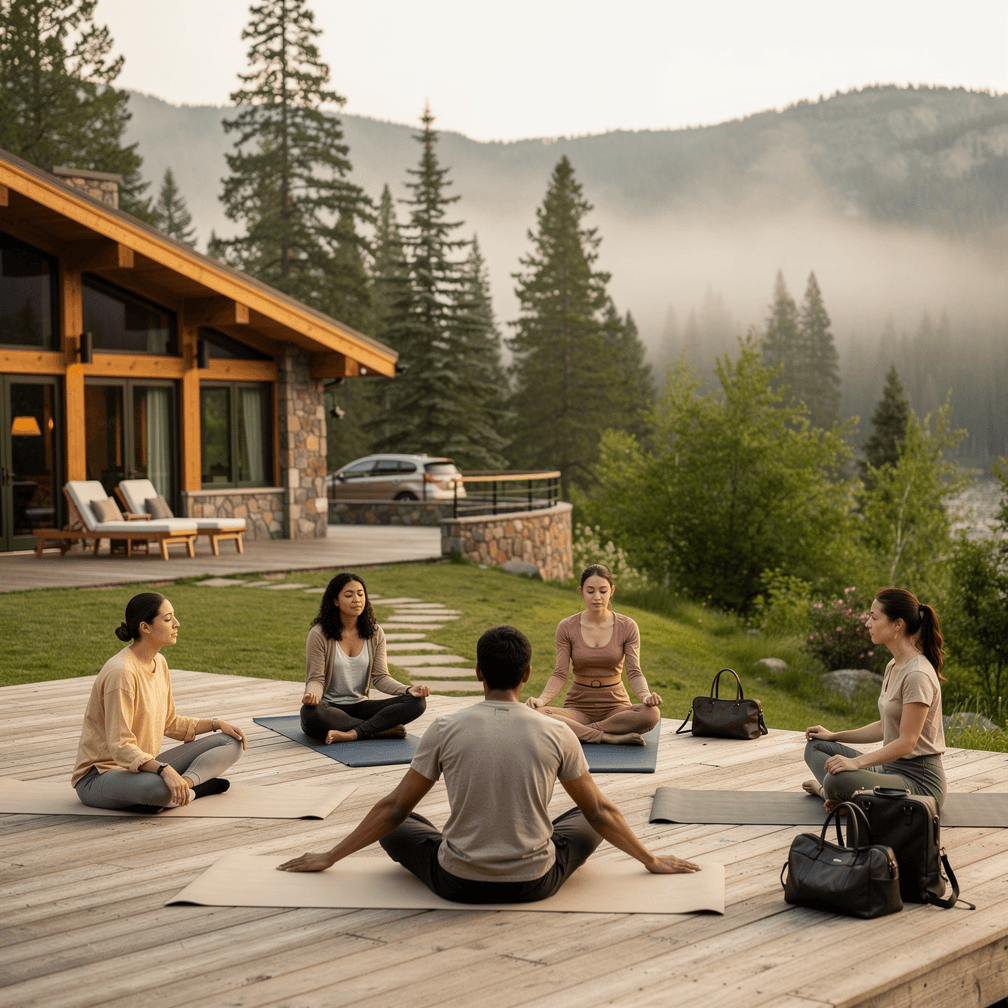
Short answer: Two nights will drop you out of work mode, restore some sleep and clear your head; it will not rebuild a habit or fix burnout. The strongest 2026 pick is the Texas Hill Country in April or October, roughly $1,200 to $2,400 for two nights with meals. Book the flights first.
Most people don’t have a free week. They have a Friday afternoon, a Monday morning, and roughly 60 hours in between. The good news is that a well-chosen 2 or 3 day retreat can do real work in that window, if it’s built for it.
The bad news is that a lot of weekend programs are just a hotel stay with a yoga class bolted on.
This is our shortlist for 2026: the short-format retreats we’d send a friend to, organized by region, with notes on what each one is actually good for. We’ve stayed at most of these or know the operators personally. Where we haven’t, we say so.
What a weekend retreat can and can’t do
Two nights is enough to drop your nervous system out of work mode, sleep more than you usually do, eat food someone else cooked, and remember what your own thoughts sound like. That’s not nothing. For a lot of people it’s the most useful thing they’ll do all quarter.
What a weekend can’t do: rebuild a habit, resolve a long-standing health issue, or replace therapy. If you’re going in hoping a Saturday breathwork session fixes a decade of burnout, you’ll be disappointed. Go in hoping to come home a little softer and a little clearer, and you’ll usually get it.
Texas Hill Country: the easiest yes for anyone in the southern US
The wellness retreat texas hill country circuit has quietly become one of the strongest weekend scenes in the country. Cypress creeks, limestone, oak shade, and a 90 minute drive from Austin or San Antonio means you can leave work at 4pm Friday and be sitting by a river before dark.
Who it suits
First-timers, couples, and anyone who finds the desert too austere. The landscape is green and forgiving. Most operators run Friday evening to Sunday afternoon programs in the 1,200 to 2,400 dollar range for two nights, meals included.
What to look for
Properties with their own water access (a creek, a spring-fed pool) tend to deliver a deeper reset than ones that rely on programming alone. Ask whether the schedule has genuine open time built in. A weekend stacked with seven sessions isn’t a retreat, it’s a conference.
Sedona: the one to fly for
A sedona wellness retreat is the pick when you want the landscape to do half the work. Red rock at sunrise tends to reorganize people. The town itself has gotten busy, so the retreats worth booking are the ones a little outside it, in Oak Creek Canyon or out toward the western mesas.
Who it suits
People who’ve done a yoga class or two and want to go a layer deeper. Sedona attracts a lot of guided meditation, sound healing, and somatic work. The altitude (around 4,500 feet) means hiking feels harder than you expect, plan accordingly.
Honest caveat
Sedona has a wide range of practitioner quality. Some operators are excellent and have been there 20 years. Others arrived last spring with a certificate and a website. Read the bios. Look for credentials, not aesthetics.
Asheville and the Blue Ridge: for the quieter version
Western North Carolina runs cooler, greener, and slower than either of the above. The retreats here lean toward forest immersion, contemplative practice, and farm-to-table meals that actually taste like the farm. Two and three night programs run year-round, with the best windows in May, June, September, and October.
This is the region we send people to when they say they want to go somewhere but don’t want anything woo. The framing tends to be plain: rest, walk, eat well, sleep.
A few quieter picks worth knowing
- Vermont, late summer: small farm-based retreats with cold river swims and wood-fired saunas. Limited capacity, book by July.
- Joshua Tree, shoulder season: best in March and November. Too hot in summer, colder than people expect in winter.
- Big Sur: hard to get to, worth it. Two night programs at the established centers fill 9 months out.
- Florida Keys, winter: the only one on this list that’s better January through March than anywhere else.
How to book a wellness retreat online without getting burned
If you book a wellness retreat online, three things matter more than the photos:
- The cancellation policy. A weekend retreat that takes your full payment 90 days out with no refund is asking you to carry all the risk. Reputable operators offer at least a partial refund up to 30 days before, or credit toward a future date.
- The actual schedule. Ask for it before you pay. “Curated experience” is not a schedule. You want session titles, times, and lengths.
- Who’s leading what. A retreat with a famous name on the website and an unnamed assistant running most of the sessions is a common bait and switch. Confirm the lead instructor will actually be present for the sessions you came for.
If you live in Austin and just want a weekend at home
Not every reset requires a flight. A lot of our readers in Texas use a long weekend at home as a kind of pieced-together retreat: a cold plunge austin session Friday evening, a long sauna austin round Saturday morning, two real meals, a hike at Bull Creek, phone in a drawer.
It’s not the same as a property with a creek and someone cooking for you. But for under 200 dollars and zero travel time, it does more than people expect.
Our short answer
If you’re picking one weekend in 2026 and want the highest chance of a real reset: Texas Hill Country in April or October, with an operator who’s been running the same property for at least three years.
If you want the trip itself to be part of the medicine: Sedona, midweek if you can swing Sunday to Tuesday. If you want quiet: Asheville in early June.
Whichever you pick, book the travel before the retreat. The number of people who reserve a spot and then can’t get a reasonable flight is higher than you’d think.