Best US wellness retreats for burnout and anxiety recovery in 2026
An audience guide for people running on empty: where to go, what actually helps a frayed nervous system, and how to book without the second-guessing.
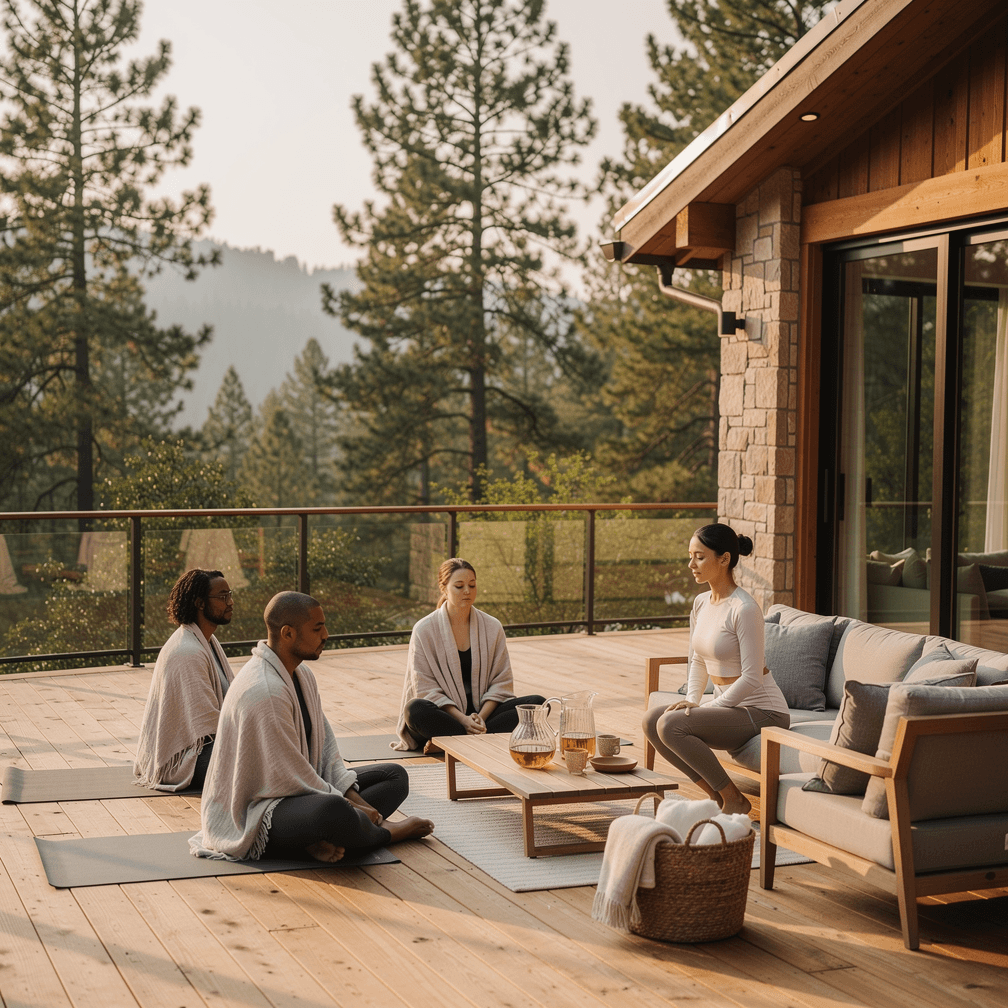
Short answer: Match the retreat to how depleted you are, not to the scenery. At the edge, choose silent or near-silent programmes, gentle yoga and long unstructured afternoons. Tired but functional, you can handle breathwork, sauna and cold plunge, and hikes. If anxiety is the loud part, pick trauma-informed facilitators and a published daily schedule.
A burnout retreat is a multi-day reset built around what a frayed nervous system actually needs: real rest, low stimulation, gentle movement and breathwork, unstructured afternoons, small groups, and trauma-informed facilitators. In the US, two of the most reliable regions for this are Texas Hill Country (close, quiet, low-pressure) and Sedona (structured, genuinely stilling).
Below: how to match a retreat to how depleted you are, what recovery should actually include, and the red flags to skip. If you already know you want one and are deciding between formats, read our companion piece on how to choose a retreat for anxiety and burnout.
If you have read three of these guides already and still feel stuck, it is probably because most of them sort by activity or region, not by how depleted you actually are. This one starts from the burnout.
Burnout and anxiety are nervous system states, not personality flaws. The right reset is the one that lets your body stop bracing for a few days.
So instead of ranking the best wellness retreats 2026 by scenery alone, we sorted them by what a frayed system tends to respond to: quiet, structure that asks little of you, real rest, and people who know how to hold a calm room.
We curate and research these picks. We only recommend what we would recommend to a friend, and we tell you who each one is not for.
First, match the retreat to your state
Be honest about where you are before you book anything.
If you are at the edge, snapping at people, sleeping badly, dreading your inbox, you want low stimulation and low decision-making. Silent or near-silent retreats, gentle yoga, long unstructured afternoons. Anything billed as “transformational intensive” can wait.
If you are tired but functional, more flat than frantic, you can handle a fuller schedule: breathwork, sauna and cold plunge, hikes, group meals. The structure itself can feel restorative when you are not already maxed out.
If your anxiety is the loud part, look for trauma-informed facilitators and clear daily rhythms. Predictability calms an anxious system faster than novelty does.
Texas Hill Country: close, quiet, and easy to reach
For anyone in the central US, a wellness retreat in Texas Hill Country is often the most sensible first reset. The drive is short, the landscape is open and unhurried, and you can be somewhere quiet within a couple of hours of Austin or San Antonio.
The Hill Country suits the “tired but functional” group well. Mornings tend toward gentle movement and breathwork, afternoons leave room to do nothing, and the limestone rivers give you a place to sit and let your shoulders drop.
If you live in or near Austin, you can also build your own micro-reset before or after a retreat. A cold plunge in Austin followed by a sauna session is a cheap, repeatable way to practice the down-regulation a longer retreat teaches. Even two or three sauna visits in Austin across a stressful month can take the edge off.
Who it is not for: anyone who needs dramatic scenery to feel like they left home. The Hill Country is subtle on purpose.
Sedona: structure, red rock, and quiet that holds
A Sedona wellness retreat earns its reputation for a simple reason. The landscape is genuinely stilling, and the town has decades of practice running calm, well-paced programs.
For burnout, the value of Sedona is the combination of beauty and routine. A typical day might open with a slow hike, move into meditation or sound work, and leave the afternoon soft. The red rock does some of the work for you; it is hard to keep doomscrolling when the canyon is right there.
For anxiety specifically, choose a Sedona program with named facilitators and a published daily schedule. You want to know what each day holds before you arrive. Skip anything vague or heavy on big promises.
Who it is not for: travelers on a tight budget or a tight timeline. Sedona is a fly-in for most people, and the better small-group programs book out early.
What “recovery” should actually include
Across every region, the retreats that help with burnout and anxiety tend to share a few honest ingredients.
Real sleep. Look for late or optional morning starts, not 5am bells. Recovery runs on rest, not discipline.
Low decision load. The point is to stop managing things for a few days. A good program decides for you: when to eat, when to move, when to rest.
Nervous system tools you can take home. Breathwork, contrast therapy like sauna and cold plunge, and simple meditation are worth more than a single peak experience, because you can keep using them.
People who know the territory. For anxiety, trauma-informed facilitation is not a buzzword. Ask whether staff are trained to support someone who gets activated, because that is the difference between a calm week and a hard one.
How to book a wellness retreat online without second-guessing
When you book a wellness retreat online, you are mostly buying trust at a distance. A few checks make that easier.
Read the cancellation policy before anything else. Burnout makes plans fragile; you want to know exactly what happens if you need to move your dates.
Look for named people, not just a brand. Bios and photos of who is actually running the days tell you more than any tagline.
Check that the daily rhythm is published. If a retreat will not tell you what a day looks like, that is your answer.
Confirm what the price includes. Lodging, meals, and sessions should be spelled out, with extras listed plainly.
Your next step
Pick your state first (at the edge, tired but functional, or anxious and looking for structure), then choose the region that gets you there with the least friction. For many readers that is Texas Hill Country this season; for a longer reset with more structure, Sedona is worth the flight.
When you find a program that fits, read the cancellation terms, check the daily schedule, and book directly through the provider’s confirmed link. If you want a hand narrowing it down, tell us your state and your budget and we will point you toward the few we would send a friend to.