Best wellness retreats in the Pacific Northwest for 2026: forest, coast, and the quiet reset
Old-growth forest, island quiet, and cold clean water make the Pacific Northwest one of the best places in the country to actually slow down. Here's how to choose a retreat that earns the flight.
Short answer: The Pacific Northwest is the right region if you want forest, quiet and cold clean water rather than sunshine and a pool deck. Pick one of four formats, nature immersion, silent meditation, somatic work or a coastal rest, then match it to the region. Expect $1,500 to $4,000 all-in; rainy shoulder seasons are better value.
The Pacific Northwest is the right retreat region if you want forest, quiet, and cold clean water rather than sunshine and a pool deck. Pick from four formats (nature immersion, silent meditation, somatic work, or a coastal rest), match the region to the format, and strongly consider the rainy shoulder seasons, which are quieter and better value than July. Expect most multi-day stays here to land somewhere between $1,500 and $4,000 all-in once travel is counted.
Why the Pacific Northwest, and why now
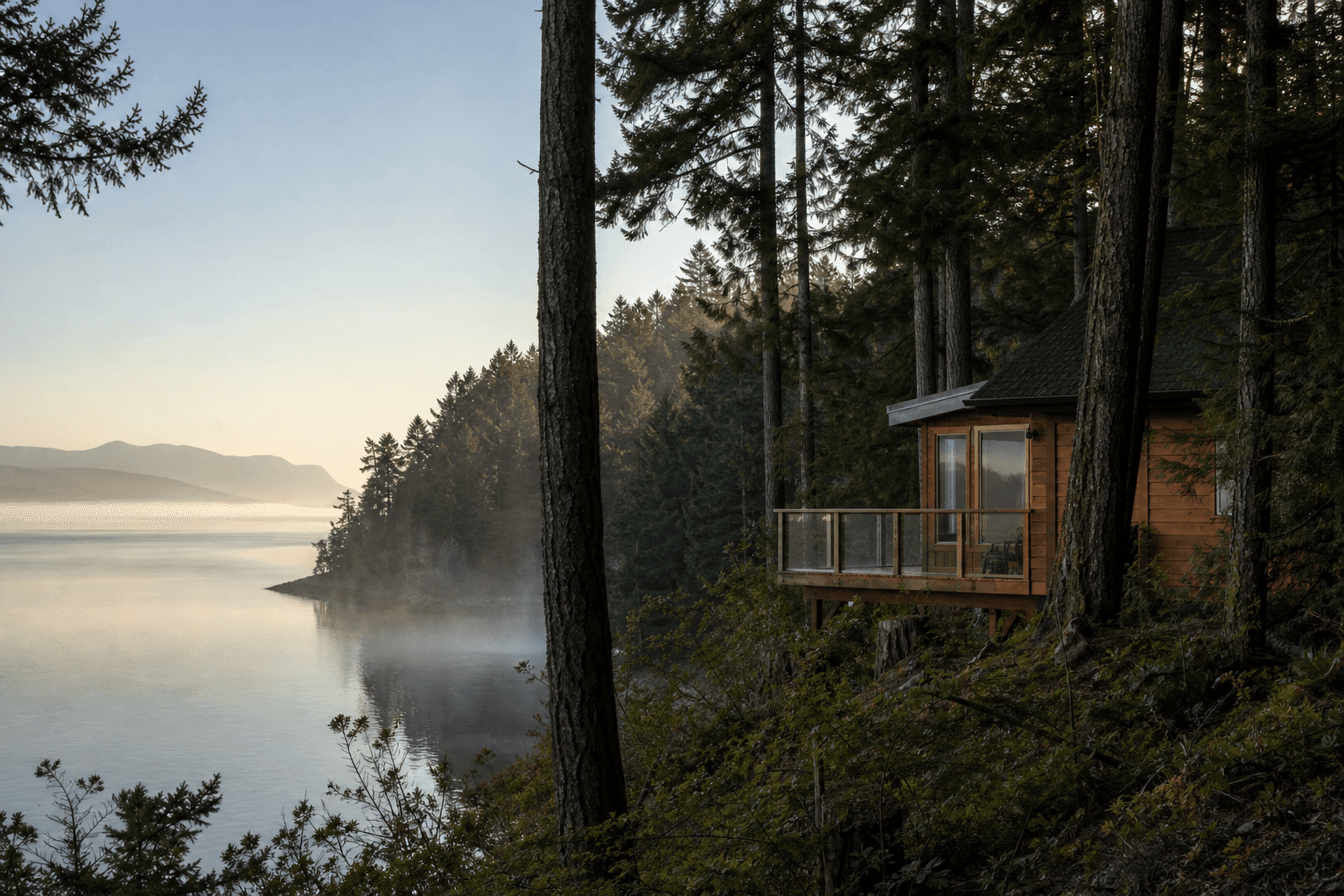
There are places you go to be entertained and places you go to be quiet. The Pacific Northwest is firmly the second kind. Old-growth forest, fog that sits on the water, islands you reach by ferry, and cold clean air do most of the work before a single session starts.
That setting is the draw and the filter. A retreat here should use the landscape, not just sit near it. The best ones build the days around forest, water, and rest. The weaker ones could be anywhere with a nice view.
This guide helps you tell them apart. We do not take placement fees, so nothing here is sponsored. We only point to the kind of place we’d send a friend.
The formats worth traveling for
Nature immersion and forest retreats. The signature of the region. Slow days built around walking, sitting, and unstructured time under the trees, often with light somatic or meditation work. If the forest is the medicine, this is the format. Our national guide to nature immersion and wilderness retreats covers what separates the serious ones.
Silent and meditation retreats. The Northwest has a deep contemplative tradition and several serious sit-focused centers. Quiet, structured, and not for everyone, but profound for the right person.
Somatic and nervous-system retreats. Small cohorts, trauma-informed facilitators, and the landscape as a calm container rather than the headline. Intake calls before arrival are a good sign.
Coastal and island reset retreats. Lighter touch, focused on rest, simple food, water, and space. Good for a first retreat or anyone who wants room rather than a packed schedule.
The best regions, compared
| Region | Best for | Getting there | The tradeoff |
|---|---|---|---|
| Olympic Peninsula | Deep forest immersion, hot springs | Long drive from Seattle | Remote; travel takes real time |
| San Juan Islands | Rest and island calm | Ferry from Anacortes | Ferry logistics rule your schedule |
| Cascades and valleys | Shorter trips, river settings | Easy from Seattle or Portland | Less remote, more weekenders |
| Oregon coast | Solo and rest retreats | Drive from Portland | Weather swings hard year-round |
Olympic Peninsula. Rainforest, hot springs, and genuine remoteness. The deepest quiet in the region, and the hardest to reach, which is part of the point.
San Juan Islands. Ferry-access island calm, water everywhere, slow by design. Excellent for rest-focused retreats.
Cascades and the mountain valleys. Forest and river settings within reach of Seattle and Portland, good for shorter trips and a first taste of the format.
Oregon coast. Big beaches, fog, and a quieter, less polished feel than California’s coast. Strong for solo and rest retreats.
What a Northwest retreat costs
Honest ranges, not quotes: expect roughly $1,500 to $4,000 all-in for most multi-day stays once you count flights, transfers, and the ferry where one applies. Donation-based meditation centers sit far below that, and small luxury lodges sit above it. Our retreat cost guide breaks down where the money actually goes, and treating the all-in number as the real price is the single best budgeting habit.
What to ask before booking in the Northwest
Who runs it, and what’s their training. For anything somatic or therapeutic, the facilitator’s background matters more than the property.
How structured are the days. Some people want a full schedule, others want space. Neither is better; the mismatch is what ruins a trip.
What the weather plan is. This is the Northwest. A good retreat embraces the rain and fog rather than apologizing for it. Ask how outdoor time works when it pours.
What’s actually included. Meals, sessions, transfers, and the ferry logistics. Island retreats in particular live or die on the travel details. Our guide to booking a retreat online safely covers deposits, refund terms, and the red flags before you pay anyone.
A note on season
The region is beautiful in the wet months, not just summer. A foggy, rainy reset can be more restorative than a sunny one, and shoulder seasons are quieter and better value. If you only consider July and August, you’re missing the best of it, and paying peak prices for the privilege.
If you can’t commit to a full retreat yet, the region’s sauna culture is a good preview: our Seattle and Portland sauna and cold plunge guides cover a day-sized version of the same reset.
FAQ: Pacific Northwest retreats
When is the best time for a Pacific Northwest retreat? September and October are the sweet spot: still-decent weather, thinner crowds, and lower prices. Spring works the same way. Summer is lovely but booked out and priced up, and the deep rainy winter suits people who genuinely want the moody, indoor-fire version of a reset.
Do I need a car for a retreat in this region? Usually yes for the Olympic Peninsula and the Oregon coast, where retreats sit far from transit. San Juan retreats often work car-free if the property picks up from the ferry terminal; ask before you book. Cascades retreats vary, so confirm the transfer situation up front.
Is the rain a dealbreaker? No, and for many people it’s the point. Good Northwest retreats plan for rain with covered outdoor space, saunas, and gear guidance, and a walk in soft rain under old growth is its own kind of quiet. If you need guaranteed sun, look at the desert instead.
How far in advance should you book? Two to four months ahead for summer and for the small island properties, which fill first. Shoulder-season stays can often be booked four to six weeks out. Popular silent retreat centers run on their own application timelines, sometimes longer.
The bottom line on Pacific Northwest retreats
The Pacific Northwest is one of the country’s great places to genuinely slow down, if you pick a retreat that uses the landscape and matches the structure you actually want. Decide between deep forest immersion, a silent sit, somatic work, or a simple coastal rest, then choose the region that serves it and book the shoulder season without fear.
If you’re weighing regions, our guides to Big Sur and silent meditation retreats across the US use the same approach, the first-timer’s checklist covers vetting any retreat, and you can see what we’d recommend on the retreats page.