Best wellness retreats in Southern California for 2026: desert, coast, and canyon
From Ojai's quiet valleys to the Joshua Tree desert and the Malibu coast, Southern California packs more retreat variety into a short drive than almost anywhere. Here's how to choose the right one.
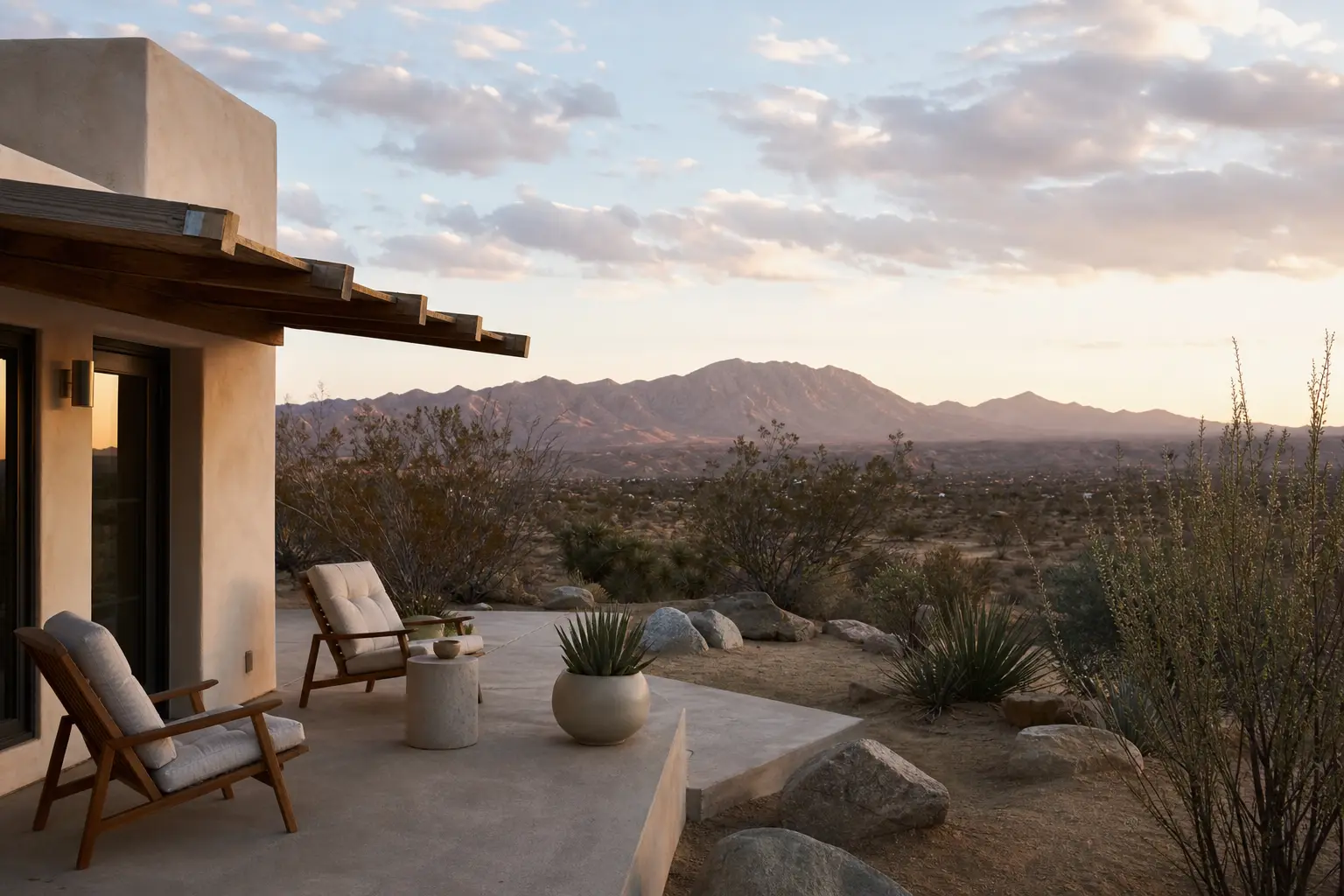
Short answer: Choose the format before the scenery. Southern California packs three different retreats into a few hours of driving: desert silence around Joshua Tree, a coastal reset above Malibu, and structured program estates in Ojai. Budget $200 to $500 a night for desert and coast, $500 to $1,200 at the estates.
Choose the format before the scenery. Southern California packs three genuinely different retreats into a few hours of driving, and the area you pick should follow from the one you need. Desert silence around Joshua Tree for meditation and real disconnection. Coast and canyon above Malibu for a gentler, shorter reset. Structured program estates in and around Ojai when you want a full schedule handed to you. Expect roughly $200 to $500 a night for mid-range desert and coastal retreats, and $500 to $1,200 a night at the program-led estates.
Why Southern California is hard to shop
Few regions give you this much range in a short drive. You can do a silent desert retreat near Joshua Tree, a coastal reset above Malibu, and a structured wellness program in an Ojai valley, all inside the same region.
That variety is also the catch. Southern California has genuinely world-class retreats sitting right next to a thick layer of expensive, photogenic places that are really just nice hotels with a yoga mat in the corner. The listings look nearly identical from the outside, because they are all photographed at the same golden hour on the same kind of terrace.
We do not take placement fees, so nothing here is paid for, and we only recommend what we would send a friend to.
The retreat formats worth traveling for
Desert silence and reset retreats. Around Joshua Tree and the high desert. Big quiet, big skies, and a stripped-back simplicity that suits meditation, somatic work, and genuine disconnection. If you have never tried a silent retreat, this is a forgiving region to start in.
Coastal and canyon retreats. Above Malibu and through the Santa Monica mountains. Ocean air, hiking, and a softer, more comfortable kind of reset. A sensible first retreat, and the easiest format to do as a couple.
Structured wellness estates. Ojai in particular has established, program-led places with full days of movement, treatments, and talks. The do-it-all option, priced accordingly. It is the closest thing in the region to a destination spa, and our hotel spa vs standalone retreat comparison is worth reading before you compare prices, because the two formats produce very different weeks.
Plant-medicine-adjacent and ceremony retreats. The region has a lot of these. Be especially careful here: check the facilitators’ training, the legality of what is actually on offer, and the aftercare plan, then walk away from anything vague. Reading what “adjacent” really means first will save you a bad booking.
Southern California retreat areas at a glance
| Area | Best for | What it feels like | Rough nightly range |
|---|---|---|---|
| Ojai | Structured programs, full schedules | Calm valley town, citrus groves, slow pace | $500 to $1,200 |
| Joshua Tree and the high desert | Silence, meditation, solo resets | Remote, elemental, minimal | $200 to $450 |
| Malibu and Santa Monica mountains | First retreats, couples, short stays | Coastal, comfortable, hikeable | $350 to $900 |
| San Diego backcountry and Temecula | Value, spa-style and mixed programs | Quiet hills, fewer crowds | $200 to $500 |
Those are honest estimates for a standard or shared room with meals and core sessions included. Treatments, private rooms, and airport transfers usually sit on top.
What a Southern California retreat really costs
The headline nightly rate is rarely the number you pay. At the Ojai-style estates, spa treatments and some specialist sessions are billed separately, and a private room can add a meaningful percentage over a shared one. In the desert, the room rate is often lower but you may be feeding yourself for at least some meals.
Add the drive or the flight, the rental car (most desert and canyon properties are not walkable to anything), and gratuities. A three-night trip that looked like $900 can land closer to $1,600 once it is all counted.
If you want the full arithmetic before you commit, our retreat cost guide shows, tier by tier, what different budgets actually buy.
When to go, and why season matters more here
Southern California is close to a year-round destination, with one big exception: the high desert. Joshua Tree and the surrounding area get genuinely punishing in high summer, and a retreat built around midday hiking in July is a different trip than the same retreat in March.
Fall through spring is the comfortable window for anything desert-based. The coast runs cooler and cloudier in late spring (locals call the gray stretch May Gray and June Gloom), which matters if you booked for ocean views. Ojai and the inland valleys get hot in summer but stay manageable in the shade.
Whenever you go, the dry air dehydrates you faster than you expect. Drink more than feels necessary, especially if the schedule includes sauna or heat work.
What to ask before you book
Format first, location second. Decide between silence, a structured program, or simple rest before you fall for a view. The format determines whether the trip works.
Who runs it, and what they are trained in. For anything therapeutic or ceremonial, this is the whole game. Vague credentials are a reason to keep looking, and our guide to checking a practitioner’s credentials covers what to actually ask for.
What is included and what is extra. Get it in writing. Treatments, private rooms, and transfers are the three that most often surprise people.
The room arrangement. If you are going alone, ask about the single supplement up front rather than discovering it at checkout.
The daily schedule. A real one, hour by hour, not a marketing summary. It tells you more about the retreat than any photograph will.
FAQ: Southern California wellness retreats
Is Ojai or Joshua Tree better for a first retreat? Ojai, in most cases. The structured estates there hand you a schedule and a staff, which is easier when you do not yet know what you want from a retreat. Joshua Tree rewards people who already know they want silence and space, and it can feel stark if you were expecting comfort.
Do I need a car for a Southern California retreat? Almost always yes. The desert and canyon properties are rarely near anything walkable, and rideshare coverage thins out fast outside the cities. Some estates run airport transfers for a fee, which is worth asking about if you would rather not drive the canyon roads.
How long should a Southern California retreat be? Three nights is the shortest stay that still feels like a reset rather than a hotel stay, and five to seven nights is where the structured programs really work. Our guide to weekend retreats covers how to make the shorter version count.
Are the expensive Ojai estates worth the money? Sometimes. You are paying for staff ratio, programming depth, and food, and at the better places those are real. You are also paying for a view and a brand. If the daily schedule looks thin when you ask for it hour by hour, the price is buying scenery.
The bottom line on Southern California retreats
Southern California can give you almost any reset you want, as long as you choose the format on purpose and judge a place on its people and its schedule rather than its photos. Decide first whether you want desert silence, a coastal reset, or a structured estate, then let that decide the area and the season.
If you are comparing regions, our guides to Big Sur and the California coast and Sedona use the same approach, the first-timer’s checklist covers the practical side, and you can see what we would recommend on the retreats page.