Does a sauna or cold plunge before bed help you sleep?
Heat before bed can genuinely help you fall asleep, for a reason that surprises people. A cold plunge right before bed tends to do the opposite. Timing is the whole game.
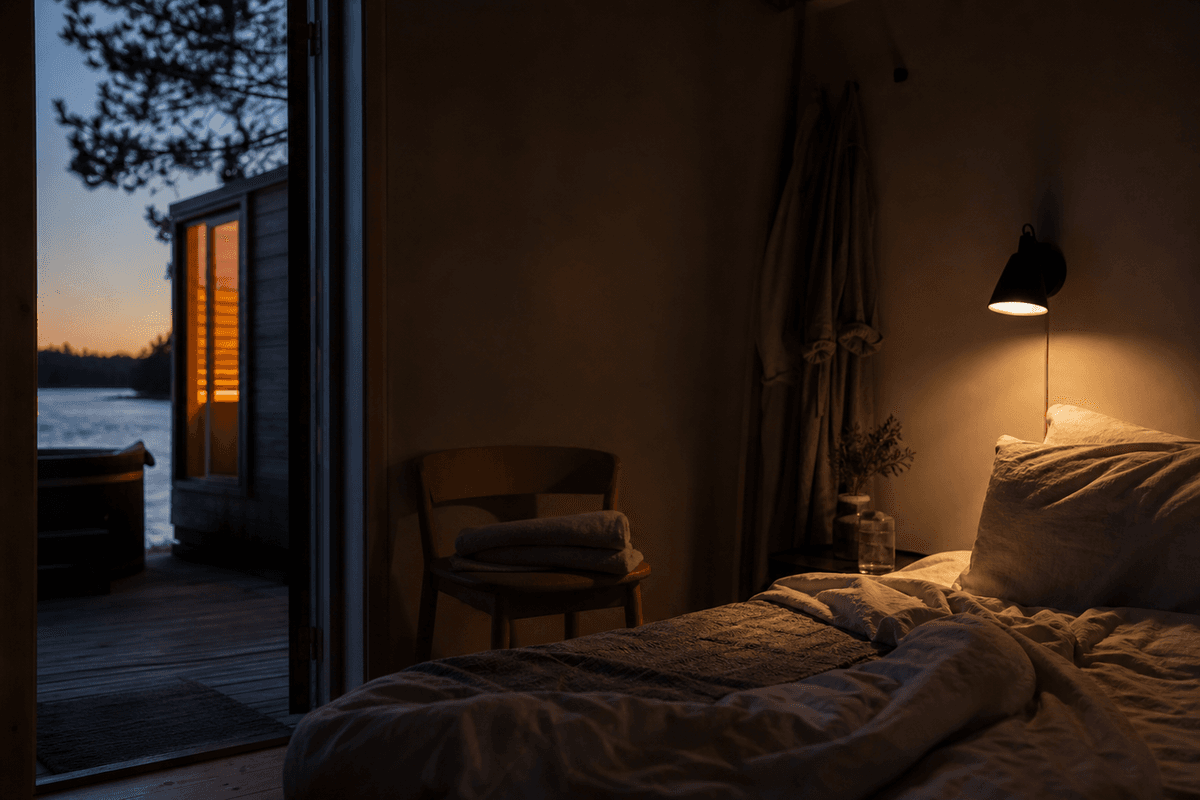
Short answer: Heat yes, cold usually no. Finishing a moderate sauna or warm bath 60 to 90 minutes before bed triggers the core-temperature drop your body reads as a sleep signal, and a meta-analysis found warm bathing one to two hours before bed shortened sleep onset. A late plunge is alerting.
Heat before bed can genuinely help you fall asleep faster, but not because it makes you warm. It works by triggering a drop in your core temperature afterward, which is one of the body’s own signals for sleep. The timing that matters is finishing the sauna or warm bath about sixty to ninety minutes before you want to be asleep.
A cold plunge is a different story. It tends to be alerting, so late in the evening it can push sleep further away, not closer.
So the honest answer is yes for well-timed heat, and usually no for a late-night plunge.
Why would a hot sauna help you sleep?
Because of what happens when you cool down, not while you are hot.
Falling asleep is tied to a natural dip in your core body temperature. When you warm up in a sauna or a hot bath, blood rushes to your skin, and once you get out, that widened circulation sheds heat efficiently and your core temperature drops below where it started. That downward slope mimics and amplifies the body’s own pre-sleep cooling.
The research here is unusually clean for this field. A meta-analysis by Haghayegh and colleagues (Sleep Medicine Reviews, 2019) found that warm water bathing one to two hours before bed shortened the time it took to fall asleep and improved self-reported sleep quality. A sauna followed by cooling down works through the same thermoregulatory mechanism.
The key is the gap. The benefit comes from the cool-down, so you want time to cool before you lie down.
When should you finish a sauna for sleep?
About sixty to ninety minutes before you want to be asleep.
That window lets your core temperature climb during the session and then fall as you rest, showered and settled, so you are sliding into the cooling phase right as you get into bed. Finish too close to bedtime and you may still be flushed and warm, which fights sleep rather than helping it.
Keep the evening session on the gentler side. A brutally long, maximally hot sauna can leave you wired and dehydrated, which is not what you want before bed. A moderate, relaxing session suits the goal better. Our how often guide covers sensible dosing.
Hydrate afterward, since you will have sweated, and let the room be cool and dark.
Does a cold plunge before bed help or hurt?
Usually hurts, if it is right before bed.
Cold water is activating by design. It triggers a sharp rise in alertness and a release of norepinephrine, the same reason a morning plunge leaves people feeling switched on and clear. That is wonderful at 7 a.m. and counterproductive at 10 p.m., when you are trying to wind down.
There is also the rebound to consider. After the initial cold, your body works to rewarm, and that activity can keep you feeling stimulated for a while. For most people, a cold plunge in the couple of hours before bed makes falling asleep harder, not easier.
If you love the cold, use it earlier in the day and let heat be your evening tool. Our contrast therapy guide explains how the two feel different.
What about contrast therapy at night?
End on heat, not cold, if sleep is the goal.
If you do alternate hot and cold in the evening, the order matters more than usual. Finishing on the cold plunge leaves you alert. Finishing warm, and then giving yourself the cooling window, leans the session toward sleep. Our right order guide covers sequencing in general, but for a pre-bed session, the sleep case specifically favors ending warm.
Honestly, for most people a simple evening sauna or warm bath is the cleaner sleep tool than a full contrast routine.
Is this a reason to build a habit?
It can be, with realistic expectations.
Well-timed evening heat is a low-risk, pleasant addition to a wind-down routine, and the sleep-onset evidence is more solid than most claims in the recovery world. It is not a cure for insomnia and it will not overpower caffeine, a bright phone, or a stressful evening. It is a helpful piece, not the whole answer.
If it becomes something you look forward to, that ritual itself supports sleep. Our habit guide covers making it stick without turning it into a chore.
The bottom line on heat, cold and sleep
Heat before bed helps by triggering the cool-down your body reads as a sleep signal, so finish a moderate sauna sixty to ninety minutes before you want to sleep. Save the cold plunge for the morning, when its alerting effect is a feature rather than a bug.
Time it right and the tool matches the goal.
To find a sauna near you for an evening reset, start with our city wellness maps.
One sleep trend we would not start with: our read on whether mouth taping is safe and works explains why the undiagnosed-apnea risk outweighs the thin benefit evidence.