Forest bathing (shinrin-yoku): the simplest practice with real evidence behind it
Slow, sensory time in nature, what it is, what the research shows, and how to actually do it.
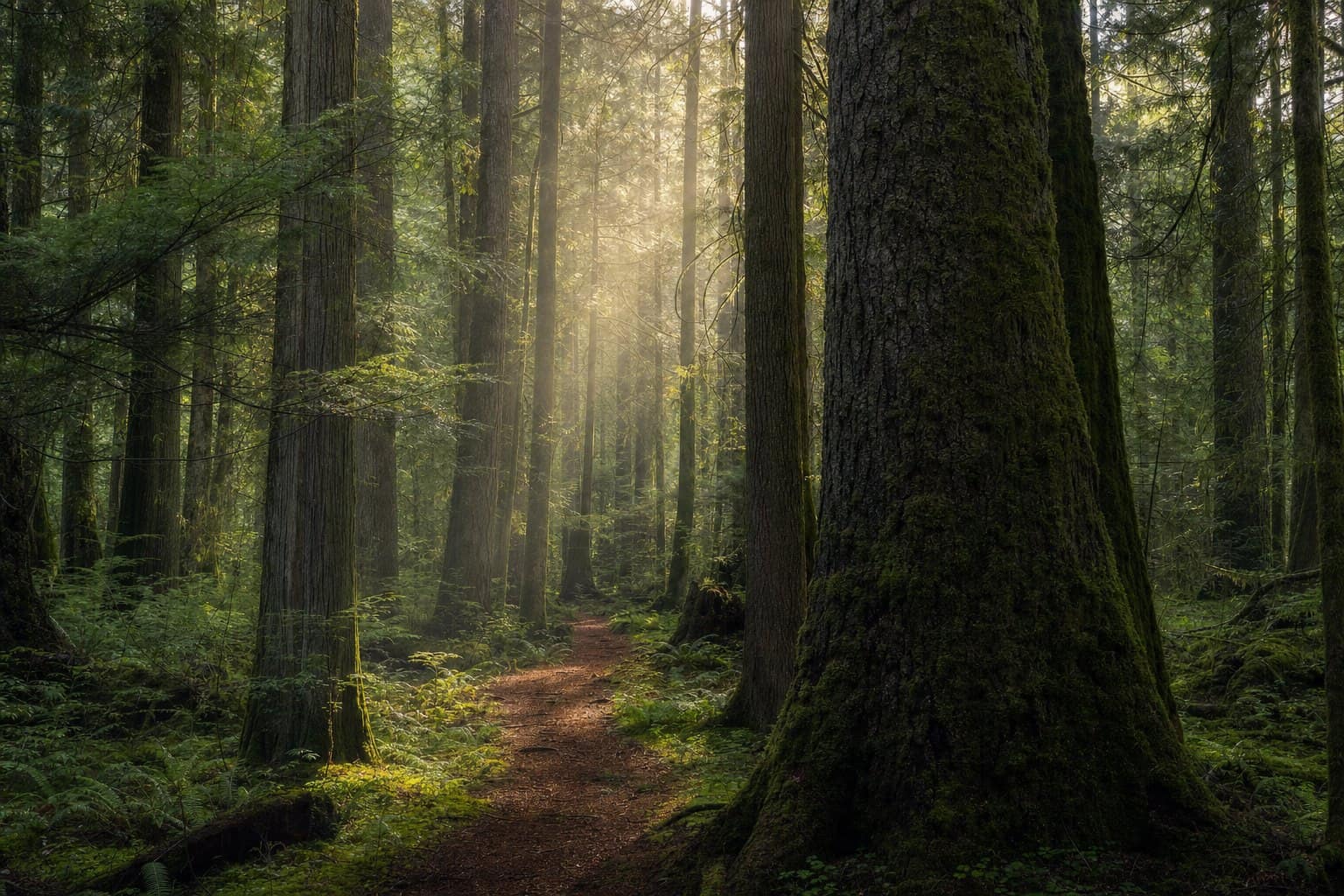
Short answer: Slow, unhurried sensory time among trees, not a hike: a guided session covers less than a mile in two to three hours, and 20 to 30 minutes is the minimum effective dose. It measurably lowers cortisol, blood pressure and heart rate, replicated across countries. Solo practice is free and equally valid.
Forest bathing sounds like the softest item on a wellness menu, and maybe the easiest to dismiss. But shinrin-yoku has accumulated some of the most consistent evidence of any restorative practice, the entry barrier is essentially zero, and the cost is nothing. The catch is that most people do it wrong without realizing there’s a right way. Here’s what actually makes the difference.
What shinrin-yoku is
Shinrin-yoku (森林浴), literally “forest bathing”, is a practice developed in Japan in the 1980s as a response to urban stress and technology saturation. It means slow, unhurried, deliberate sensory immersion in a forested environment. The critical distinction: it is not a hike, not exercise, and not a nature walk with headphones and a podcast.
The point is not to cover distance or get somewhere. The point is to slow down enough that the forest environment can actually register, sights, sounds, smells, textures, the feel of air, and to let the nervous system respond to that input.
A guided shinrin-yoku session differs from a solo walk primarily in that a certified guide uses deliberate prompts (“notice five sounds you haven’t heard yet,” “find something that surprises you”) to slow participants down and deepen sensory engagement. Solo practice is equally valid once you understand the principle.
What a forest bathing session is like
A formal guided session typically runs 2, 3 hours and covers less than a mile. That pace, roughly a mile in two hours, is genuinely slow and initially feels awkward for anyone accustomed to purposeful walking.
The guide will offer a series of invitations rather than instructions: sit for ten minutes and simply listen, smell the ground after rainfall, notice where light is and isn’t. There may be a closing circle or tea.
Solo practice can be as short as 20, 30 minutes. The minimal effective “dose” in research studies is about 20 minutes of slow, undistracted time in a green environment. A phone-free walk where you consciously slow your pace and notice your sensory environment, without agenda, captures most of the benefit.
Sitting is underrated: finding a spot, stopping entirely, and remaining for 10, 15 minutes produces a different quality of attention than even slow walking. This sensory attentiveness overlaps meaningfully with walking meditation and mindfulness practice, though forest bathing doesn’t require any meditation background.
What the evidence says about forest bathing
- Reasonable evidence for: This is where forest bathing distinguishes itself from many wellness practices. Japanese researchers, beginning with the work of Yoshifumi Miyazaki and Qing Li in the 2000s, found consistent associations between forest environments and measurable reductions in salivary cortisol, blood pressure, heart rate, and pulse rate variability (a stress marker). These effects appear in relatively short exposures, 20 to 30 minutes, and replicate across multiple countries and populations. Mood improvement (reduced anxiety, fatigue, and hostility on validated scales) is also consistently reported. Immune function research has shown increases in NK (natural killer) cell activity following multi-day forest immersion programs, though single-session effects on immune markers are more modest. The phytoncide hypothesis, that volatile organic compounds (terpenes) released by trees have direct physiological effects, has some supporting evidence; inhaling cedar and cypress phytoncides in controlled settings has produced measurable changes in immune cell activity.
- Debated or mixed: Whether forests specifically are necessary or whether any low-stimulation green environment (a city park, a garden) produces comparable effects is genuinely debated. Several studies suggest urban parks produce similar cortisol reductions, though effect sizes tend to be slightly smaller than forest studies. The “dose-response” relationship, how much time produces how much benefit, is not precisely established. Whether the benefits are attributable to phytoncides, the absence of urban noise and stimulation, the visual complexity of natural environments (attention restoration theory), or some combination is still being sorted out.
- Not established / overstated: Forest bathing does not cure disease. Immune improvements from brief sessions, while real, are modest and temporary. Claims about forest bathing “reversing cancer” or producing lasting immune reprogramming from occasional visits are not supported. The research is solid for stress reduction and mood; extrapolating from there to dramatic disease outcomes is overclaiming.
Benefits people report from forest time
Regular practitioners of shinrin-yoku describe: a reliable and rapid reduction in mental noise and rumination, a quality of calm that feels different from exercise-induced relaxation (less energized, more grounded), improved sleep on the night following a forest session, heightened sensory acuity (noticing more of the world generally), and a sense of perspective that urban environments tend to compress.
Many describe feeling more patient and less reactive in the hours after a session. These are consistent with the research on cortisol and autonomic nervous system downregulation and are worth taking at face value.
Who forest bathing suits, and who should skip it
Forest bathing has essentially no contraindications. No fitness level is required, it can be done while seated, in a wheelchair, or moving at any pace. Older adults, people recovering from illness, and anyone with high stress loads benefit particularly well. Seasonal allergies may make certain forest environments uncomfortable in spring; pollen counts and allergen-specific planning are worth considering.
Who benefits most: People in high-stimulation, high-cognitive-load jobs (medicine, finance, caregiving, tech). People with anxiety or chronic stress. Children, research suggests nature exposure is especially important for developing nervous systems. Anyone who feels disconnected from their body or physical environment. See also horticultural therapy for a related practice that uses plant interaction in therapeutic settings.
There is no equipment required, no instructor certification required for solo practice, and no minimum age or fitness standard.
What forest bathing costs
- Solo practice in a public forest or park: Free.
- Guided shinrin-yoku session with a certified guide: $30, $80 per person for a 2, 3 hour group walk; $80, $150 for a private guided session.
- Retreat or multi-day program with forest bathing as a component: $300, $2,000+ depending on length and accommodation.
- Certification as a guide (if you want to lead others): training programs exist through the Association of Nature and Forest Therapy (ANFT) and others, running $500, $2,500.
How to choose your approach
For a first experience, a guided session is worth considering, not because solo practice requires a guide, but because having a prompt-structure for the first hour helps break the habit of purposeful, destination-oriented movement. Once you’ve experienced what “slow enough” actually feels like, solo practice is easy and sustainable.
Choose a location with canopy cover if possible, studies specifically using forested (canopy) environments tend to show stronger effects than open grassland. Turn the phone off, not to silent. Wear layers; sitting still in a forest is cooler than you expect.
FAQ: forest bathing
Does forest bathing need a real forest, or will a park work? A canopy forest produces the strongest effects in research, but a quiet urban park with substantial tree cover still produces measurable stress reduction. Use what’s accessible, a consistent practice in a local park beats an occasional trip to a wilderness area.
How is forest bathing different from just going for a walk? The pace and the attention. Most walking is purposeful, phone-assisted, and destination-oriented. Forest bathing requires slowing to a pace slow enough to engage the senses, without agenda, for a sustained period. The same woods produce a different experience at 3 mph versus 0.5 mph with attention on what’s present.
Do I need a certified guide? No. Certification programs exist for practitioners who lead group experiences professionally, but solo shinrin-yoku practice requires only understanding the principle (slow, sensory, no agenda) and access to a green space. Mindfulness meditation practice complements it well if you want to deepen the attentional quality.
How often should I go to see a benefit? Research suggests benefits accumulate with consistency. A 20, 30 minute session once or twice a week is enough to produce measurable shifts in chronic stress markers over time. More is better, but even occasional visits are meaningful.
The honest summary on shinrin-yoku
Forest bathing is the highest evidence-to-effort ratio on this list. Slow, sensory time among trees measurably lowers cortisol, blood pressure, and heart rate, effects that show up in as little as 20 minutes and replicate across multiple research contexts. It costs nothing, requires no skill or equipment, and has essentially no contraindications.
The only mistake is treating it like a hike. Slow down, leave the phone off, and let the forest actually register. That’s the whole practice.