Wild Swimming Explained: Benefits, Real Risks, and How to Start Safely
Open-water swimming offers genuine mood and community benefits, and genuine dangers that most enthusiastic guides understate.
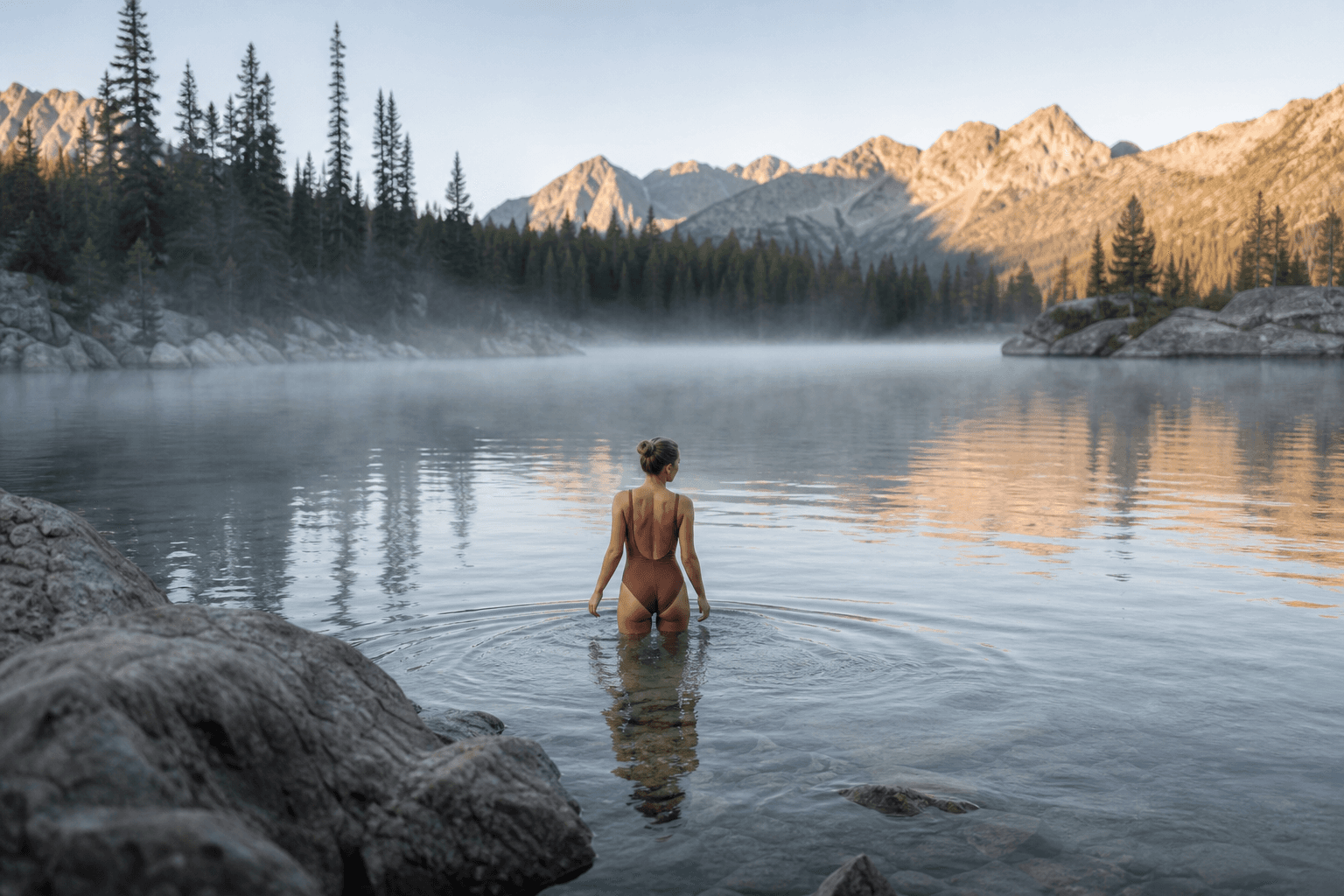
Short answer: Wild swimming is swimming in unmanaged natural water, usually below 15°C (59°F) where the research sits. Evidence supports mood lift, cold adaptation and community; cold shock and drowning are documented causes of death, including in strong swimmers. Start with a supervised group, keep early swims under 10 minutes, never go alone.
Wild swimming, entering natural bodies of water like lakes, rivers, reservoirs, and the sea, has moved from a niche outdoor pursuit to a mainstream wellness practice, with communities forming around it in nearly every country with cold water. The enthusiasm is well-founded in some respects. It’s also a practice where the risks are routinely underplayed in the wellness conversation. This guide covers both honestly.
What wild swimming is
Wild swimming is simply swimming in natural, unmanaged water rather than in a chlorinated pool. It overlaps substantially with open-water swimming, cold-water swimming, and sea swimming, the terms are sometimes used interchangeably, though “wild” usually implies a more immersive, nature-focused experience beyond competitive training.
The practice spans a wide spectrum: a gentle float in a warm summer lake is very different from a January plunge into a British loch. Cold-water wild swimming, typically water below 15°C (59°F), is where most of the physiological research and most of the wellness claims concentrate.
The cold adds specific stressors and specific benefits that make it more complex than a swim in warm water.
Wild swimming is increasingly positioned as a form of nature immersion (with some evidence overlap with forest bathing) and as a cold-exposure practice with overlapping science to deliberate cold plunging. For the cold-exposure physiology specifically, our ice bath and cold plunge guide covers that research in depth.
What a wild swim is like
A typical wild swim outing with a community group or organized experience looks like this:
You arrive at the water, a lake shore, river bank, or coastal spot, and assess conditions. With a group, a leader or experienced swimmer checks temperature, currents, and entry/exit points. You change and enter the water gradually or at once, depending on the approach. Even with full immersion as the goal, experienced wild swimmers usually advise wading in rather than jumping, especially in cold water.
In cold water, the first 30, 90 seconds are the most physiologically intense. Your breathing will respond involuntarily, gasps, rapid breathing, a racing heart. This is normal and passes, but it’s also when cold-shock risk is highest.
Once your breathing stabilizes, most people find a rhythm and begin to register the characteristic sensations: tingling, then a kind of clarity or aliveness that regular swimmers describe as addictive.
Most cold-water wild swims are short, 5 to 20 minutes depending on temperature. Afterwards, people change, warm up with hot drinks, and often linger together. The social component is a significant part of why many people keep doing it.
What the evidence says about open water
Wild swimming sits at the intersection of cold-water immersion research, nature-immersion research, and community-based wellbeing, each with its own evidence quality.
-
Reasonable evidence for: Mood improvement immediately following cold-water immersion. Multiple studies and a well-documented case series (including work from the University of Portsmouth) show significant reductions in low mood and anxiety symptoms in people who swim regularly in cold open water. Cold adaptation over repeated exposures, the physiological stress response genuinely becomes more manageable with consistent practice. A strong sense of community and belonging in group swimming contexts. Some evidence for improved vagal tone (heart rate variability), consistent with controlled cold-exposure research.
-
Debated or mixed: Whether wild swimming provides mental health benefits beyond what any regular outdoor exercise would provide. The social, outdoor, and sensory novelty factors are difficult to isolate. Claims about brown fat activation and metabolic improvement exist in cold-exposure research broadly, but wild swimming studies specifically are limited. Whether benefits generalize to warm-water wild swimming, most research focuses on cold water.
-
Not established / overstated: That wild swimming “detoxifies” the body or boosts immunity in any meaningful clinical sense. Long-term antidepressant-equivalent effects (the evidence is promising but based on small studies; it is not a substitute for treatment). That it’s universally safe for everyone, the cold-shock and drowning data make this clearly false.
Benefits swimmers report
- Immediate mood lift and a sense of aliveness after a swim
- Reduced anxiety, particularly with regular practice
- Better sleep, especially after cold-water sessions
- A reliable, low-cost nature ritual that structures the week
- Strong social connection through swimming communities
- Improved tolerance of discomfort and cold over time
- A sense of confidence from doing something physically challenging
Who should wild swim, and who should not
Good fit: Active adults looking for an outdoor, community-centered wellness practice. People who find conventional gym or pool environments uninspiring. Anyone drawn to cold-exposure benefits in a natural setting. Those who enjoy mindfulness meditation or breathwork may find the enforced present-moment attention of cold water a useful complement.
The safety picture is not optional reading. Wild swimming carries real risks that the wellness community frequently glosses over:
Cold shock is the primary acute danger. When the body hits cold water, an involuntary gasp and rapid breathing response can cause you to inhale water. This is the leading cause of cold-water drowning deaths in non-swimmers and even in strong swimmers who enter cold water too quickly or unexpectedly. Acclimatization over time reduces but does not eliminate this response.
Hypothermia is a slower risk. Core temperature drops faster in water than in air at the same temperature. Mild hypothermia can impair judgment and swimming ability before you register how cold you are. Getting out before you’re too cold to do so safely is a skill that takes practice.
Drowning risk is always present in open water regardless of temperature. Currents, weeds, boat traffic, unexpected depth, and post-swim weakness all contribute. Strong pool swimmers regularly underestimate open water.
Who should not wild swim, or should get medical clearance first: Anyone with a heart condition, arrhythmia, or high blood pressure (cold immersion stresses the cardiovascular system significantly). People with Raynaud’s disease. Anyone on medication that affects circulation or thermoregulation. Those with epilepsy. Children without close adult supervision. Anyone who cannot swim confidently in a pool.
Talk to your doctor before beginning cold-water wild swimming if you have any cardiovascular history or relevant health conditions.
What wild swimming costs
Wild swimming in natural water is largely free, it’s one of its genuine appeals. Where costs come in:
- Guided introductory experiences or organized swims: $15, $60 per session, depending on the guide and location. Some offer coaching on safety, technique, and cold-water entry.
- Retreat-based wild swimming programs (multi-day, often combined with yoga, breathwork, or other modalities): $300, $2,000+.
- Equipment: A good wetsuit ($80, $400) makes cold-water swimming safer and more sustainable for beginners. A tow float ($15, $40) improves visibility in open water, worth every penny. Neoprene gloves and socks extend comfortable time in cold water.
How to choose a good experience or guide
- Start with supervised group swims. Wild swimming communities exist in most cities near natural water, many offer free or low-cost group sessions. Entering water with experienced swimmers is far safer than going alone.
- Ask about safety protocols explicitly. A good guide discusses cold-shock, entry technique, maximum time in the water for the temperature, and what happens if someone struggles. If a guide dismisses safety questions, go elsewhere.
- Check the water quality. Natural water can contain bacteria, algae blooms, or pollution. In the US, EPA water quality databases and local public health departments post advisories. In the UK, the Outdoor Swimming Society maintains a site database. Blue-green algae is genuinely toxic, don’t swim in it.
- Never swim alone. This is the one rule that is close to absolute. Even experienced wild swimmers die in solo incidents. Bring someone who can raise the alarm.
- Learn the entry technique for cold water. Controlled breathing before entry, slow wading in rather than jumping, and keeping your head above water for the first minute until breathing stabilizes, these are skills, not intuitions.
FAQ: wild swimming
Do I need to be a strong swimmer? You should be a confident swimmer in a pool before moving to open water. Open water is less predictable, and fatigue sets in faster in cold water. Beginner swimmer experiences in calm, supervised conditions exist, but you need baseline swimming competence.
Is wild swimming the same as cold-plunge therapy? There’s significant overlap in the physiology, but they’re different experiences. Cold plunges are typically controlled, static, and brief. Wild swimming involves active movement, navigation, and real outdoor hazards. The science of cold exposure applies to both; see our ice bath and cold plunge guide for that detail.
How cold is too cold? Water below 10°C (50°F) is considered very cold and requires acclimatization and ideally a wetsuit for beginners. Below 5°C is expert territory. Most organized community swims monitor temperature and adjust expected time in the water accordingly. A general rule: beginner swims should be kept under 10 minutes in water below 15°C until your body has adapted over several sessions.
What should I wear? For warmer water (above 18°C), a swimsuit is fine. For cooler water, a wetsuit provides thermal protection and buoyancy. Neoprene gloves, socks, and a swimming hat meaningfully reduce heat loss from extremities and the head. A bright tow float is recommended any time you swim in open water.
The honest summary on wild swimming
Wild swimming is one of the more genuinely rewarding wellness practices available, it’s free, communal, immersive, and backed by real (if modest) evidence for mood and resilience benefits.
It is also a practice where cold-shock and drowning are documented causes of death, including in experienced swimmers, and the wellness community has been irresponsible about how it discusses those risks. Start with a supervised group, build acclimatization gradually, never go alone, and take the safety protocols as seriously as the mood benefits. Done thoughtfully, it earns its reputation.