Float tanks: sensory deprivation, what it's like, and what it's good for
Floating in body-temperature salt water, the experience, the research, and who loves it.
Short answer: Sensory deprivation is less harsh than it sounds: about a foot of water saturated with 800 to 1,000 pounds of Epsom salt, heated to 93 to 94°F, lid you control, 60 to 90 minutes. Reasonable evidence for stress, anxiety, muscle relaxation and sleep. The first float is adjustment; the calm usually lands on the second.
You float effortlessly in a foot of body-temperature Epsom-salt water, in the dark, for 60 to 90 minutes, and most people climb out feeling deeply calm. The evidence reasonably supports short-term stress and anxiety relief, muscle relaxation and better sleep that night; the bigger claims (curing depression, PTSD, “detox”) are not established. It suits stressed, tense, overstimulated people best.
A float tank, also called a sensory deprivation tank or REST pod (Restricted Environmental Stimulation Therapy), is one of the strangest-sounding and most reliably restful experiences in wellness.
The concept is simple even if it sounds intimidating: lie in warm, salty water with nothing to see, hear, or feel, and let your nervous system finally exhale. Here’s what it’s actually like, what the research backs, and who gets the most out of it.
What a float tank is
A float tank is a dark, sound-dampened pod or room filled with roughly a foot of water saturated with around 800, 1,000 pounds of Epsom salt (magnesium sulfate). The salt concentration is high enough that you float effortlessly on the surface, no swimming, no effort required.
The water is heated to approximately 93, 94°F (skin-neutral temperature), so after a few minutes you stop sensing where your body ends and the water begins.
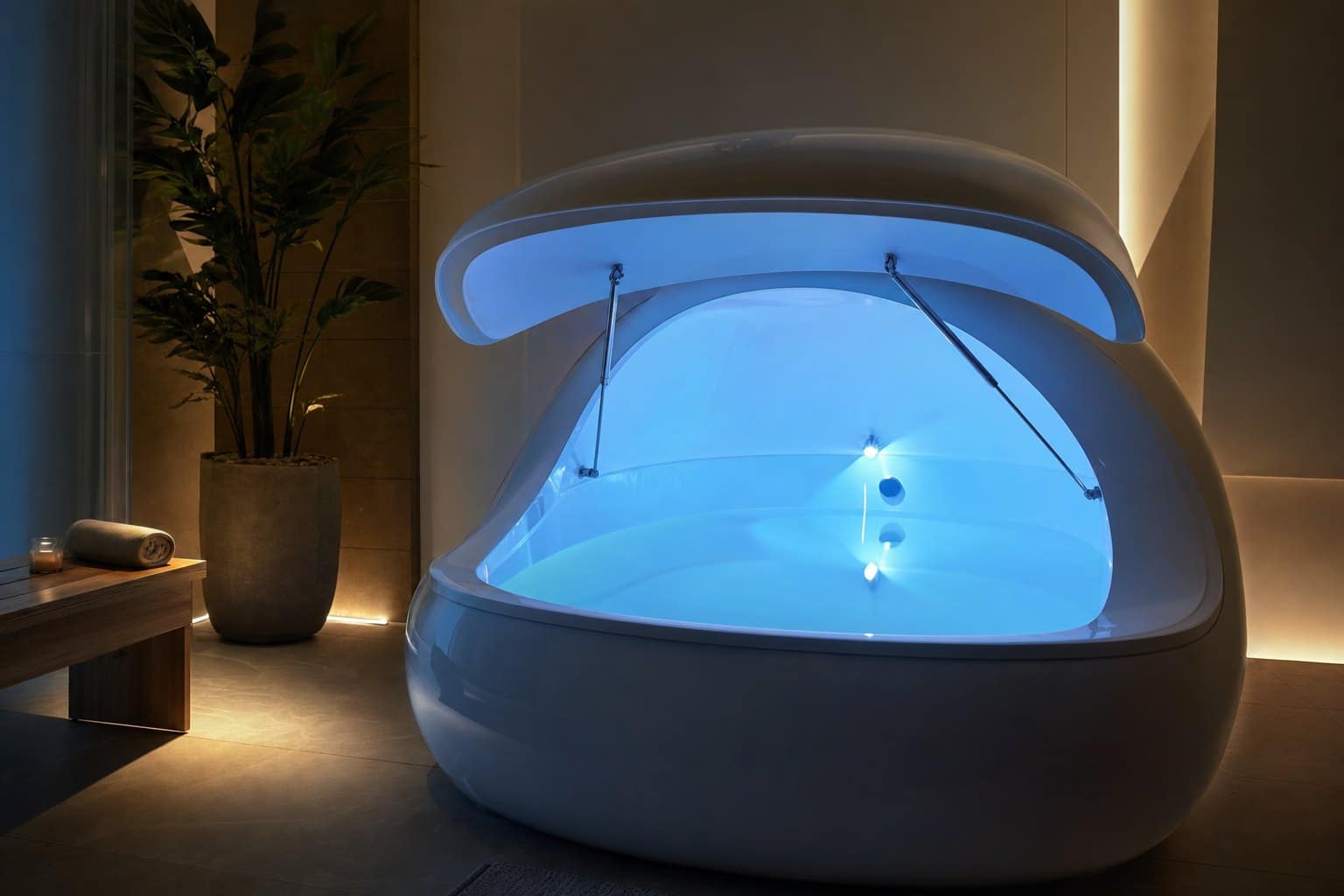
Modern float centers typically offer enclosed pods with a lid you control, larger float rooms you can walk into, or open pools with full blackout capability. The enclosed pods are quieter and more isolating; rooms feel less confined if you’re nervous about small spaces.
The “sensory deprivation” label is accurate but sounds harsher than the reality. You’re not strapped down, you lie freely, the lid opens at any time, and the experience is closer to a very intense rest than anything uncomfortable.
What a float session is like
Most sessions run 60, 90 minutes, with 90 minutes being the standard at dedicated float centers. Here’s a typical arc:
You shower before entering (required to keep the tank clean), put in earplugs, and step or climb in. Many pods have a soft blue light inside, you can leave it on or switch it off. Once you close the lid and the light goes dark, the adjustment period begins.
The first 10, 20 minutes are often the hardest part: your mind is still busy, the dark and silence feel novel, and your body doesn’t quite believe it can relax completely. Some people feel a low-level itch to check their phone or a vague unease. This is normal and passes for most people.
After that window, the majority of floaters describe sinking into a state that’s hard to name, deeply calm, borderless, sometimes mildly dreamlike. Thoughts slow or loop softly. An hour passes faster than expected. Some people use the time to problem-solve; others drift in and out of something that feels like light sleep.
A few experience mild visual patterns from a brain that’s stopped receiving external input.
At the end, soft music or a gentle light signals time’s up. You shower again (the salt leaves a crust if you don’t) and most people step out feeling loose, unhurried, and noticeably calmer than when they walked in.
What the evidence says about floating
- Reasonable evidence for: reduced anxiety and stress (multiple controlled studies show significant drops in cortisol and self-reported anxiety after a float session); muscle relaxation and temporary relief from chronic pain; improved sleep quality, particularly in people with high baseline stress; reduced blood pressure in hypertensive participants. The Epsom salt and weightlessness are both likely contributors, buoyancy removes gravitational load from joints, and magnesium is absorbed transdermally (though the degree of absorption is debated).
- Debated or mixed: whether float therapy has durable mental-health effects beyond the session, how much is the relaxation response vs. sensory restriction specifically, and the degree of magnesium absorption through skin.
- Not established / overstated: claims that float tanks cure depression, PTSD, or physical disease on their own. Some studies show promise for PTSD and fibromyalgia, but sample sizes are small and replication is limited. “Detox,” “cellular reset,” and similar claims have no credible support.
Benefits floaters report
People with high baseline stress, chronic muscle tension, or anxiety tend to report the most noticeable benefit. Common themes: feeling mentally “emptied out,” sleeping more deeply the night of the float, a reduction in physical pain that lasts hours to days, and a heightened ability to focus in the days following.
Athletes use float tanks for recovery, the combination of weightless rest and Epsom salt makes it a genuinely useful muscle recovery tool. People with fibromyalgia or chronic back pain often find temporary but meaningful relief. And for people whose minds rarely quiet down, the enforced absence of stimulation can produce a stillness that’s difficult to replicate elsewhere.
Who floating suits, and who should skip it
Float tanks suit a wide range of people, including those new to wellness practices (no skill required), athletes recovering from hard training, people with high stress or anxiety, those with chronic muscle pain, and anyone who finds it hard to stop thinking long enough to rest. People with ADHD split down the middle on floating, and our guide to wellness with ADHD explains why a short first float is the test.
If claustrophobia is a concern, most centers offer rooms rather than enclosed pods, worth asking before booking. The first float is often more adjustment than bliss; the second and third sessions are typically where people find their rhythm.
Talk to your doctor if you have open wounds, a skin condition like eczema that might be aggravated by salt, uncontrolled epilepsy, very low blood pressure, or if you’re in the first trimester of pregnancy. People with severe anxiety disorders occasionally find the isolation triggering rather than calming, go in with low expectations and know you can exit anytime. Our guide to wellness with epilepsy covers why water alone is the specific concern and what to ask a centre. Book on an empty stomach if you have reflux, which our guide to acid reflux and hiatal hernia explains.
For a contrast between float-induced stillness and active cold stress, see the ice bath and cold plunge guide.
What a float costs
In the US, a single 60-minute float typically runs $60, $90; 90-minute sessions are $80, $110 at most standalone float centers. First-time rates and intro packages are common ($40, $60 for a first float). Monthly memberships at float-focused studios often drop the per-session cost to $50, $70.
Purchasing a home float tank is possible but expensive: entry-level pods run $2,500, $5,000; commercial-grade units cost $10,000 and up.
How to choose a good float center
Cleanliness is non-negotiable. Ask how the water is filtered and sanitized between sessions, reputable centers use UV filtration plus hydrogen peroxide or ozone, and the salt concentration itself is bacteriostatic. Saltwater clarity and smell are reliable signals.
Look for staff who brief first-timers properly, a comfortable shower setup (you’ll need two showers), and pods or rooms in good repair. A center that offers both enclosed pods and open rooms gives you options if enclosed spaces make you nervous.
Avoid centers that oversell spiritual or healing claims, “deep relaxation and sensory rest” is the honest promise. Centers associated with wellness communities (spas, recovery studios, yoga centers) often maintain higher standards than one-off novelty experiences.
Reading reviews specifically for first-timer experiences is useful; look for mentions of cleanliness and how staff handled nervous newcomers.
If deep rest without floating appeals to you, yoga nidra achieves a similar edge-of-sleep state and is free to try at home tonight.
FAQ: float tanks
Is a float tank really completely dark and silent? Yes, if you switch off the pod light and use earplugs (usually provided). Some people keep a dim light on their first time, which is fine, you control the experience.
Will I fall asleep and drown? Extremely unlikely. The salt concentration keeps you buoyant; even deeply relaxed, your body naturally stays on the surface. Some people drift into light sleep and wake up gently when the session ends.
How long until I feel something? Many first-timers spend most of their session adjusting. The calm often arrives fully on the second or third float. If you feel underwhelmed the first time, that’s common, it’s worth trying at least twice.
Does the Epsom salt do anything? Likely yes for joint relief and muscle relaxation (via buoyancy and possibly some magnesium absorption), but the “magnesium deficiency cure” claims are overstated. The weightlessness alone accounts for much of the physical benefit.
The honest summary on float tanks
A float tank is one of the more unusual and genuinely effective tools for deep stress relief and muscle recovery. The research isn’t vast, but it’s consistent: stress and anxiety go down, relaxation goes deep, and people with chronic pain often find real relief.
The first float is about getting used to it; the benefit typically lands by the second. It’s not magic, but it’s not hype either, it’s what happens when you remove nearly all external stimulation and give your nervous system nowhere else to go but down.
If the Epsom salt itself is what interests you, our piece on whether an Epsom salt bath does anything covers the home version and the magnesium-absorption question honestly.