Infrared vs traditional sauna: which one is right for you in 2026?
They both make you sweat, but they do it in very different ways and suit very different people. Here's an honest comparison so you pick the heat that fits you.
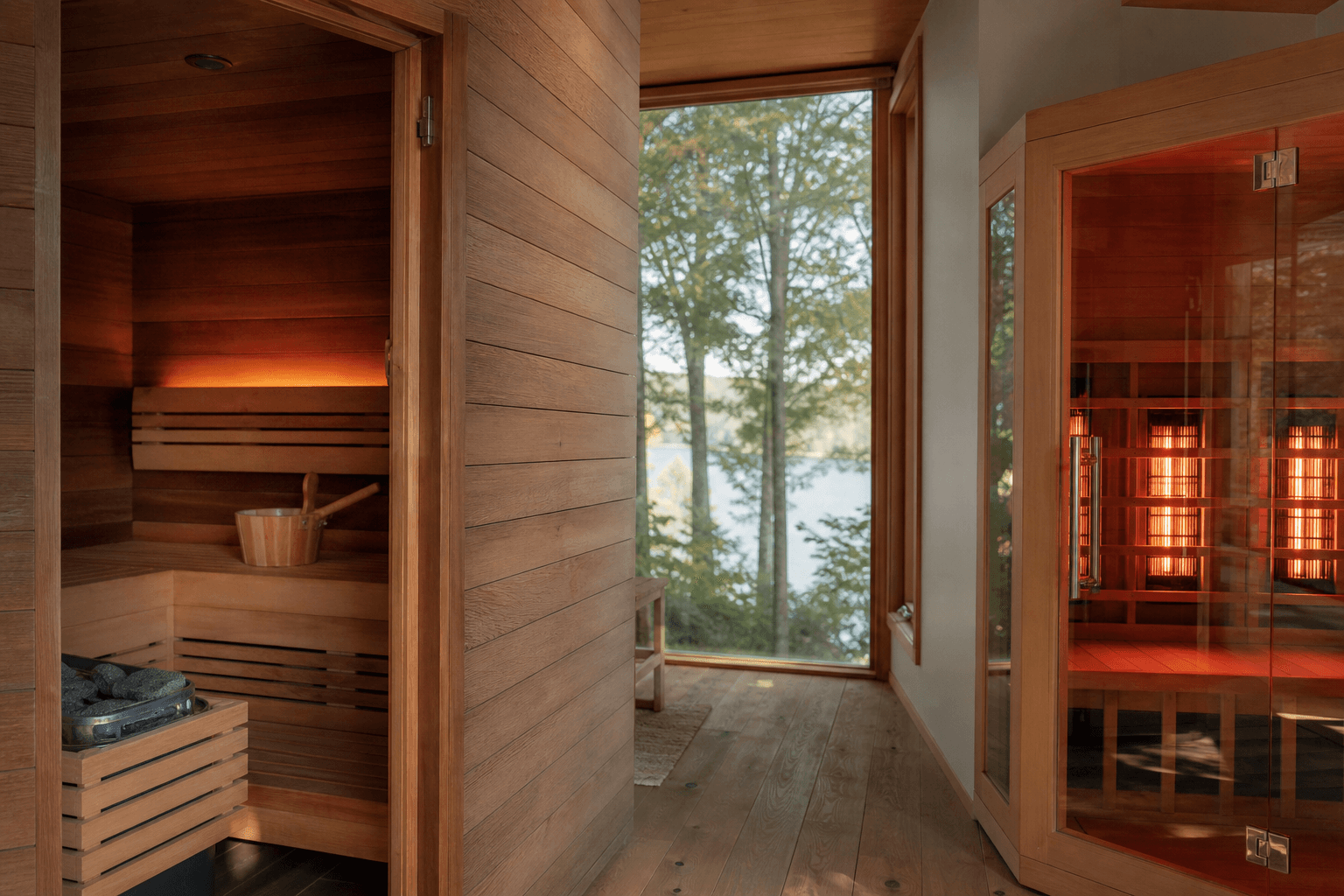
Short answer: Neither wins; it is a fit question. Traditional sauna heats air to 150 to 195F, carries the real evidence base, and pairs with a cold plunge. Infrared heats you directly at 110 to 140F, so it is gentler and you can sit for 25 to 45 minutes. Choose on heat tolerance.
The longer answer
There is no winner, only a fit. Choose a traditional sauna if you want intensity, steam, a social ritual, or a partner for cold plunging, and if you care that the heat-therapy research base is built almost entirely on this kind of sauna. Choose infrared if high heat is hard for you to tolerate, if you want a calm 30 to 45 minute sweat you can read through, or if you are sensitive to humidity.
Both make you sweat properly. They just get there by different routes, and that one mechanical difference explains everything else on this page.
If you are new to heat entirely, our overview of the main sauna types covers Finnish, infrared, steam, and the rest before you commit to any of them.
How each one actually heats you
Traditional sauna. A stove heats rocks, the rocks heat the air, and the hot air heats you. Air temperature usually sits between 150 and 195F. Ladling water over the rocks releases a burst of steam (loyly) that spikes the perceived heat sharply for a minute or two. You are warming from the outside in.
Infrared sauna. Panels emit infrared radiation, which your skin and the tissue just beneath it absorb directly. The cabin air stays much cooler, commonly 110 to 140F, because heating the room is not the point. You are warming more directly, in cooler surrounding air.
That is the whole distinction. Everything people argue about downstream, comfort, session length, evidence, cold plunge pairing, follows from hot air versus direct radiant heat.
Infrared vs traditional at a glance
| Traditional (Finnish) | Infrared | |
|---|---|---|
| Air temperature | 150 to 195F | 110 to 140F |
| How it heats you | Hot air and steam | Radiant panels, direct on the body |
| Humidity | Dry, or high in bursts with water | Dry throughout |
| Typical session | 8 to 20 minutes per round | 25 to 45 minutes |
| Feel | Intense, immediate, breath-taking with steam | Gentle, tolerable, slow build |
| Social or solo | Often communal and ritual-led | Usually solo or a small cabin |
| Cold plunge pairing | Excellent, the classic contrast cycle | Workable but less of a contrast |
| Research base | Large, decades of observational and trial work | Small, mostly short-term studies |
| Home cost | Higher, needs venting and often wiring | Lower entry point, plug-in units exist |
What each one feels like
A traditional sauna is intense and immediate. The heat hits when the door opens, a ladle of water on the rocks can take your breath for a moment, and the culture tends to be social, with rounds, benches at different heights, and a rhythm of heat and cool. The top bench is a genuinely different experience from the bottom one.
An infrared cabin is quieter and more tolerable. You can breathe easily, hold a conversation, or stretch while still sweating heavily by the 20 minute mark, and it is the easier of the two to do daily without it feeling like an event. Our walkthrough of a first infrared session covers the practicalities, and first sauna session etiquette covers the traditional room.
What the evidence actually supports
This is where the two diverge most, and where marketing tends to blur them.
Traditional sauna has the substantial evidence base. Long-running Finnish cohort studies have linked frequent sauna bathing with better cardiovascular and all-cause mortality outcomes, and smaller trials show consistent short-term effects on blood pressure, arterial stiffness, and perceived recovery. These are largely observational findings in a population that saunas as a lifelong habit, so they show association rather than proof of cause, and healthier people may simply sauna more. Our summary of what the sauna science actually says and the deeper piece on sauna and your heart go through the caveats properly.
Infrared has a much thinner literature: mostly small, short-term studies, often without good controls. Some of it is encouraging. None of it is large enough to say that infrared delivers the same cardiovascular effects as traditional sauna. It is reasonable to expect a similar core-temperature response if you stay in long enough, and unreasonable to assume the outcomes transfer. Anyone selling infrared on the strength of the Finnish data is borrowing evidence that was not collected on their product.
Be especially skeptical of the strong infrared claims. Sweating does not detox you in any meaningful sense, as the detox question explains, the calorie-burn numbers on cabin brochures do not survive scrutiny, and infrared is not the same thing as red light therapy, which our infrared versus red light piece untangles. On pain, the evidence is more mixed than the studios suggest: does an infrared sauna help with pain is the honest version.
Who should choose which
Go traditional if you want the classic intensity, you like steam and the social bench culture, you plan to run a proper hot-cold contrast cycle, or you specifically want the version of sauna the research was done on. If contrast is the goal, sauna or cold plunge first and why contrast therapy works are the next reads.
Go infrared if high heat is genuinely hard for you, you want longer and calmer sessions, humidity bothers you, you prefer a private cabin, or you are building a home setup on a smaller budget. Our home infrared buying guide covers what actually matters in a unit.
Plenty of good studios have both, which makes the cheapest answer the best one: book each once and notice which you look forward to. How to choose a studio covers what to check before you pay, and what a session costs sets expectations on price.
Safety notes that apply to both
Heat is a real cardiovascular load, not a neutral spa amenity. Hydrate, start with shorter sessions than you think you need, and leave the moment you feel dizzy, nauseated, or oddly cold. What to do if you feel faint in a sauna is worth reading before you need it.
Talk to your doctor first if you are pregnant, have a heart or blood pressure condition, or take medication affecting blood pressure, sweating, or heart rate, since several common drugs interact with heat in ways people do not expect. See sauna, cold plunge, and blood pressure and heat, cold, and common medications. Alcohol and sauna are a bad combination in either cabin.
FAQ: infrared vs traditional sauna
Which one makes you sweat more? Traditional, usually, and faster. Infrared produces a comparable volume of sweat over a longer session because you sit in it two to three times as long. Sweat volume is not a measure of benefit either way.
Is infrared better for beginners? Often, yes, on comfort grounds. The cooler air is much easier to sit in for a first session, and there is no steam spike to catch you off guard. That is a tolerance advantage, not an effectiveness advantage.
Can you cold plunge after infrared? You can, and some people love it. The contrast is milder because your core has warmed more slowly and the surrounding air was never that hot. If the hot-cold swing is the part you want, traditional gives you a sharper one.
How often should you use either? Most regulars land somewhere between two and four sessions a week, with consistency mattering more than the individual session. Our guide to how often to sauna or cold plunge covers building it into a week without overdoing it.
The bottom line on infrared vs traditional
There is no winner here, only a fit. Traditional sauna gives you intensity, steam, ritual, the sharper cold plunge, and the stronger evidence base. Infrared gives you a gentler, longer, calmer sweat that is easier to do often and easier to install at home. The best sauna is still the one you will actually use twice a week in February.
To find a serious studio near you, our city guides to Los Angeles, New York, and Chicago use the same buyer’s checklist, and the modality guides explain the related practices. We only recommend what we would send a friend to.