Sauna or hot tub with a Dexcom, Libre or insulin pump: what the makers say
The pump makers are unusually direct: take the pump off before a hot tub or sauna, because heat can spoil the insulin inside it. The glucose sensor makers are more cautious than clear. Here is what each one says, and how to plan a session around it.
Short answer: The insulin pump makers say take it off. Omnipod’s user guide says to remove the Pod before hot tubs, whirlpools or saunas because the heat may affect the insulin inside it, and Tandem says its pumps should not be worn in hot tubs, whirlpools or saunas. Medtronic says insulin degrades above 98.6°F, and the FDA says pump insulin exposed above 98.6°F should be discarded. For glucose sensors, Dexcom says sauna use has not been tested, and a sauna runs far hotter than the operating ranges Dexcom and Abbott publish. Plan any session with your diabetes team, and confirm odd readings with a fingerstick.
If you live with diabetes and wear a sensor or a pump, the first question about a sauna or hot tub is not your blood sugar. It is what the heat does to the devices, and to the insulin inside them.
The makers answer that more directly than you might expect. Insulet’s Omnipod 5 user guide says to remove your Pod prior to using hot tubs, whirlpools or saunas, because these conditions could expose it to extreme temperatures and may affect the insulin inside it, which could lead to high blood sugar. Tandem’s support pages say the t:slim X2 and the Tandem Mobi should not be worn in hot tubs, whirlpools or saunas, to avoid exposing the pump to high temperatures.
This is general information, not medical advice, and it gives no dosing advice. How long you can be disconnected from a pump, and what to do about insulin around a session, are questions for your diabetes team.
What the insulin pump makers say about saunas and hot tubs
Three makers, one direction.
Omnipod. The Omnipod 5 user guide carries the warning quoted above, and Insulet’s Omnipod safety page repeats it for the Omnipod DASH system. The same guide defines extreme heat for the Omnipod 5 controller as above 104°F during use.
Tandem. The t:slim X2 and Tandem Mobi pages both say the pump should not be worn in hot tubs, whirlpools or saunas, and remind you to disconnect the infusion set tubing from your site and unclip the pump before any activity that could submerge it.
Medtronic. The MiniMed 780G user guide tells you to avoid a pump operating temperature above 98.6°F (37°C), and says insulin solutions degrade at temperatures higher than 98.6°F.
Why heat matters for the insulin itself
The devices can be replaced. The more important problem is the insulin.
The FDA’s page on insulin storage in emergencies says insulin loses some effectiveness when exposed to extreme temperatures, and that the longer the exposure, the less effective it becomes, which can mean losing blood glucose control. For pumps it is specific: insulin in a pump’s infusion set, which the FDA describes as the reservoir, tubing and catheters, should be discarded if it has been exposed to temperatures above 98.6°F.
That is the reason behind Omnipod’s warning about high blood sugar. A pump worn in a sauna or hot tub is not just at risk of damage; it may keep delivering insulin that no longer works as it should.
What the glucose sensor makers say: Dexcom and FreeStyle Libre
The sensors are less clear, and they cannot simply be taken off and put back on.
Dexcom. Dexcom’s own FAQ says plainly that using Dexcom CGMs in a sauna has not been tested, and points to the user guide for temperatures. The Dexcom G7 user guide (international edition) lists the sensor’s operating temperature as 10°C to 42°C. Dexcom also says the G7 sensor is waterproof to 8 feet for up to 24 hours, but the receiver is only splash resistant.
FreeStyle Libre. Abbott’s support page gives the operating temperature for the FreeStyle Libre 14 day system as 50°F to 113°F. Check your own model’s manual, because newer systems have their own specifications.
A sauna is well outside both ranges. Embrace North, a Minneapolis bathhouse in our Minneapolis guide, says its saunas are set to 200°F. So wearing a sensor in a sauna is using it outside the conditions it was tested for, and the makers do not say what happens.
Abbott adds two points that matter in a hot room. Its safety information says severe dehydration and excessive water loss may cause inaccurate sensor readings, and that if your readings do not match how you feel, you should confirm with a fingerstick blood glucose test.
A sauna or hot tub plan with a pump or CGM
Build the plan with your diabetes team, then keep it simple on the day.
Before. Agree with your team how long you can be off the pump and what to do about insulin during that time. Check your glucose. Have fast-acting glucose and a meter with you, not in a locker across the building. Our diabetes guide covers what heat itself can do to blood sugar, and our guide to eating before a sauna or cold plunge covers the meal question.
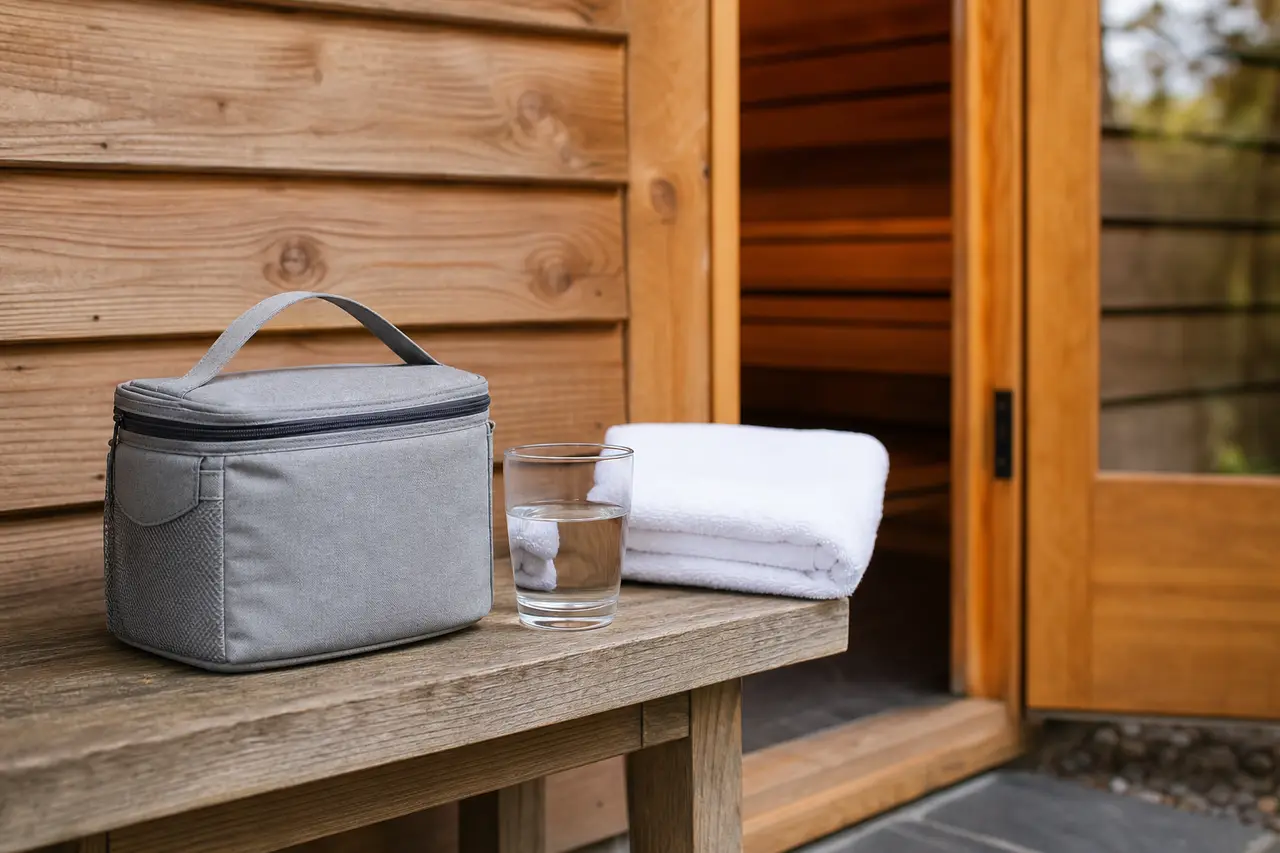
The pump. Follow your maker’s instruction: take the Pod off, or disconnect the tubing and unclip the pump. Keep the pump and your insulin out of the heat. The FDA advises keeping insulin away from direct heat and out of direct sunlight, which rules out the bench next to the sauna door.
The sensor. It stays on your body, so keep the session short and sit lower, where it is cooler. Keep your phone or receiver outside. Afterwards, if the numbers look wrong or do not match how you feel, confirm with a fingerstick, as Abbott advises.
After. Reconnect as agreed, check your glucose, and drink water. Feeling faint after heat can be a blood sugar low or a blood pressure drop, and our guide to what to do if you feel faint in a sauna covers the moment.
Pumps, sensors and heat at a glance
| Device | What the maker says | Sauna | Hot tub |
|---|---|---|---|
| Omnipod 5, Omnipod DASH | Remove the Pod before hot tubs, whirlpools or saunas | Take it off | Take it off |
| Tandem t:slim X2, Tandem Mobi | Should not be worn in hot tubs, whirlpools or saunas | Disconnect and unclip | Disconnect and unclip |
| Medtronic MiniMed 780G | Avoid operating above 98.6°F; insulin degrades above it | Disconnect, keep it cool | Disconnect, keep it cool |
| Dexcom G7 | Sauna use not tested; operating range 10°C to 42°C | Short sessions, confirm odd readings | Sensor is waterproof to 8 feet; keep the receiver dry |
| FreeStyle Libre 14 day | Operating range 50°F to 113°F | Short sessions, confirm odd readings | Check your model’s water rating |
| Spare insulin | Keep away from direct heat, per the FDA | In a cool bag, not in the spa | In a cool bag, not by the tub |
What is oversold about CGMs and saunas
Two claims come up often. The first is that a sauna reading proves heat lowers your glucose. It might, and our diabetes guide covers the evidence on heat and blood sugar, but a sensor being used outside its tested range, in a dehydrated body, is not the instrument to prove it. A fingerstick is.
The second is that the sensor will be fine because it is waterproof. Waterproof and heatproof are different ratings. Dexcom rates the G7 for water depth and time, and separately says sauna use has not been tested.
What belongs to your diabetes team
Everything about insulin: how long you can safely be disconnected, whether to change anything around a session, and how to handle a high or low afterwards. Also whether regular sauna or hot tub use suits your diabetes at all, especially with complications that affect your heart, blood pressure or feet.
If you take other medicines, such as a GLP-1 drug, our Ozempic, Wegovy and Mounjaro guide covers the heat questions they raise, and our metformin, Jardiance and Farxiga guide covers the diabetes pills. For fitness trackers and smartwatches, which have their own rules, see our guide to wearing an Apple Watch or Oura Ring in a sauna.
Our medication heat-warning label index quotes what the FDA label for Humalog says about heat, sweating, dehydration and the sun, word for word, with a link to the label.
FAQ: Dexcom, Libre and insulin pumps in the sauna or hot tub
Can I wear my Dexcom in a sauna? Dexcom says using its CGMs in a sauna has not been tested, and the G7 user guide lists an operating temperature of 10°C to 42°C, far below sauna temperatures. The sensor cannot be removed and reapplied, so if you use a sauna, keep sessions short, keep the receiver or phone outside, and confirm any odd reading with a fingerstick.
Can I wear a FreeStyle Libre in a hot tub or sauna? Abbott gives the FreeStyle Libre 14 day system an operating temperature of 50°F to 113°F, and a sauna is far hotter. Abbott also says dehydration may cause inaccurate readings and advises a fingerstick when readings do not match how you feel. Check your own model’s manual for its temperature and water ratings.
Do I need to take off my Omnipod for a hot tub? Yes. The Omnipod 5 user guide says to remove the Pod before using hot tubs, whirlpools or saunas, because the heat could expose it to extreme temperatures and may affect the insulin inside, which could lead to high blood sugar. Agree with your diabetes team how long you can be without it.
Can I use a sauna with a Tandem or Medtronic insulin pump? Tandem says the t:slim X2 and Tandem Mobi should not be worn in hot tubs, whirlpools or saunas. Medtronic’s MiniMed 780G guide says to avoid operating the pump above 98.6°F and that insulin degrades above that temperature. Disconnect and keep the pump cool, and plan the time off insulin with your diabetes team.
The bottom line on CGMs, pumps and heat
For insulin pumps, the makers agree: a sauna or hot tub is not the place for the pump, because the heat can damage the insulin inside it. Take it off as your maker instructs, keep it and your insulin cool, and plan the time off with your diabetes team.
For glucose sensors, the makers are cautious rather than clear. The sensor stays on, the sauna is outside its tested range, and the fix is practical: short sessions, the receiver outside, and a fingerstick whenever the numbers and your body disagree.