Sauna, cold and massage with diabetes: what's safe
There is a famous small study where sitting in a hot tub improved blood sugar control, and it gets quoted constantly. The practical cautions that come with heat and diabetes get quoted far less, and they are the part that matters day to day.
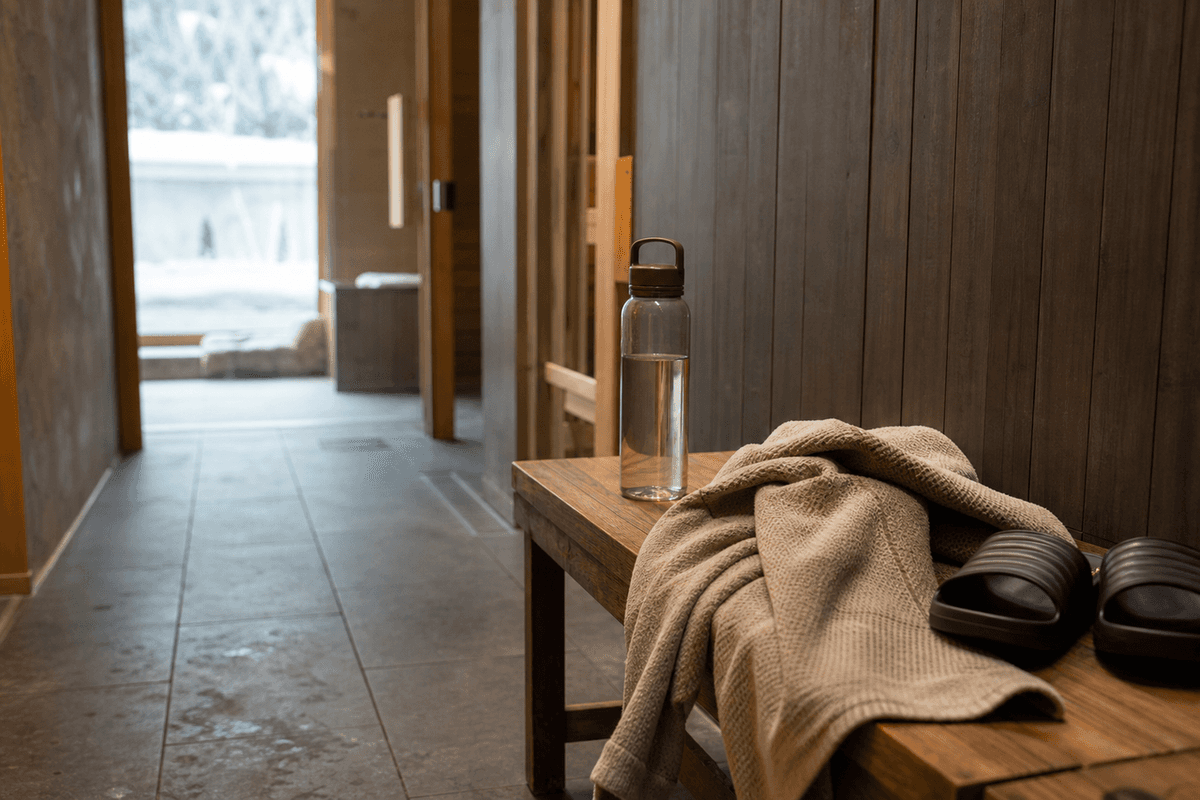
Short answer: Diabetes does not rule out saunas, cold plunges or massage; it changes the planning. Heat can speed insulin absorption and lower blood glucose, and a hot room masks the early warning signs of a low, so check before and after and carry fast-acting glucose. Wear sandals in every wet area and inspect your feet afterwards.
Diabetes does not rule out saunas, cold plunges, or massage. It changes the planning, and it makes two specific risks worth taking seriously: blood sugar dropping unexpectedly, and reduced sensation in your feet meeting hot or shared surfaces.
There is also a genuinely interesting piece of research here, which is why heat and diabetes come up at all. It is a small study, it is often overstated, and it is worth knowing about.
This is orientation, not medical advice. Your diabetes team knows your medication, your control, and your complications, and their answer beats anything here. Ask them before you change a routine.
What did the hot tub study find?
A small trial with a striking result.
The paper people cite is Hooper in the New England Journal of Medicine in 1999, a brief report on hot-tub therapy for type 2 diabetes. Participants sat in a hot tub for around half an hour a day over three weeks, and showed improvements in blood glucose and glycated haemoglobin, along with weight loss and better sleep in some cases.
It is a real published finding and a plausible mechanism, since heat increases blood flow to muscle in a way that has some parallels with exercise.
It is also very small, uncontrolled, and decades old, and it has not been replicated at scale. Read it as an interesting signal that heat is metabolically active, not as a treatment protocol. Our guide on sauna vs exercise covers the wider question of what passive heat can and cannot substitute for.
What is the main risk with heat?
Hypoglycaemia, and it can arrive without the usual warning.
Heat increases blood flow to the skin and to muscle, which can speed absorption of injected insulin and can lower blood glucose during and after a session. If you take insulin or a sulfonylurea, that combination is the thing to plan around.
The complication is that the early symptoms of a low, sweating, feeling shaky, warm, and lightheaded, are exactly what a hot room produces anyway. The signal you normally rely on is masked by the environment, which is the specific reason this deserves attention rather than a general caution.
Practical version: check before you go in, do not go in low or having skipped a meal, take fast-acting glucose with you into the changing room, and check again afterwards. Consider avoiding injecting into a limb you are about to heat. If you use a CGM, note that sensor readings lag capillary glucose, which matters more when things are moving quickly.
Diabetes precautions at a glance
| What to do | |
|---|---|
| Before a hot session | Check glucose; do not enter low or fasted |
| Insulin injection site | Avoid a site you are about to heat, absorption speeds up |
| Fast-acting glucose | Bring it; keep it in the changing room within reach |
| Session length | Shorter and cooler than the room average, especially at first |
| Symptoms in the room | Treat sweating, shakiness and confusion as a possible low, not just heat |
| Feet, always | Wear sandals on communal floors; check feet after |
| Hot surfaces | Never test heat with your feet if sensation is reduced |
| Massage | Fine; flag neuropathy, injection sites and any foot ulcer |
| Cold plunge | Usually fine; the glucose and circulation cautions still apply |
Why do feet need separate attention?
Reduced sensation plus hot and shared surfaces.
Peripheral neuropathy blunts the ability to feel heat and minor injury, and that combination is the reason diabetes foot care is taken so seriously. A sauna floor, a hot tub surround, a heated tile, or a stone bench can be hot enough to burn skin that cannot report it.
Communal wet areas add a second issue: shared floors are a common route for fungal infections and small cuts, both of which are more consequential when healing is impaired.
So: sandals in every communal wet area including showers, no testing water temperature with a foot, and a proper look at your feet after each visit for redness, blisters, or cuts you did not feel. If you have an active ulcer or an open wound, communal water is out until it has healed. Our guide to choosing a studio covers hygiene standards, which matter more here than for most people.
What about massage?
Generally good, with things worth mentioning.
Massage is well tolerated and there is no general reason to avoid it. Tell the therapist you have diabetes, and mention three things specifically: any neuropathy and where, any recent injection sites, and any foot problems.
Neuropathy matters because you may not accurately feel pressure that is too firm, so err lighter and speak up. Injection sites matter because vigorous work over them can affect absorption. Feet matter because a foot massage over an unnoticed lesion is a bad idea.
Also worth knowing: a long relaxing session can lower glucose a little, so the same before-and-after checking applies. Our guides on what to expect at your first massage and checking a practitioner’s credentials cover the general side.
Is cold plunging safe?
Usually, with the standard exclusions.
There is no diabetes-specific rule against cold immersion. The general cautions apply: the cold shock response is a cardiac stress, so if you have cardiovascular complications, which are common in long-standing diabetes, that is a conversation with your doctor first.
If you have peripheral vascular disease or significantly reduced circulation in your feet, cold immersion is worth clearing specifically, since the whole point is intense vasoconstriction in the extremities.
Check your feet after cold as well as heat, for the same sensation reasons. Our guides on cold plunge safety and what to do after a cold plunge cover the general rules.
What should you tell a venue?
Enough that someone can help if you need it.
You do not owe anyone your medical history, but telling front-of-house that you have diabetes and may need to step out is worth doing, especially at a bathhouse where you might be in a quiet room alone.
Better still, go with someone who knows what a low looks like and what to do. That single step removes most of the practical risk, and it is the same advice that applies to heat sessions generally. Our guide on what to do if you feel faint in a sauna is worth reading first, because the response is the same: get low, get out, do not try to walk it off.
Avoid alcohol entirely around heat, which is doubly true here since alcohol both impairs glucose regulation and compounds the blood pressure drop. Our guide on alcohol and sauna covers the evidence.
FAQ: diabetes, heat and massage
Can heat replace exercise for blood sugar control? No. The hot tub study is interesting, not a substitute. Exercise has an overwhelming evidence base for glycaemic control that passive heat does not approach.
Will a sauna raise or lower my glucose? It commonly lowers it, though responses vary. That is why checking before and after matters more than assuming a direction.
Is an infrared sauna safer? Milder heat is easier to tolerate, which helps, but the glucose and foot cautions are unchanged. Our infrared vs traditional comparison covers the differences.
What if I have type 1? The same principles apply and the hypoglycaemia caution is more pointed. Talk to your team about adjusting around heat sessions rather than improvising.
If your diabetes is treated with semaglutide or tirzepatide, our guide to wellness on Ozempic, Wegovy or Mounjaro covers the thirst, the slow stomach and the muscle question those drugs add.
The bottom line on wellness with diabetes
Heat is metabolically active and can lower blood glucose, and the early signs of a low look exactly like being hot, which is the specific reason to check before and after and to carry fast glucose into the changing room.
Feet are the second issue: reduced sensation plus hot surfaces and communal floors means sandals, no testing temperature by foot, and a proper look afterwards. Massage and cold plunges are generally fine with the same disclosures. None of this rules wellness out; it just means planning the session rather than wandering in.