What is a silent retreat? What to expect before you go
Days of not speaking sounds intense, and it can be. But a silent retreat is gentler and more ordinary than most people imagine. Here's what one actually involves.
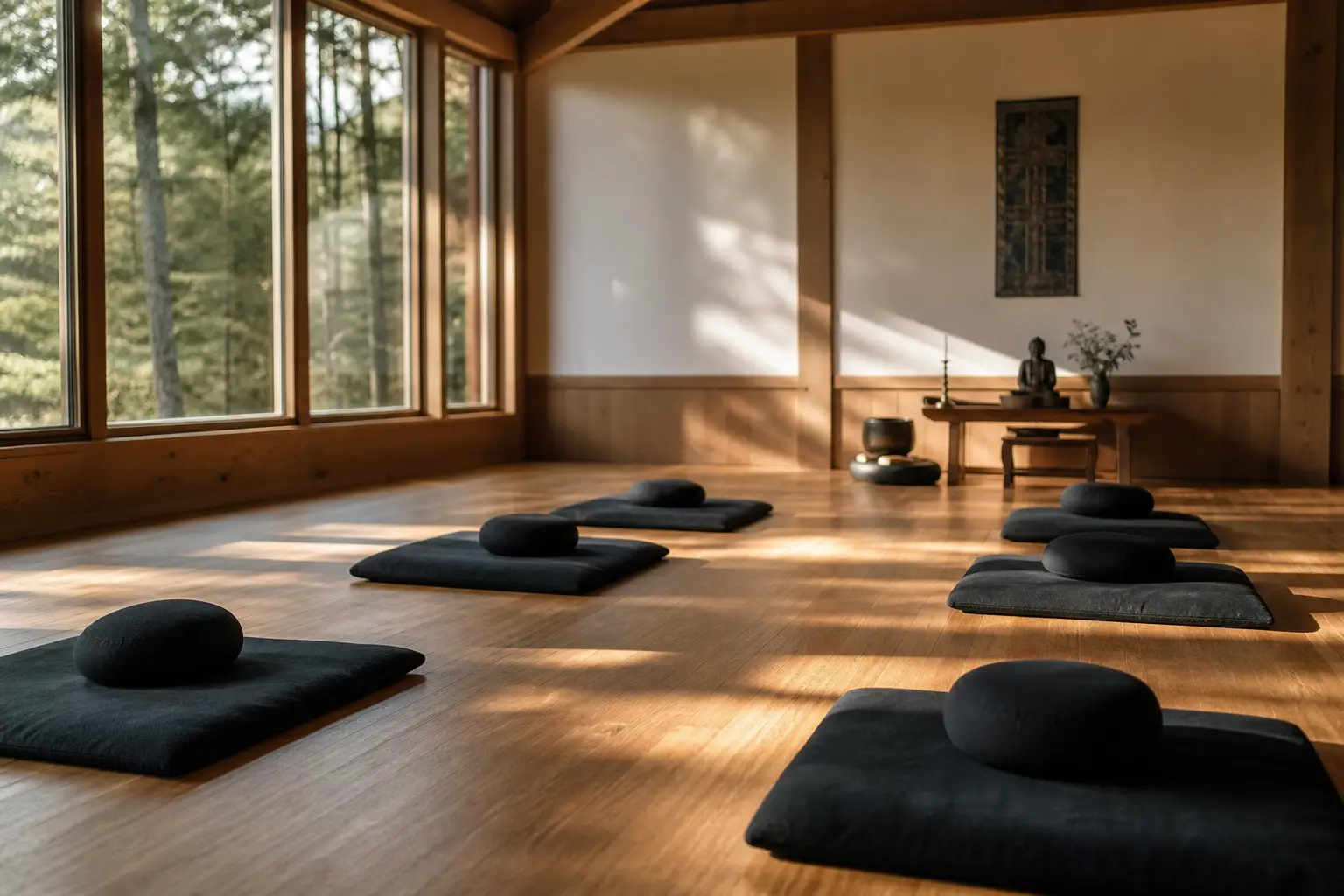
Short answer: A silent retreat is a structured stay where nobody talks, usually for the whole duration, so the time goes into meditation and rest instead of conversation. Many also drop reading, writing and phones. You can always speak to a teacher. Weekend centre retreats commonly run $100 to $300 a night including meals.
A silent retreat is a structured stay where nobody talks, usually for the whole duration, so the time can go into meditation and rest instead of conversation. You still eat, walk, sleep, and follow a schedule alongside other people. You just do all of it without speaking, and usually without your phone.
The silence is not the goal. It is a tool for removing the outer noise so that whatever is underneath becomes audible, which is often the part people find worth the trip.
This guide covers what a silent retreat is, the main formats, what they cost, and who they suit, so the idea feels less daunting before you commit. If you want the hour-by-hour texture of actually being on one, our account of a first silent retreat covers the days themselves, including the one that catches most people out.
We do not take placement fees, so nothing here is selling you a particular place.
What “silent” actually means
Most retreats use some version of what Buddhist traditions call noble silence. In practice that means no conversation with other guests, and often no eye contact either, since eye contact is a form of exchange that keeps the social machinery running.
Many retreats extend it further: no reading, no writing, no journaling, and no phone. That surprises people, and it is deliberate. Reading and writing are both ways of talking to yourself, and dropping them is what makes the quiet go deeper than a weekend of not chatting.
There is almost always a channel kept open. You can speak to a teacher or manager for anything genuine, ask for help, or raise a problem. Nobody is stuck. The silence is a container, not a lock.
Types of silent retreat compared
| Format | Typical length | Cost model | Best for |
|---|---|---|---|
| Vipassana courses | 10 days | Donation, after you complete it | People who want the deep end, with a clear structure |
| Insight or mindfulness retreats | Weekend to 2 weeks | Fixed fee per night | Most first-timers, with a range of intensities |
| Zen sesshin | 3 to 7 days | Fixed fee, often modest | Those drawn to formal, disciplined practice |
| Monastic or spiritual stays | 2 nights and up | Donation or low fixed fee | Quiet and simplicity within an existing tradition |
| Partial-silence retreats | Weekend upward | Standard retreat pricing | Testing the water before a full silent stay |
Vipassana courses are the best-known silent format: ten days, a specific taught method, no charge up front, and a donation only if you finish and want to give. Well organized and genuinely demanding.
Insight and mindfulness retreats span the widest range, from gentle secular weekends to serious multi-week sits, and most first-timers land here. Zen sesshin are formal and disciplined, with long sitting periods and precise conventions around the hall. Monastic stays put you inside an existing rhythm of quiet.
Partial-silence retreats hold silence for a morning, a day, or from evening to breakfast. This is the kindest entry point, and what we would suggest to most people first.
What the structure looks like
The rhythm is remarkably consistent across traditions: early starts, alternating sitting and walking meditation through the day, simple meals eaten in silence, a rest period in the afternoon, and usually a talk from a teacher in the evening.
The structure does the deciding for you. You are not choosing what to do next at any point, which is a larger part of the relief than most people anticipate. You follow the bell.
Sessions are typically 30 to 45 minutes, and nearly all retreats let you sit in a chair rather than on the floor. Walking meditation between sits exists precisely because bodies cannot sit for eight hours; if you want the mechanics of it, walking meditation covers them. On what the practice itself does, meditation benefits is our honest read of the evidence, which is real but more modest than the marketing suggests.
What a silent retreat costs
Silent retreats are usually the cheapest kind of retreat you can go on, which surprises people who assume intensity means expense.
Vipassana courses run on donations, so the cost is what you choose to give afterward. Monastery-hosted stays are often donation-based or a modest nightly fee. Meditation centers running weekend silent retreats commonly land somewhere in the $100 to $300 a night range including meals and a simple room, and dormitory accommodation sits at the lower end.
Compared with the broader range of retreat pricing, that is inexpensive, largely because there is no spa, no excursions, and no staff to entertain you. You are paying for a bed, food, and a hall.
Who a silent retreat suits, and who it does not
It suits people who already have some meditation practice, or none but a real pull toward stillness. It suits anyone worn flat by constant input, which is most people, and it tends to land hardest after a noisy stretch of life rather than during a calm one.
It is not the right move if you are in acute distress or crisis. Extended silence removes the distractions that hold difficult feelings at a manageable distance, and that can be a lot to meet without support. If you are under active treatment, talk to your clinician before booking; our comparison of retreats and therapy is direct about where that line sits.
Good retreats screen for this and will tell you honestly if the timing is wrong. That is a sign of a well-run place, not a rejection.
How to prepare
Start shorter. A weekend or a partial-silence retreat is a far kinder entry than a ten-day sit, and it tells you most of what you need to know.
Expect a loud mind. The first day or two often feels busier inside than normal life does. That is the ordinary experience, not evidence you are doing it wrong.
Sort logistics first. Tell people you will be offline, leave a real emergency number with the retreat, and hand the phone over without negotiating with yourself about it.
Drop the goal. There is no state you are supposed to reach. Showing up and following the schedule is the entire practice, and people who arrive with targets tend to have the hardest week.
FAQ: silent retreats
Can I really not talk at all? Not to other guests, no, and most people find that easier than expected once nobody is trying. You can always speak to a teacher or the retreat manager about anything you need, and every retreat keeps that channel open.
What if I need to leave partway through? You can. Nobody is held anywhere, though most retreats will ask you to speak with a teacher before you go, since the urge to leave peaks on day two or three and usually passes. A retreat that makes leaving difficult is one to avoid.
Are silent retreats religious? Some are and some are not. Vipassana and Zen retreats come out of Buddhist traditions but are generally taught without requiring belief, monastic stays sit inside their tradition openly, and plenty of insight and mindfulness retreats are entirely secular. Read the description, and ask if it is unclear.
Do I need meditation experience to go? Not for most retreats, though some longer courses prefer or require prior practice. Building a modest daily habit first makes the early days considerably easier: our mindfulness meditation guide is a reasonable starting point.
The bottom line on silent retreats
A silent retreat is structured quiet time: meditation, rest, simple food, and no conversation, used to hear yourself more clearly. It is usually cheaper than other retreats, more ordinary than it sounds, and harder in the first two days than at any point after.
Start with a weekend or a partial silence rather than the deep end, choose a well-run retreat with real teacher support rather than the longest one you can find, and go without a target.
To place it against other formats, our yoga vs meditation retreat guide helps, retreat etiquette covers silence and shared space, and the first-timer’s checklist covers vetting one. If the phone is the real problem rather than the noise, a digital detox retreat targets that directly.