What is a wellness retreat? A plain guide for 2026
The phrase covers everything from a silent meditation week to a luxury spa weekend. Here's a clear definition, the main types, and what actually happens on one.
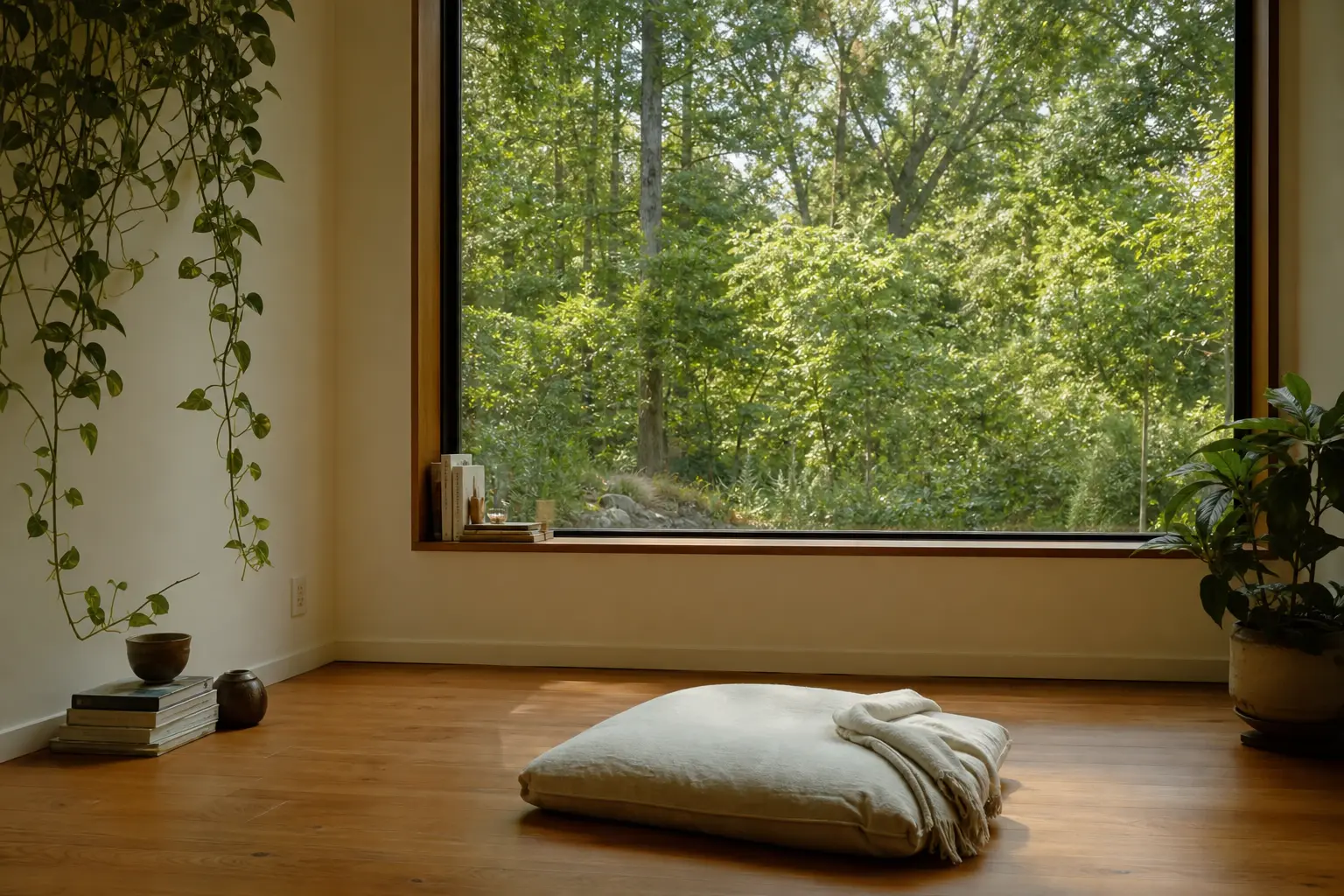
Short answer: A wellness retreat is two to seven days away from home in a dedicated setting with a program attached. Three things must be true: you leave your normal environment, there is a structure, and the structure is the point rather than an amenity. US prices run $400 to $1,200 a weekend, $1,500 to $5,000 a week.
The longer answer
A wellness retreat is a set period of time, usually two to seven days, spent away from daily life in a dedicated setting, following some kind of program aimed at your physical, mental, or emotional wellbeing. Three things have to be true: you leave your normal environment, there is a structure of some sort, and the structure is the point rather than an amenity.
That last condition is what separates a retreat from a hotel with a spa. A resort sells you a room and offers yoga at 9am. A retreat sells you the yoga and puts you somewhere to sleep. Our comparison of a hotel spa versus a wellness retreat is the clearest test if a listing is ambiguous.
In the US, expect roughly $400 to $1,200 for a weekend and $1,500 to $5,000 for a week, with destination spa programs running well above that.
The main types of wellness retreat
| Type | Typical length | Rough US price | Intensity | Best for |
|---|---|---|---|---|
| Yoga and movement | 3 to 7 days | $700 to $3,500 | Low to high, read the level | Building a practice, physical reset |
| Meditation and silent | 3 to 10 days | $400 to $2,500 | Mentally demanding | Working with the mind directly |
| Healing and therapeutic | 4 to 7 days | $2,000 to $6,000 | Emotionally demanding | Burnout, grief, a hard transition |
| Nature and reset | 2 to 5 days | $500 to $2,500 | Low | Unplugging, sleep, plain rest |
| Detox and fasting | 3 to 10 days | $1,500 to $5,000 | Physically demanding | A structured reset, medical caution needed |
| Fitness and adventure | 3 to 7 days | $1,500 to $5,000 | High | Training with a group, hiking, bootcamp |
| Spa and destination | 2 to 7 days | $2,500 and up | Comfort-first | Recovery with amenities and staff |
Plenty of retreats blend two or three of these, and the label matters far less than the daily schedule. Our guide to which retreat type fits which goal maps this the other way around, starting from what you want.
Silent retreats deserve their own warning: they are the format most often booked casually and most often underestimated. What a silent retreat is actually like is worth reading before you book one.
What actually happens on one
Most retreats share a shape regardless of type. Sessions in the morning and often the early evening, meals prepared and eaten with the group, a long open middle of the day, and a real reduction in phone use. Some run tight schedules from 6am. Others leave half the day blank on purpose.
Arrival day is usually light: settling in, an introduction circle, a first gentle session. The middle days are the substance. The last day is often short, ending by late morning.
What makes it land differently from a normal trip is the combination of a supportive setting, a structure you did not have to build, and distance from the things that usually interrupt you. Our guide to what to expect at a wellness retreat covers the rhythm in more detail, and how long a retreat should be covers what changes between three days and a week.
What a wellness retreat is not
It is not therapy. A trauma-informed or therapeutic retreat can be genuinely useful alongside proper care, and it is not a substitute for a clinician who knows your history. Retreat versus therapy is the honest version of that comparison.
It is not medical treatment, and any retreat marketing itself as a cure for a diagnosed condition deserves suspicion rather than a deposit.
It is not automatically a rest. A five-day fitness retreat or a ten-day silent sit is demanding. If you are running on empty, choose a nature or reset format rather than the most transformative-sounding option.
And it is not reliably better because it is expensive. Our look at whether retreats are worth it and the five myths people book on both push back on that.
Who they suit
Retreats work best for people with a reason. Recovering from burnout, deepening a practice you already have, getting through a transition, or simply buying yourself uninterrupted time you cannot carve out at home. Our regional guide to retreats for anxiety and burnout is the most common of those reasons.
They suit people less well when the expectation is transformation on a deadline. A week away can genuinely shift how you feel and what you notice. It does not durably fix a job, a relationship, or a habit on its own, and the honest evidence on what retreats actually do reflects that.
What they cost, and what drives the price
Price is driven mostly by four things: how many nights, what kind of room (shared, private, or a suite), where it is, and how much one-to-one attention is included. Food, travel, and treatments then move the total substantially.
A shared room at a modest venue with group sessions is a completely different product from a private casita with daily bodywork, even when both are called a retreat. Our honest cost breakdown, including what $2,000, $3,500 and $5,000 actually buy, shows where the money goes, and retreats on a budget covers the cheaper end without pretending it is the same experience.
How to choose your first one
Decide the type before the photos pull you in. Read the actual daily schedule rather than the description of the transformation. Check who is leading it and what they have actually done. Compare the all-in cost including flights, transfers, and anything billed on site.
Then check the boring things: refund terms, room sharing, dietary accommodation, and what happens if you sit out a session. How to choose a wellness retreat and how to book one safely online cover the due diligence. We only recommend what we would send a friend to, and most of that judgment lives in those unglamorous details.
Two of our most-read pieces answer the questions that come next: our women’s wellness retreats guide for who a retreat circle suits, and our comparison of BookRetreats, Retreat Guru and a curated shortlist for where to book it.
FAQ: wellness retreat basics
How long should my first retreat be? Two or three nights is the low-risk version. It is enough to feel the shift, short enough that a mediocre teacher is not a wasted week, and it fits a normal weekend plus one day.
Do I have to do every session? On almost all retreats, no. Sitting out to nap or walk is normal. Structured programs like silent retreats and fasting retreats are the exception, and they will say so.
Is a retreat just an expensive vacation? Sometimes, and that is fine if you know which one you are buying. The difference is that a vacation is organized around what you want to see and a retreat is organized around what you want to practice. Retreat versus vacation covers the choice properly.
When is the best time of year to go? Shoulder seasons tend to be cheaper and less crowded, and outdoor-heavy retreats are weather dependent in ways the photos never show. Our guide to the best time to book covers timing and lead times.
The bottom line on wellness retreats
A wellness retreat is protected time in a supportive setting with a program attached, and the right one depends entirely on what you actually want from the week. Pick the type first, read the schedule second, and treat the price as a description of the accommodation rather than the depth.
To go further, our first-timer’s checklist covers vetting one, what wellness retreats actually do keeps expectations honest, and hotel spa vs a standalone retreat helps if you are weighing how much time you really need.