Your first massage: what to expect and how to ask for what you need
The awkward parts, what to wear, whether to talk, how much pressure to ask for, are the exact things nobody explains before you're lying on the table. Here's the honest rundown.
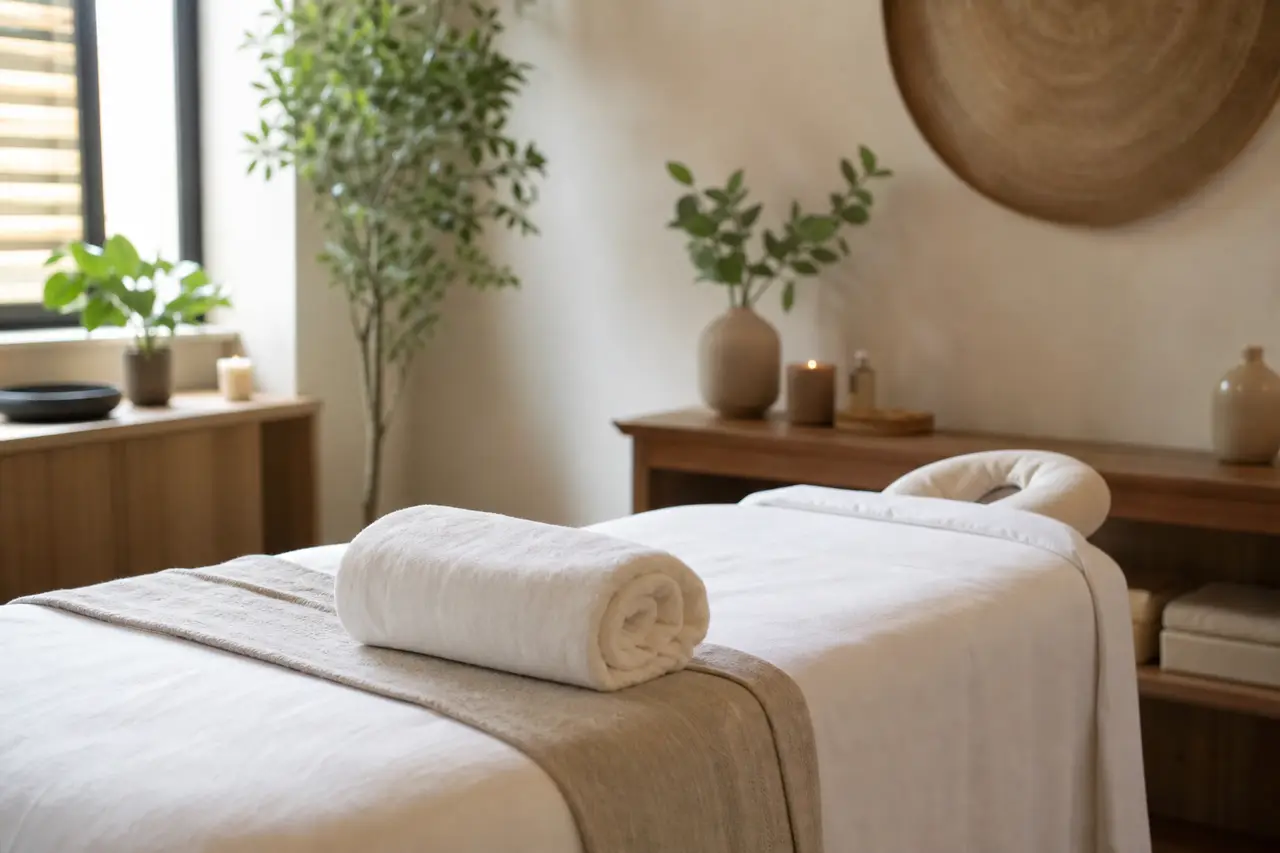
Short answer: You talk briefly with the therapist about what you want, undress to your comfort level in private, and lie under a sheet while they uncover only the area being worked on. Sessions run 50 to 90 minutes. Speak up about pressure, temperature or pain; that is expected. Tipping is commonly 15 to 20%.
Your first massage is simpler than the anxiety around it. You will talk briefly with the therapist about what you want, undress to your comfort level in private, and lie under a sheet on the table while they work, keeping you covered except the area being massaged.
Speak up any time about pressure, temperature, or anything that hurts, that is expected, not rude. A session runs 50 to 90 minutes, you are always in control, and the single most useful thing you can do is tell the therapist clearly what you want.
That is how you get a great massage instead of a polite, forgettable one.
What actually happens, start to finish?
You will have a short intake: any injuries, areas to focus on or avoid, pressure preference, allergies to oils. Then the therapist leaves the room so you can undress to your comfort level, most people go down to underwear or fully undress, and get under the top sheet.
The therapist knocks before returning and keeps you draped throughout, uncovering only the limb or area they are working on. They will massage with oil or lotion, often starting at the back, and reposition you or ask you to turn over partway through.
At the end they leave so you can dress, and you will usually feel a bit slow and relaxed. Drink some water afterward.
What should you wear, and do you have to undress?
You undress only to your comfort level, and a good therapist works fine with whatever you choose. Most people remove clothing from the areas being worked on, but if staying in underwear or keeping a layer on makes you comfortable, say so; nobody will mind. You are draped the whole time regardless. For a first visit, comfort beats “doing it right”, there is no right.
Should you talk during the massage?
Whatever you prefer. Some people chat, most go quiet and let their mind drift, and either is completely normal.
The one thing you should always speak up about is the massage itself: if the pressure is too much or too light, if you are cold, if something hurts in a bad way, or if you want more time on a spot. Therapists genuinely want this feedback and cannot read your mind.
“Could you go a bit lighter” is a normal sentence, not a complaint.
How do you ask for the right pressure?
Be specific and adjust in real time.
“Deep” means different things to different people, so instead of a label, react: “that’s perfect”, “a little firmer”, “that’s too much on the shoulders.” Good pain, the productive ache of a tight muscle releasing, is fine; sharp, bright, or breath-holding pain is not, and you should say so immediately.
You are not being difficult; you are helping them do their job. If you are choosing a style, our types of massage guide explains the difference between a relaxing Swedish session and deeper work.
Etiquette, tipping, and the awkward questions
Shower or at least arrive clean, silence your phone, and go easy on strong perfume. Tipping is customary at spas and independent studios in the US, commonly 15 to 20%, though it is not expected at medical or clinical massage settings, when unsure, ask the front desk.
It is normal to fall asleep, and normal for your stomach to gurgle as you relax. If anything ever makes you genuinely uncomfortable, you can end a session at any time, no explanation owed.
The bottom line on your first massage
Talk briefly up front, undress to your comfort, stay covered, and speak up about pressure and anything that hurts. Do that and a first massage is easy and genuinely restorative. For where different styles fit and what bodywork does and doesn’t fix, our types of massage guide has the honest version.