Your first cryotherapy session: what to expect
Three minutes in a chamber at minus 200 degrees sounds terrifying and is genuinely brief. Here's what actually happens, and an honest word about what it does and doesn't do.
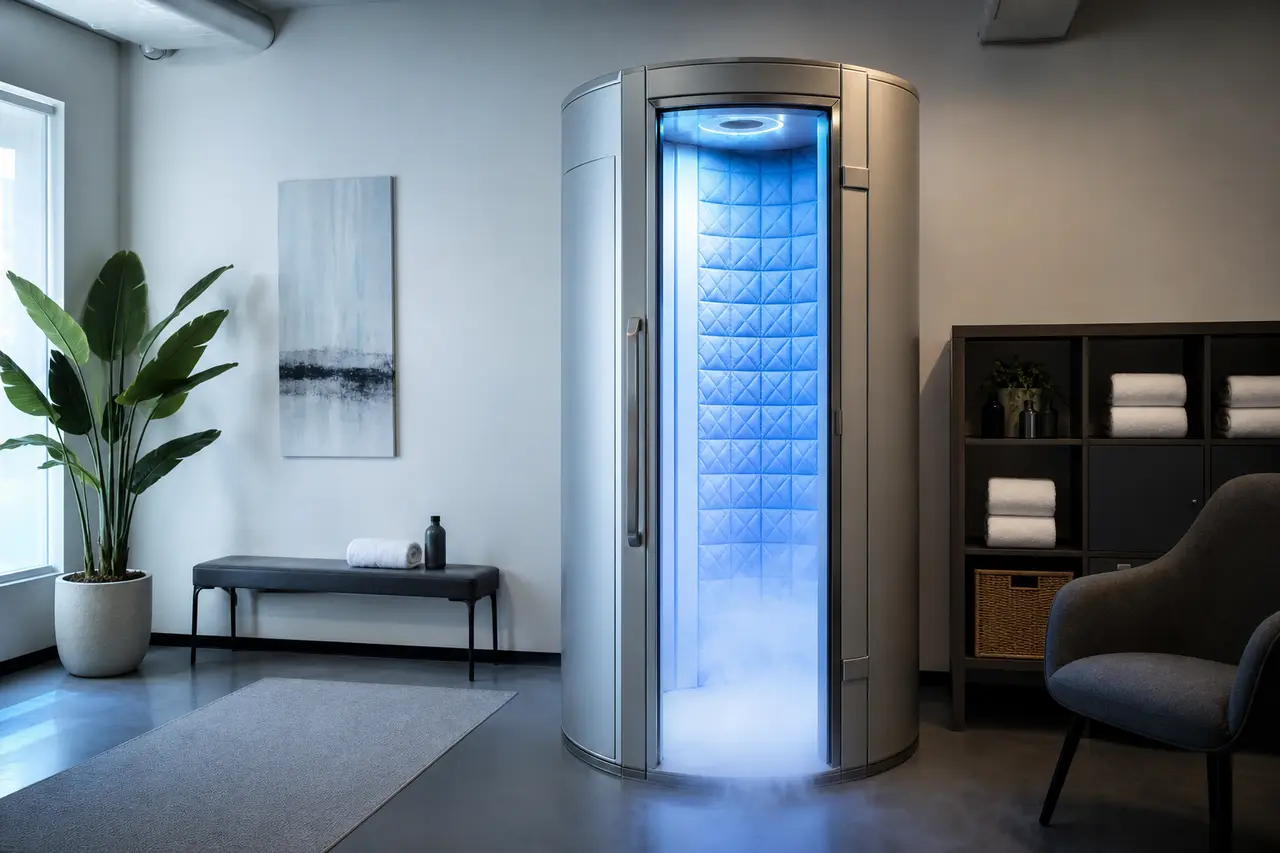
Short answer: You stand for two to three minutes in dry air around minus 110 to minus 140°C, in underwear plus the dry gloves, socks and slippers the studio provides. It is sharp but tolerable, because dry air pulls far less heat than water. Keep your skin completely dry. Expect alertness afterwards; the bigger claims have weak evidence.
Your first whole-body cryotherapy session lasts about 2 to 3 minutes standing in a chamber of extremely cold air, often around minus 110 to minus 140°C (roughly minus 160 to minus 220°F), wearing minimal clothing plus dry gloves, socks, and slippers the studio provides.
It sounds far more brutal than it feels: the cold is dry, so it removes much less heat than cold water, and your skin gets cold fast while your core barely changes.
Expect an intense but short and tolerable few minutes, a jolt of alertness afterward, and honestly, an experience whose evidence is thinner than the marketing.
What actually happens in the chamber?
A staff member briefs you, you change into minimal clothing (underwear or a swimsuit) and put on the dry gloves, socks, slippers, and often a headband or mask they provide to protect extremities. You step into the chamber, which is either open-topped with your head above the cold (whole-body) or fully enclosed.
Cold air, usually chilled with nitrogen or electric refrigeration, surrounds you for the set time while an attendant stays present and talks you through it. You can usually step out at any point.
Because the cold is dry air rather than water, it feels sharp on the skin but is easier to stand than the same duration in a cold plunge, and your core temperature moves very little.
How is it different from a cold plunge?
Mostly in intensity of actual cold dose, despite appearances. The chamber’s temperature number is dramatic, but dry air at those temperatures pulls far less heat from your body than cold water does, so a plunge is arguably the stronger cold stimulus even though its number is milder.
The two also feel different: cryo is brief, dry, and stand-up; a plunge is wet, heavy, and immersive. Our cold plunge vs cryotherapy comparison covers the evidence and cost tradeoffs, and the short version is that the plunge has the stronger research base and the lower price.
What should you wear and know beforehand?
Wear dry underwear or a swimsuit and remove all jewelry, and make sure your skin is completely dry, moisture plus that cold is a frostbite risk, which is exactly why the studio provides dry gloves and socks and insists on them. Do not touch the chamber walls. Tell staff about any health conditions during intake.
The session is short, so there is not much to prepare beyond arriving and listening to the attendant.
What are the safety rules?
Cryotherapy is generally safe when supervised and done briefly, but it has real contraindications: skip it or get medical clearance if you are pregnant, have uncontrolled high blood pressure, heart disease, Raynaud’s, cold allergy, or a seizure disorder.
Never do it with wet skin, never exceed the recommended time, and never use a chamber without an attendant present. If you feel dizzy, numb beyond the expected cold, or genuinely unwell, get out. Frostbite and cold burns are the main risks and they come from moisture, jewelry, or overlong exposure.
What should you actually expect from it?
An honest list: a burst of alertness and a mood lift afterward, a feeling of invigoration, and for some people a sense of reduced soreness. Those acute effects are real and are the reasonable reasons to try it.
What to hold loosely: claims about fat loss, deep recovery advantages over cheaper cold, or disease treatment, the evidence for the bigger promises is weak, and a whole-body cryo session is one of the pricier ways to get cold. Enjoy the brief, sharp, oddly energizing experience for what it is.
The bottom line on cryotherapy
Two or three dry, intense minutes, a real jolt of alertness, and a short list of safety rules, that is cryotherapy. Keep dry, keep it brief, and keep your expectations honest. If you want the better-evidenced and cheaper version of cold, our first cold plunge walkthrough is the place to start.