The best detox and cleanse retreats in the US for 2026: juice, ayurvedic, and what actually helps
An honest look at where to go, what a real cleanse week feels like, and how to tell a serious program from a spa with a smoothie menu.
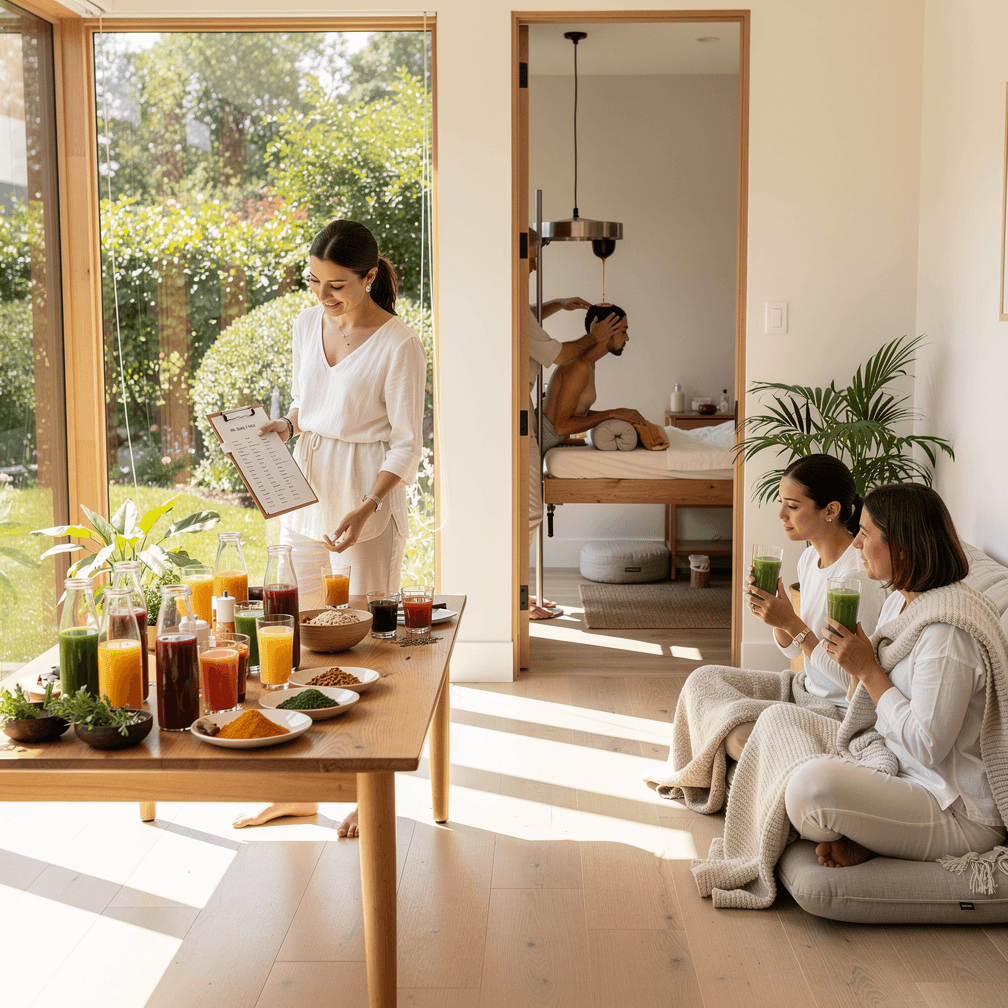
Short answer: Your liver and kidneys do the actual detoxification; no green juice changes that. What a cleanse retreat buys is a structured week of less food, more sleep and no decisions. Four formats exist: juice and broth fasting over three to seven days, ayurvedic panchakarma over 7 to 21 days, functional-medicine resets with lab work, and lighter spa weeks.
The word “detox” gets thrown around so loosely that a careful person can be forgiven for tuning it out. Your liver and kidneys do the actual detoxification; no green juice changes that.
What a good cleanse retreat actually offers is something different and more honest: a structured week where you eat less, sleep more, move gently, and step out of the loop of caffeine, alcohol, screens, and decisions.
That reset is real, and for a lot of people it’s the closest they get all year to feeling like themselves again.
This is a working list of the best wellness retreats 2026 has on offer in the detox and cleanse category, plus how we’d think about choosing between them. We’ve kept the focus to programs in the US, with a few notes on what to ask before you book.
What a “cleanse retreat” actually means in 2026
The category has split into roughly four shapes, and knowing which one you want saves a lot of money.
Juice and broth fasting. Three to seven days of cold-pressed juices, broths, and herbal teas, usually with light yoga, walks, colonics on offer, and a slow refeed at the end. Best for people who want a short, hard reset and don’t have a complicated medical history.
Ayurvedic panchakarma. A traditional Indian protocol that runs 7 to 21 days. It includes daily oil massages (abhyanga), herbal steam, dietary changes built around your dosha, and gentler cleansing therapies. Slower, deeper, more individualized. Best for people willing to commit two weeks and curious about a whole-system approach.
Functional medicine resets. Run by MDs or NDs, often with lab work before and after, a structured anti-inflammatory diet, supplements, IV therapy, and sometimes sauna and cold protocols. Best for people working through a specific issue (gut, hormones, fatigue) who want data, not vibes.
Spa-integrated wellness weeks. Lighter touch. Cleaner food, more sleep, treatments, hiking. Not a true fast. Best for people who want to feel better without suffering.
None of these is the “right” one. The right one is the one you’ll actually complete without quitting on day three.
Texas Hill Country: the closest serious option for most of the South and Midwest
A good wellness retreat texas hill country option is hard to beat for accessibility. You fly into Austin or San Antonio, drive 45 to 90 minutes, and you’re in the limestone hills near Wimberley, Dripping Springs, or Fredericksburg.
The land does a lot of the work: live oak shade, spring-fed creeks, and the kind of quiet that makes you realize how loud your life has been.
The Hill Country has become a real hub for cleanse-style programming, partly because Austin’s wellness scene spilled outward and partly because the climate makes outdoor mornings pleasant nine months a year.
Look for programs that run Sunday-to-Saturday with a structured arrival call the week before, a registered dietitian or licensed practitioner on staff, and a clear refeed protocol. Avoid anything that calls itself a “juice fast retreat” but won’t tell you who’s actually supervising the fast.
If you live in Austin and want to test whether a longer cleanse is for you, a much cheaper experiment is to string together a week of contrast therapy at home.
A daily cold plunge austin session paired with a sauna austin visit, plus cutting alcohol and processed food, will give you a real preview of how your body responds to a stressor-and-recovery rhythm. If you like that week, you’ll probably love a full retreat. If you hate it, save your money.
Sedona: the one most people are actually picturing
When someone says “I want to go on a wellness retreat,” they’re often picturing red rocks at sunrise. A sedona wellness retreat earns its reputation. The elevation (around 4,300 feet) gives you cooler nights and clearer sleep, the hiking is genuinely restorative, and the town has more bodyworkers, ayurvedic practitioners, and breathwork facilitators per capita than almost anywhere else in the country.
For a cleanse specifically, Sedona is strongest on the ayurvedic side. Several long-running panchakarma programs operate there year-round with classically trained vaidyas, daily oil treatments, and the slow tempo that the protocol actually requires. The juice-fast scene exists too but tends to blur into the broader spa market.
A few practical notes if you’re considering Sedona in 2026: book at least 90 days out for spring and fall, expect altitude to amplify the first two days of any fast (drink more water than you think you need), and budget for a rental car. The town is spread out and rideshare is thin.
Other US regions worth knowing about
Asheville and the Blue Ridge. Strong on functional medicine and farm-to-table cleanse weeks. Lush, humid, beautiful in May and October. Several programs partner with local MDs who do pre- and post-retreat labs.
Big Sur and the Northern California coast. The classic setting. Expect higher prices, longer waitlists, and a culture that takes silence seriously. Better for meditation-forward resets than aggressive juice fasts.
Vermont and the Catskills. Quietly excellent in the warm months. Look here for fasting retreats run by physicians, often on old farmsteads, with a New England seriousness about protocol.
Joshua Tree and the high desert. Dry, hot, stark. Good for people who find the desert clarifying and bad for people who need green. Several smaller ayurvedic and fasting programs operate out of guest ranches.
The Florida Keys. A growing scene for shorter three- and four-day juice resets with a swim-and-snorkel component. Easier to combine with a longer vacation.
How to choose: five questions that filter the field fast
- Who is medically responsible? A real cleanse program has a named clinician, MD, ND, RD, or experienced ayurvedic practitioner, who reviews your intake form before you arrive. If no one is asking about your medications, that’s a flag.
- What does the refeed look like? The end of a fast matters more than the fast itself. You want a slow, staged return to solid food over two to four days. A program that sends you home on a juice and wishes you luck is not finished.
- What’s the daily schedule? Read it carefully. A good cleanse week has structure (morning movement, treatments, rest, evening reflection) without being packed. If every hour is booked, you won’t actually rest.
- What’s the group size? Six to twelve is the sweet spot for most people. Larger feels like a conference. Smaller can feel intense if the group doesn’t click.
- What’s the cancellation policy? Cleanse retreats are physically demanding. Life happens. A program that offers a credit or transfer (not just a refund) is usually a sign of a confident operator.
On booking, and on not over-optimizing
Most serious programs let you book a wellness retreat online now, with a deposit and a short intake form. A few of the older ayurvedic centers still want a phone call, which is not a bad sign; it often means the lead practitioner wants to talk to you before saying yes.
Either way, plan to book 60 to 120 days ahead for 2026, especially for spring and fall dates in Sedona, the Hill Country, and the Blue Ridge.
One last thing. The best retreat of the year is not always the most intense one. We’ve watched people pick a 14-day panchakarma when what they needed was a quiet four-day juice reset and a week of normal sleep.
Match the program to the version of yourself who will actually show up, not the version you wish you were. A cleanse you finish gently is worth more than a heroic one you abandon on day five.
If you’re still deciding, the honest move is to write down what you want to feel like the Monday after you get home. Calmer. Less inflamed. Off the wine. Sleeping through the night. Then work backwards from that into a program. The retreat is just the container. The change is the one you bring home.