The best fitness retreats in the US for 2026: bootcamps, hiking weeks, and the honest middle ground
A grounded guide to fitness-forward retreats in 2026, from Texas Hill Country bootcamps to Sedona's red rock trails, with what to look for before you book.
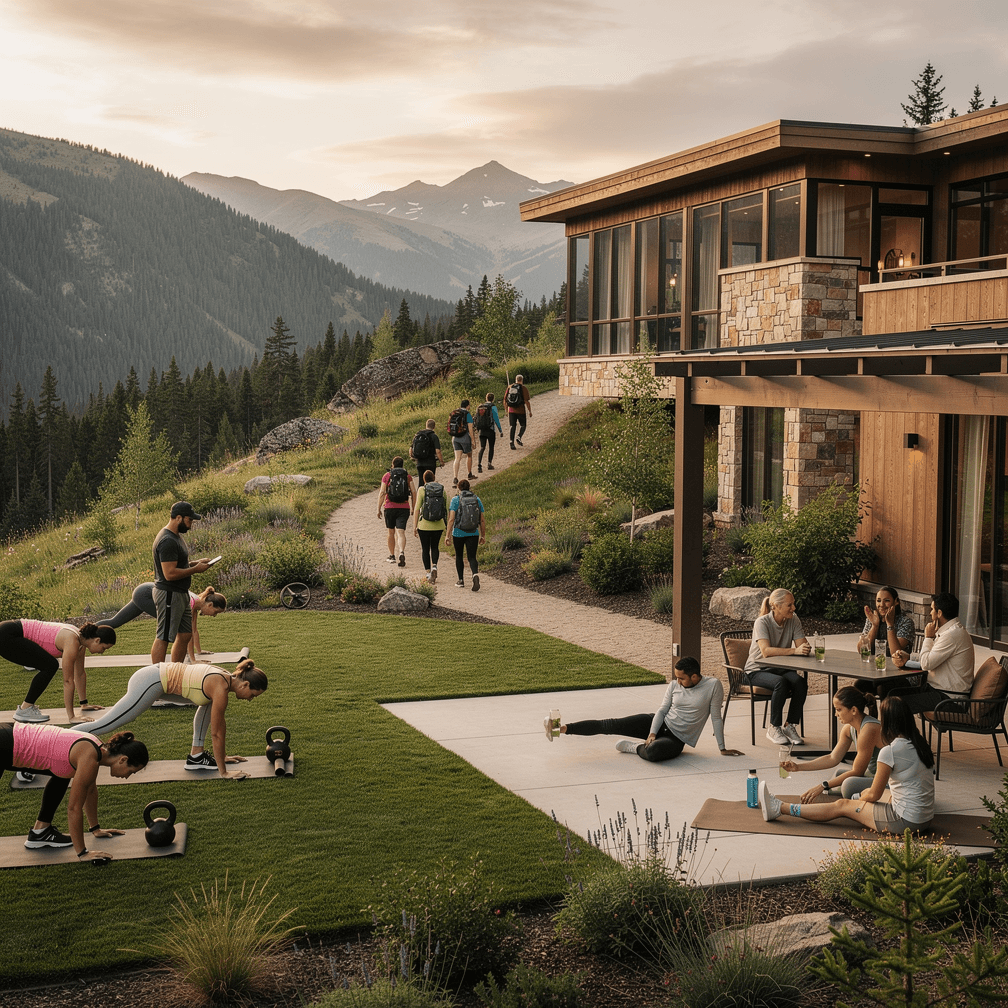
Short answer: Two formats. Bootcamp weeks run two or three sessions a day around strength and conditioning and will genuinely move your numbers, provided the operator peaks you on day four rather than stacking hard sessions to day six. Hiking weeks use four to eight hours on trail: high volume, low intensity, better aerobic base, no muscle gain.
Fitness retreats have quietly become the fastest growing slice of the wellness travel market, and the format has split into two clear camps. On one side: bootcamp weeks built around early alarms, strength blocks, and conditioning. On the other: hiking-based programs that use long days on trail as the workout itself, with mobility and recovery folded around them. Both work. They produce very different weeks.
If you are trying to sort through the best wellness retreats 2026 has lined up and you actually want to come home stronger, not just relaxed, this is the guide we wish someone had handed us a few years ago.
Bootcamp-style retreats: what the week actually looks like
A bootcamp retreat is structured around training sessions, usually two or three a day. Expect a strength block in the morning, a conditioning or skills session midday, and something lower intensity in the late afternoon (mobility, yoga, a hike at conversation pace). Meals are built around protein targets. Sleep is protected. There is almost always a sauna, and on the better properties, a cold plunge.
The payoff is real. Five or six days of consistent training, eating well, and sleeping eight hours will move your numbers in a way your home routine rarely does. The risk is overcooking it. A good operator programs the week so you peak on day four and taper into recovery; a less careful one stacks hard sessions until day six and sends you home injured.
Texas Hill Country bootcamps
A wellness retreat Texas Hill Country style tends to lean into the geography. The terrain west of Austin gives you genuine elevation change without altitude, limestone trails for trail running, and ranch properties large enough to host outdoor lifting platforms. The shoulder seasons (March, April, October, November) are the sweet spot.
Summer is brutal, and winter can swing from seventy degrees to ice in a week.
What we look for in a Hill Country bootcamp: a coach with an actual strength credential, programming that names the goal of each session, and a property within a reasonable drive of Austin so you can extend the trip with a cold plunge Austin session or a sauna Austin visit before you fly out. The recovery infrastructure in Austin proper has gotten genuinely good, and tagging two extra days onto a Hill Country week is one of the better uses of a wellness budget we know.
Other strong bootcamp regions for 2026
- Asheville, North Carolina. Mountain air, serious trail networks, and a cluster of trainers who came up through CrossFit and have since softened into something more sustainable.
- Park City, Utah. Altitude is a feature here. Programs that use it well build conditioning gains you can feel for months. Programs that ignore it gas you out by day three.
- Sedona, Arizona. A Sedona wellness retreat is more often hiking-based than bootcamp-based, but a handful of operators run hybrid weeks that pair red rock trails with structured strength sessions at a nearby gym.
Hiking-based retreats: lower intensity, longer days, different result
Hiking retreats use the trail as the training stimulus. A typical day is one long hike (four to eight hours, depending on the property) with a yoga or mobility session in the evening. Total weekly volume is high, but intensity per minute is low.
You finish the week with better aerobic base, stronger ankles and hips, and the particular calm that comes from seven days of being outside.
This format suits people who already train and want a deload week with a view, or people coming back from injury who need volume without impact. It does not build muscle. If your goal is to add ten pounds of lean mass, a hiking week is the wrong tool.
Sedona, the obvious choice
A Sedona wellness retreat earns its reputation. The trail network is varied enough to support a full week without repeating routes, the elevation (around 4,500 feet) gives you a mild aerobic challenge without making the week miserable, and the recovery options on rest days are unusually good. Spring and fall are ideal. Summer is hot but manageable if your operator starts early.
What to ask before you book a Sedona week: how many miles per day on average, what the elevation profile looks like, and whether the guides carry wilderness first aid certifications. The last question filters out a surprising number of operators.
Other hiking-based regions worth a look
- The Blue Ridge in late September. Color, cool mornings, and trails that have been maintained for a century.
- Big Sur in May. Coastal hiking with a steeper learning curve on weather. Bring layers you would not expect to need.
- Vermont in early October. Shorter days, but the foliage is the reason you go.
How to choose between the two formats
A few honest questions to sit with before you book a wellness retreat online:
- What is your current training load? If you train four or more days a week already, a bootcamp may be redundant. A hiking week gives your body a different stimulus and often produces better gains in the month after.
- What is your sleep like at home? Bootcamps assume you can recover from two sessions a day. If you are running on six hours and stress, the hiking format will serve you better.
- Do you actually like lifting? This sounds obvious, but a surprising number of people book bootcamps because they think they should, then spend five days resenting the squat rack. Pick the format you will look forward to on day three.
What to look for before you pay a deposit
The retreat market in 2026 is large enough that you can afford to be picky. A few filters that have served us well:
- Coach credentials, named. A good operator lists the actual certifications of the lead coach. Vague language about “years of experience” is a flag.
- A real schedule, published in advance. You should be able to see the full daily plan before you book. If you cannot, ask. If they will not send it, move on.
- Group size capped under sixteen. Larger groups are fine for yoga retreats; they are not fine for strength programming, where you need a coach who can actually see your reps.
- A clear cancellation policy. Read it. Most operators have moved to a tiered refund structure (full refund 60 days out, partial at 30, none inside two weeks). That is reasonable. Watch for non refundable deposits over 30 percent of the total; those are aggressive.
- Recovery infrastructure on site or nearby. Sauna, cold plunge, decent showers, real beds. The recovery side of the week is where the adaptation actually happens.
Stacking a retreat with a few days in Austin
If you are flying into Austin for a Hill Country week, give yourself two extra days on either end. The city has quietly built one of the better recovery scenes in the country. A cold plunge Austin session the morning after you arrive helps with jet lag and travel inflammation.
A sauna Austin visit the evening before you head into the Hill Country sets up your sleep for the first night of training. Both are easy to book the week of.
Booking a wellness retreat online without getting burned
When you book a wellness retreat online, you are usually paying months in advance for a week that lives or dies on the quality of the staff. A few practical notes:
- Pay with a credit card that offers trip protection. Most premium cards do, and the coverage is genuinely useful if a property closes or a guide cancels.
- Save the operator’s email confirmation as a PDF. Screenshots get lost; PDFs do not.
- Read recent reviews, not the testimonials on the operator’s site. Look for ones from the last twelve months, ideally with photos. The retreat industry has high staff turnover, and a property that was excellent in 2024 may be running differently now.
- Email the operator with a specific question before you book. How they answer (or whether they answer at all) tells you most of what you need to know about the week.
A short list to start your 2026 research
We are not going to rank these, because the right retreat depends entirely on what you are looking for. But if you want a starting point for the best wellness retreats 2026 has on the calendar, these regions consistently produce strong weeks:
- Texas Hill Country, March through May and October through November, for bootcamps and hybrid weeks.
- Sedona, March through May and September through November, for hiking-based and mixed formats.
- Asheville, late spring and early fall, for bootcamps with a softer edge.
- Blue Ridge and Vermont, late September into mid October, for pure hiking weeks with the best scenery of the year.
- Big Sur, May and June, for hiking weeks with a coastal contrast.
The honest summary: the format matters more than the brand. Pick the kind of week your body actually needs in 2026, read the schedule carefully, and give yourself a few quiet days on either end. The retreat does the work; the recovery around it is what makes the work stick.