Best wellness retreats in the Hudson Valley and Catskills for 2026: the weekend reset near New York
Two hours from the city and a world away, the Hudson Valley and Catskills have become the Northeast's go-to reset. Here's how to choose a retreat that's worth the drive, not just close to it.
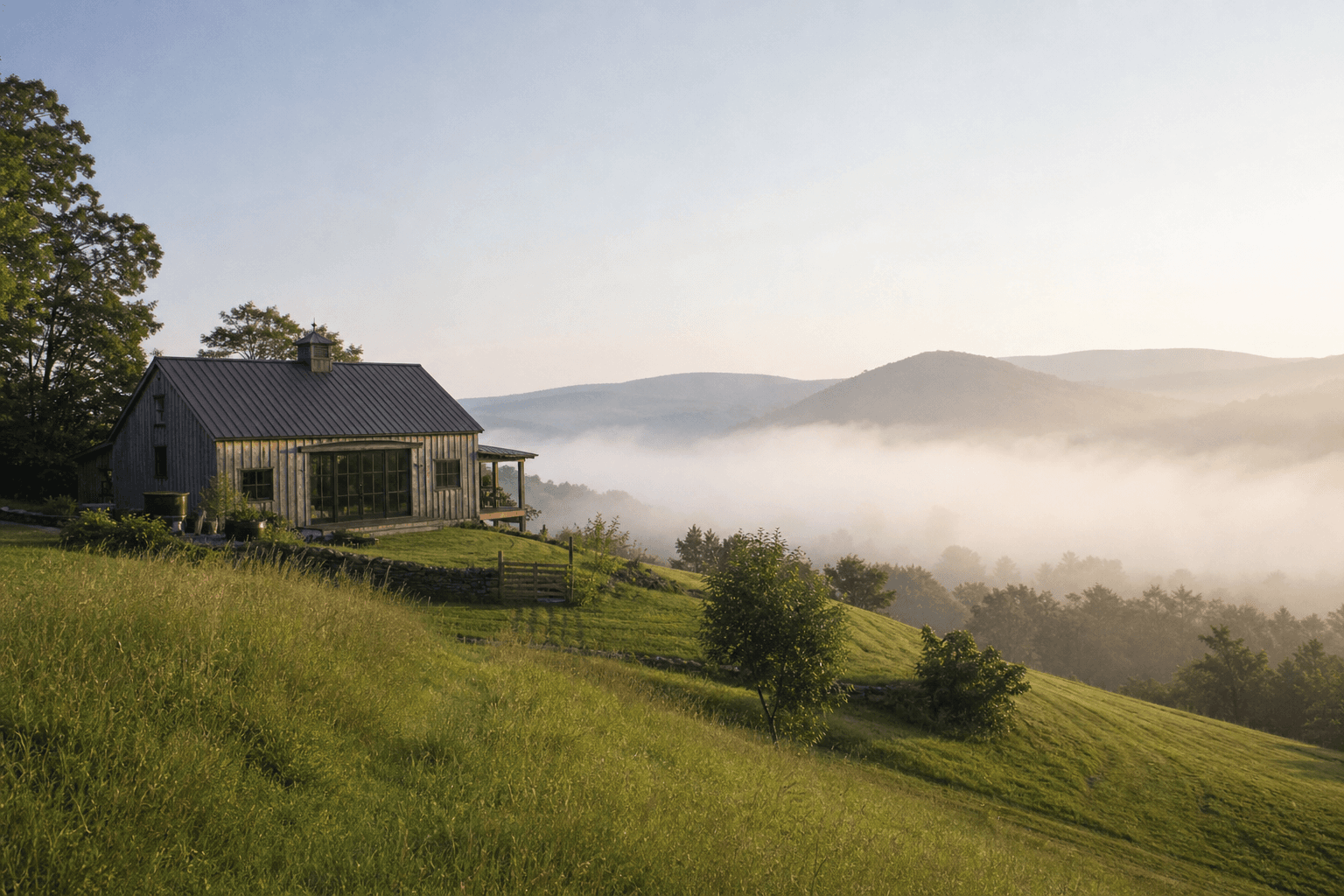
Short answer: The Hudson Valley and Catskills are the Northeast’s easiest serious reset, two hours from New York. Decide between a structured program and pure rest first, then pick the area: the Catskills for real quiet, the mid-Hudson Valley for ease. Expect $300 to $600 per person per night with meals.
The verdict on retreating upstate
The Hudson Valley and Catskills are the best low-effort serious reset in the Northeast, and the right way to choose is to decide between a structured program and pure rest first, then pick the area by how disconnected you want to be. The Catskills for real quiet, the mid-Hudson Valley for ease, the Berkshires edge for the estate scene.
For a few million people, this is the closest real escape there is. Two hours north of New York City the noise drops away into farmland, river towns, and the soft old mountains of the Catskills. That proximity made the region the Northeast’s favorite weekend reset, and the boom brought both genuinely lovely places and a lot of farmhouses with a yoga mat and a high nightly rate.
The closeness is the appeal and the trap. A retreat here is easy to reach, which means it has to be good on its own merits, not just convenient. The best ones use the land and the quiet. The weakest ones are a nice Airbnb with a wellness label. This guide helps you tell the difference. We do not take placement fees, so nothing here is sponsored.
The four formats, at a glance
| Format | Best for | Typical rhythm |
|---|---|---|
| Converted-barn and farm retreats | Unstructured rest, small groups | Simple good food, open days, optional sessions |
| Yoga and movement weekends | People who want a schedule | Two practices a day, shared meals, a clear arc |
| Somatic and nervous-system retreats | Deeper, facilitated work | Small cohorts, intake calls, trauma-informed pacing |
| Bathhouse-and-cabin resets | Spa-style recovery | Sauna, cold plunge, quiet cabin lodging |
Converted-barn and farm retreats are the regional signature: restored barns and farmhouses, small cohorts, and unstructured rest. This is the format most people picture, and at its best it’s wonderful.
Yoga and movement weekends are structured programs, often built around a teacher or a style. Good if you want a clear schedule and a group carrying you through the days.
Somatic and nervous-system retreats are smaller and quieter, with the valley as a calm container. Look for facilitators with real training and an intake call before you book. Our guide to what trauma-informed actually means helps you read those descriptions honestly.
Bathhouse-and-cabin reset stays are a newer wave pairing sauna and cold plunge with cabin lodging, the closest thing to a spa retreat in the region. If you want the heat-and-cold piece without leaving the city at all, our guide to New York City’s saunas and bathhouses covers the urban version.
Which area fits which trip
The Catskills. Mountains, streams, and the deepest quiet, especially around the western and central ranges. Best for genuine disconnection; expect longer drives and patchier cell service, which is part of the point.
The mid-Hudson Valley. River towns, farms, and easy access by car or train. Good for a first retreat or a shorter stay where logistics matter.
The Berkshires edge. Where the valley meets western Massachusetts, blending into the New England estate scene. If that pull wins, our Berkshires retreat guide covers it properly.
What a weekend upstate honestly costs
Prices vary widely, but a realistic frame helps. Expect roughly $300 to $600 per night per person for a well-run small retreat with meals and programming included, less for simple farm stays with minimal structure, and more for polished properties or one-on-one facilitated work. A bare rental with a “wellness weekend” label at retreat prices is the thing to walk away from.
Because trips here are usually short, the per-night rate stings more than it would on a longer trip. Our retreat cost guide puts these numbers in national context, and if you’re deciding how many days to take, how long a retreat should be is the companion question.
What to ask before booking upstate
Program or pure rest. Decide whether you want a schedule or empty space. This is the choice that prevents most letdowns.
Who’s running it. For anything therapeutic, the facilitator matters more than the property. For a rest stay, the host’s sense of food and quiet matters most.
What fills the day. Some places offer sessions, sauna, and guided time; others simply give you a beautiful place to do nothing. Know which you’re buying, because both are sold with the same photos.
The real travel time. Two hours on paper can be three on a Friday. Ask about timing and whether they help with transfers from the train.
FAQ: Hudson Valley and Catskills retreats
Do I need a car for a Catskills retreat? Usually yes for the Catskills proper. Some mid-Hudson retreats sit near Metro-North or Amtrak stations and offer pickups, so ask before you book. The deeper the quiet, the more likely you need to drive.
When is the best season to go? Fall is the headline season and books out earliest. Late spring and summer are green and easy, and winter suits sauna-and-woodstove resets if the property is built for it. There is no bad season, only mismatched expectations.
Is a weekend long enough for a retreat here? Yes, and that’s the region’s whole advantage: no flights and short drives mean two nights of actual reset instead of two nights minus travel. For a deeper shift, three or four nights is noticeably better.
How far ahead should I book? For fall weekends and small-cohort retreats, a few months out is wise. Quieter seasons and rest-focused farm stays are often bookable within weeks. Paying by card through a proper booking flow protects you either way, as our guide to booking a retreat online safely explains.
The bottom line on the Hudson Valley
The Hudson Valley and Catskills are the easiest serious reset in the Northeast, as long as you choose a place that’s good on its own terms rather than just close to the city. Decide between a structured program and pure rest first, then match the area to how far you actually want to get from everything.
If you’re comparing options, our guide to New England retreats covers the next region over, the best weekend retreats in the US helps if your time is tight, and you can see what we’d recommend on the retreats page.
What's actually in New York, by the numbers
From our own mapping of 135 day-wellness venues in New York, NY. Categories come from venue names, so a place that offers a plunge without saying so in its name is counted only as a general studio — treat these as a floor, not a census.
| Category | Venues | Share of city |
|---|---|---|
| Massage & bodywork | 42 31.1% | |
| General wellness & recovery | 31 23% | |
| Yoga | 25 18.5% | |
| Sauna & bathhouse | 22 16.3% | |
| IV therapy | 17 12.6% | |
| Acupuncture | 16 11.9% | |
| Pilates | 15 11.1% | |
| Red light | 14 10.4% |