Cold plunge vs ice bath: are they actually different?
People use the terms interchangeably, argue about them online, and mostly mean the same thing. Here's what actually separates them, and what doesn't.
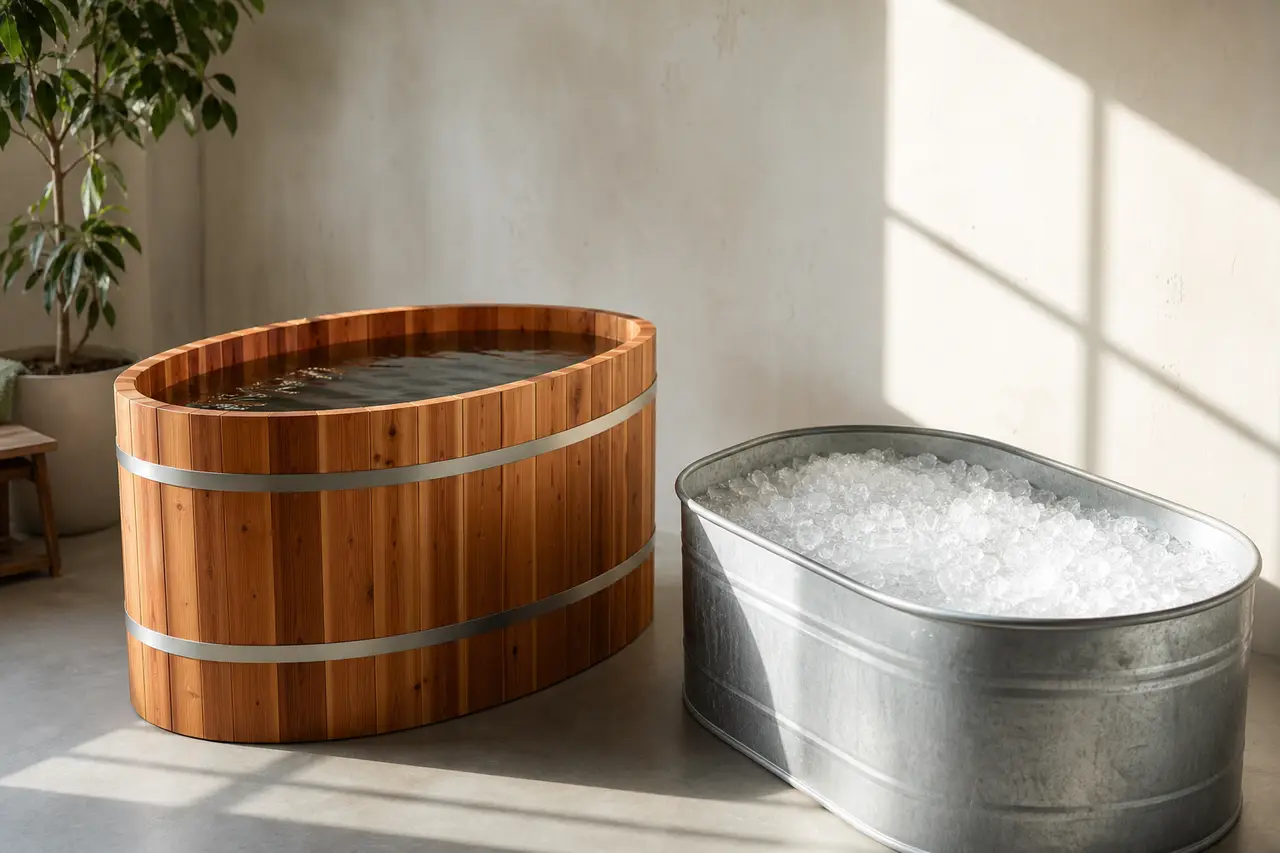
Short answer: The same practice under two names. Your body responds to water temperature and time in it, not to the label. In common use an ice bath is a tub you fill with ice, cheap and drifting warmer as it melts, while a cold plunge is a chiller-held tub at a set temperature. Choose on consistency, upkeep and cost.
Cold plunge and ice bath describe the same underlying thing, cold-water immersion, and your body cannot tell the difference between them; what matters physiologically is the water temperature and how long you stay in, not the label.
In common use, “ice bath” usually means a tub you fill with water and dump ice into (often very cold, and DIY), while “cold plunge” more often refers to a purpose-built tub with a chiller that holds a set temperature without ice. That is a difference of method and convenience, not of biology.
Pick based on temperature control and cost, and ignore anyone insisting one is secretly superior.
What does each term actually mean?
Ice bath. The classic version: a tub, stock tank, or even a bathtub filled with cold water and bags of ice to drive the temperature down, often into the 40s Fahrenheit or lower. It is cheap, DIY, and variable, the temperature depends on how much ice you add and drifts up as the ice melts. This is the athlete-in-a-trash-can image.
Cold plunge. Increasingly this means a dedicated tub with a chiller unit that cools and holds the water at a chosen temperature, no ice required, often with filtration so the water stays clean for weeks. It is the more expensive, more convenient, more consistent version.
The overlap is total: a “cold plunge” filled with ice is an ice bath, and an “ice bath” held at a steady temperature is a cold plunge. The words track the equipment, not two different practices.
Does your body respond differently to them?
No. Your physiology responds to the temperature of the water and the duration of exposure, full stop.
Water at 50°F for two minutes produces the same cold-shock response, the same noradrenaline surge, the same effect whether you got it there with a chiller or with ice, and whether the sign on the tub says “plunge” or “bath.” The benefits, and the honest limits of those benefits, are the same; our explainers on cold exposure and dopamine and cold and metabolism apply identically to both.
Anyone claiming a unique benefit for one over the other, at the same temperature and time, is selling equipment.
So what actually differs in practice?
Three practical things, all about the method rather than the effect:
Temperature consistency. A chiller holds a steady, known temperature; an ice bath starts cold and warms as ice melts, so your “dose” varies within a single session and between sessions.
Convenience and upkeep. A chiller plunge is ready whenever you are and stays clean for weeks; an ice bath means buying, hauling, and adding ice every time and changing the water often.
Cost. An ice bath can be near-free with a stock tank; a chiller plunge runs a few thousand dollars plus running electricity. Our home setup cost guide covers the full range.
Which cold setup should you choose?
Choose an ice bath if you want to start cheap, are experimenting, or plunge occasionally, hauling ice is a fine trade for saving thousands.
Choose a chiller cold plunge if you plunge regularly and value consistent temperature and near-zero effort, the convenience is what keeps a habit alive, which is worth real money to consistent users. For most beginners, an ice-filled stock tank is the honest place to prove the habit before spending on a chiller.
The bottom line on cold plunge vs ice bath
Same practice, same biology, different equipment. “Ice bath” leans DIY-and-variable, “cold plunge” leans chiller-and-consistent, and your body treats identical water identically. Decide on temperature control, convenience, and budget, not on the name. Whichever you use, our first cold plunge walkthrough covers doing it safely, and how often covers a sensible dose.