Goat Yoga Explained: What Actually Happens (and Why People Love It)
Goat yoga is mostly about the goats. The yoga is light, the joy is real, and the stress relief is legitimate.
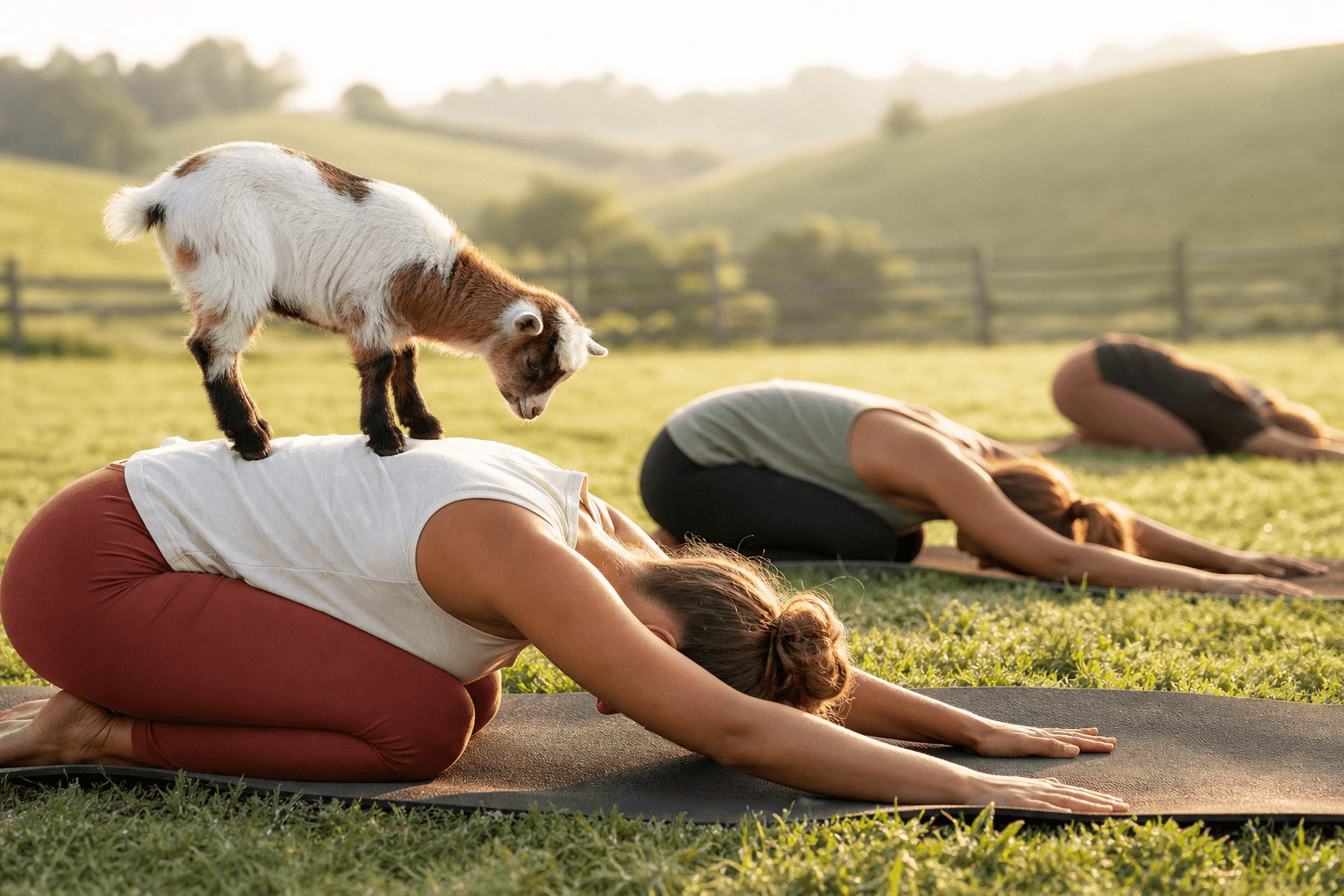
Short answer: A gentle outdoor or barn yoga class, usually 45 to 60 minutes, with baby goats, typically Nigerian Dwarf or pygmy breeds, roaming among the mats and climbing on people in tabletop and child’s pose. The yoga is secondary. The real draw is animal contact outdoors, which has documented mood and stress effects.
Goat yoga is exactly what it sounds like, and that is somehow both the joke and the point. You do yoga. Goats wander among the mats, occasionally climb on your back during child’s pose, and eat your water bottle label if you leave it unattended. It is not a serious yoga class. It is, by most accounts, an extremely good time.
What goat yoga is
Goat yoga is a group yoga class held in an outdoor or barn setting where baby or juvenile goats roam freely among participants during the session. The format became a cultural phenomenon around 2016 when an Oregon farm went viral after introducing goats to their yoga classes, and it spread quickly to farms, petting zoos, and wellness ranches across the country.
The yoga component is typically gentle hatha or basic flow, accessible to complete beginners, with the understanding that the animals are the co-instructors. Goats are curious, surprisingly sure-footed, and strongly attracted to humans in tabletop or child’s pose (you have created a flat surface at their preferred height).
Baby goats in particular will climb, nuzzle, and occasionally nap on people. Most goat yoga operations use Nigerian Dwarf or pygmy goat breeds because they are small, friendly, and light enough to stand on a human back without discomfort.
Some farms also offer “goat cuddle” or “goat hike” sessions without yoga poses; the yoga is one format among several animal-experience offerings.
What a goat yoga class is like
You arrive at a farm, ranch, or outdoor wellness venue and receive a mat. Sessions typically take place in a pasture, paddock, or large barn with good light and ventilation. The class size is usually 10, 30 people.
The instructor leads a 45, 60 minute yoga sequence, standing poses, gentle flows, seated stretches, and substantial time in tabletop and child’s pose, which are optimal goat-access positions. While you move through poses, goats do whatever they want. Some will ignore you entirely. Some will attempt to eat your hair.
Most will eventually climb on at least one person’s back, at which point the class generally pauses for photos.
Goats are chaotic and occasionally messy. Bring clothes you don’t mind getting muddy or trampled. Most farms place hay around the perimeter to keep the goats occupied, but goats are notably poor at following instructions.
The session usually ends with open time to sit, pet, and photograph the goats before they are returned to their enclosure.
What the evidence says about animal contact
- Reasonable evidence for: Human-animal interaction (HAI), particularly with friendly animals in naturalistic settings, is associated with measurable reductions in cortisol, lower heart rate, and improved self-reported mood, this is a well-researched area in animal-assisted therapy. Being outdoors in natural settings (farms, fields) has its own mood and stress-reduction benefits documented in environmental psychology. Any gentle movement, including basic yoga, supports these effects through the physical activity itself.
- Debated or mixed: Whether goats specifically provide greater benefit than other friendly animals. The existing HAI research uses dogs, horses, and cats most frequently. Goat-specific research is minimal; the benefit likely generalizes from human-animal contact broadly.
- Not established / overstated: That goat yoga constitutes a meaningful yoga practice for flexibility, strength, or mindfulness development compared to a dedicated yoga class. The yoga is a vehicle for the animal experience, not the other way around. Any claims about goats providing unique healing or therapeutic outcomes are not evidence-based.
Benefits people report from goat yoga
- A genuine, deep mood lift, multiple attendees describe it as the most fun they have had in months
- Stress and anxiety reduction in the hour following the session
- Reduced self-consciousness; the goats make it impossible to take yourself seriously
- A sense of connection to animals and outdoor spaces
- Memorable, shared social experience, it is a strong group activity
Who goat yoga suits, and who should skip it
Goat yoga is for almost everyone. It requires no yoga experience, no fitness level, and no prior animal experience.
It is a strong choice for: people who want a fun outdoor experience with friends or family, people who find standard yoga intimidating or too serious, people who benefit from animal contact (HAI research suggests this includes people with anxiety, depression, and high-stress lives), and people who want something genuinely different from a typical wellness activity.
Skip it if you have: animal allergies (farm environments include dander, hay, and various allergens, significant allergy sufferers should ask the operator about their specific animals and setting), serious fear of animals or unpredictable movement, or mobility limitations that make getting up and down from a mat difficult repeatedly. Goats are unpredictable; they may startle or move suddenly.
Wear clothes you can get muddy. Closed-toe shoes are a good idea for walking to and from the mat area. Bring sun protection for outdoor sessions.
What goat yoga costs
- Group class (most farms): $20, $45 per person
- Private or small-group session: $150, $350 for a reserved group of 6, 15 people
- Corporate or team events: $400, $1,200+ depending on group size and venue
- Combo packages (yoga + farm tour or brunch): $50, $80 per person at some venues
Goat yoga is typically priced lower than specialty studio yoga because the novelty is the draw, not the instruction quality, and operating costs are different from urban studios. Most farms book sessions on weekends; some offer weekday availability for private groups.
How to choose a good experience
Look for operations where the animals are clearly healthy, well-cared-for, and accustomed to human contact. The goats should be social and calm around people, not stressed or skittish. A good operation will have an outdoor space that is clean and well-maintained, a certified or experienced yoga instructor (even if the class is gentle), and clear communication about what to expect, including the inevitable chaos.
Ask whether the goats are babies or adults. Baby goats (kids) in spring are the classic experience and the ones that tend to climb. Adult goats are often calmer but less interactive.
Read reviews specifically for how the staff handles the animals. Farms that genuinely care about animal welfare tend to produce a better experience than those treating the goats purely as a gimmick.
If you enjoy goat yoga and want to build a more consistent yoga practice, exploring the full range of yoga styles is a good next step. If you want a similar joyful, unserious approach to movement in the water, SUP yoga offers comparable lightness.
FAQ: goat yoga
Will a goat actually stand on my back? Probably yes, if you get into child’s pose or tabletop. Baby goats climb on anything flat and warm. It typically feels like mild pressure, not painful unless a hoof finds a bony spot.
Do I need yoga experience? No. The yoga in most goat yoga classes is very gentle and beginner-friendly. The instructor understands that half the class is watching a goat, not the demonstration.
What should I wear? Comfortable, stretchy clothes you don’t mind getting stepped on or muddy. Avoid anything too precious. Closed-toe shoes for the walk to the mat area; bare feet on the mat are fine once you’re in position.
Is goat yoga appropriate for kids? Usually yes, with caveats. Most farms welcome children who can follow basic instructions and are comfortable around animals. Check the minimum age policy with the specific venue, some set a floor of 8, 10 years for the yoga format.
The honest summary on goat yoga
Goat yoga is not a yoga class in any serious sense, and it is not pretending to be. It is an animal-assisted outdoor experience dressed up with yoga mats, and the mood and stress benefits of spending time with friendly animals in a natural setting are genuinely supported by research.
If you go expecting a workout or a mindfulness session, you will be confused. If you go expecting to laugh, pet a baby goat, and leave in a better mood than you arrived, goat yoga delivers reliably.